Tenerife is one of the few places in Europe where no-deposit car hire is a real product rather than a marketing line – Canary Islands operators genuinely do it. What almost nobody spells out is the asterisk: the fuel deposit is separate and it still applies, because the island standard is a full-to-full policy.
That distinction decides how much of your credit limit disappears for a week. The rest is smaller: a modern UK photocard licence needs no International Driving Permit for a stay under six months, and the minimum driver age varies by operator and car category rather than sitting at one universal number.
What "no deposit" actually means
Cicar, the established Canary Islands rental company, is the name this question usually attaches to. It is well reviewed on Trustpilot, rates highly on Discover Cars' own Tenerife South listings, and its no-deposit marketing is accurate as far as it goes.
Here is how far it goes. No deposit means no security deposit held against damage – the hold most international operators place on your card at the desk, often several hundred euros, and the thing that catches out anyone on a debit card or a tight credit limit.
It does not mean no hold at all. A fuel deposit still applies under the full-to-full policy: the company holds the value of a full tank and releases it when you bring the car back full. That is a smaller number than a damage deposit, but it is not zero, and it is why "no deposit" and "nothing on my card" are not the same sentence.
Full-to-full, and how to not lose money on it
Full-to-full is the standard fuel policy across operators on the island: you collect the car with a full tank and return it full. It is the fairest of them, because you only ever pay for the fuel you burn.
It is also the one with a failure mode. Return the car short and the company keeps the difference out of the held deposit, at a refuelling rate well above the forecourt price. Fill up before you reach the airport, and keep the receipt.
The alternatives – full-to-empty, or "same-to-same" – have you pre-paying for a tank at the operator's rate and handing back whatever is left as a gift. If a quote looks unusually cheap, check the fuel policy first.
Age, experience, and why there is no single number
No single minimum age covers car hire in Tenerife, and any guide quoting one figure is flattening a real variation. The industry-wide baseline is generally 21, but requirements move by operator and car category.
- Under-25 drivers commonly pay a young-driver surcharge – Enterprise's UK site cites £23 per day, capped at 10 days, as one worked example
- Some Canary Islands categories additionally require the driver to be 21 to 22 with one to two years' licence experience
- Larger and premium categories typically set the bar higher than the standard hatchback that most visitors book
Filter for it rather than assume it. Put the youngest driver's age into the comparison before you compare prices, because a surcharge applied at the desk can outweigh whatever you saved on the daily rate.
Your licence, and the IDP question
A modern UK photocard licence needs no International Driving Permit to drive in Spain on a temporary stay of up to six months. That covers essentially every holiday.
The exception is narrow: an IDP is only relevant if you still hold an old-style paper UK licence. If your licence is a card with a photograph on it, you do not need one, and any hire desk suggesting otherwise is wrong.
What to compare, beyond the daily rate
The site's car hire link goes to Discover Cars, a comparison platform rather than a rental company – it aggregates local operators like Cicar alongside the international names, sortable by price, rating, deposit and fuel policy.
That deposit filter is the useful one, and the reason to compare rather than book direct with a brand you recognise. Two quotes at the same headline price can differ by several hundred euros in what they hold on your card.
Excess cover is the other line to read. Discover Cars sells its own products – Sincera for customers booking from within Europe, Full Coverage for those booking from outside it – which sit alongside, not instead of, whatever the rental company offers at the desk.
Do you actually need a car?
For a week that never leaves Costa Adeje, no. The southern resorts are walkable and well served by buses, and the airport transfer guide prices the arrival run – the getting around Tenerife guide covers the bus network itself, including when it genuinely stops being enough.
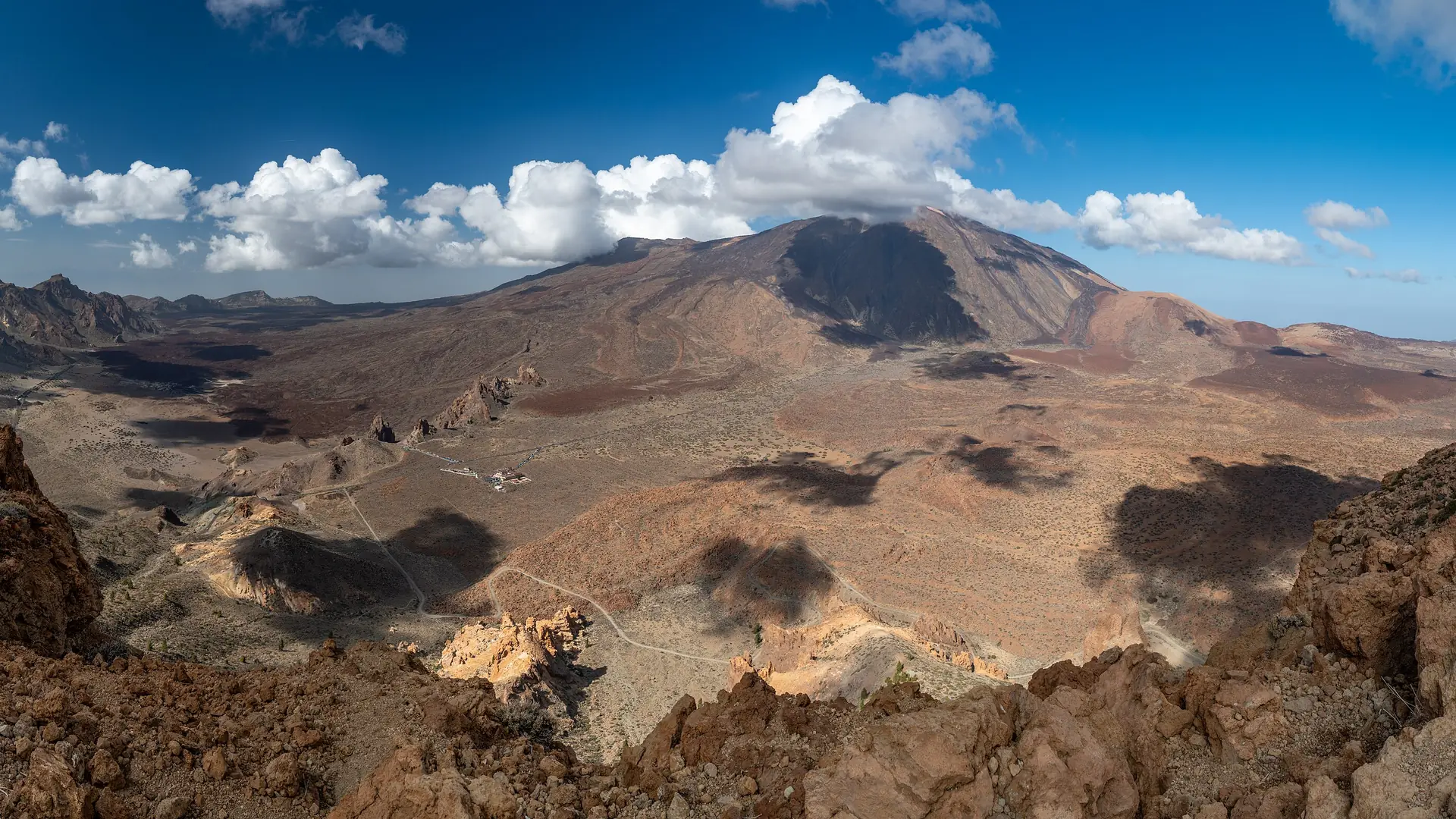
The case for driving is the rest of the island. Mount Teide sits at the centre and takes a full day from the coast, the north is a different climate from the south, and the best of the walking and the black-sand coves are on roads no bus route serves usefully.
The Mount Teide guide and the things to do in Tenerife guide both reach the same conclusion: the island is bigger than the resort strip.
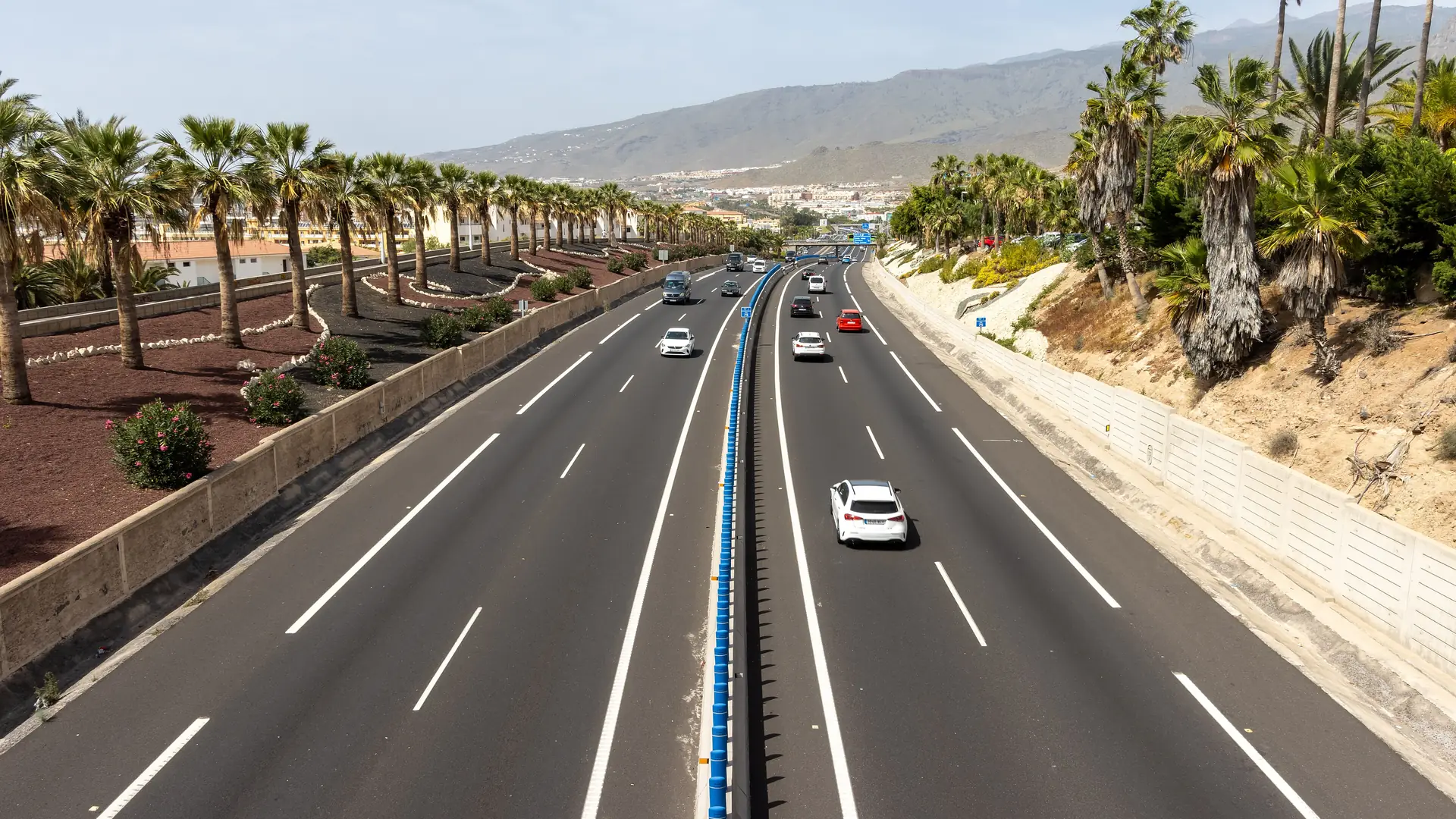
One note on roads: no source we checked describes any Tenerife-specific road toll or vignette. That is an absence of evidence rather than official confirmation, but nothing suggests you need to buy anything before driving the TF-1.
If you are renting a villa rather than a hotel room, the car stops being optional – the Tenerife villas guide explains why most of that stock sits away from a resort's front door.
FAQ – hiring a car in Tenerife
Featured image: Photograph by Mike Peel (www.mikepeel.net). / Wikimedia Commons / CC BY-SA 4.0