Most guides to Gran Canaria list five resorts and leave you to choose. The quicker route is to answer two questions first. Do you want a city with a beach, or a beach with resorts? That is the whole north-versus-south decision, and it takes Las Palmas either in or out of the running.
The second question is will you hire a car? On Gran Canaria a car-free week is realistic: Global's buses link the airport to Las Palmas, Playa del Inglés, Maspalomas, Puerto Rico and Puerto de Mogán. But the bases differ sharply in how well they work on foot, and one of them is built on a hill.
North or south: which half of the island suits you?
The line 2026 guidebooks keep coming back to is the clearest summary: the north is a city with a beach, the south is a beach with resorts. Las Palmas is a working capital with a 3km urban beach. The south coast, from Playa del Inglés round to Puerto de Mogán, is where the hotel-and-pool holiday lives.
| Base | Character | Best for | Car |
|---|---|---|---|
| Las Palmas (Las Canteras) | Capital city, urban beach | City breaks, food, culture | Not needed |
| Playa del Inglés | Busy, nightlife-led | Nightlife, LGBTQ+, budgets | Not needed |
| Maspalomas / Meloneras | Calmer, polished resort | First trips, couples, families | Optional |
| Puerto Rico | Sheltered bay, steep valley | Families, boat trips | Useful |
| Puerto de Mogán | Small harbour village | Couples, a quieter week | Useful |
The trade-off for choosing the north is weather: Las Palmas sits on the cloudier, cooler side of the island. Our Gran Canaria weather by month guide explains why, and how big the difference really is month by month.
Choose the south for reliable lounger days. Choose Las Palmas if a week of nothing but resort would bore you, and you would rather swim at lunchtime and eat tapas in a real city at night.
Las Palmas and Las Canteras: the city base
Las Palmas de Gran Canaria is the island's capital, and Playa de las Canteras is its 3km urban beach, backed by a promenade of apartments, small hotels, cafés and tapas bars. You are staying in a Spanish city that happens to have a beach, not a resort pretending to be a town.
What it is not is a quiet, exclusive strip. The promenade is busy, the beach is shared with the people who live there, and the city has everything a city has. For some visitors that is precisely the appeal; for a couple who want silence and a pool, it is the wrong booking.
A stay here makes the old town, the museums and the city beach walkable or a short bus ride apart. The things to do in Las Palmas guide sets out what fills the days, and why the water at Las Canteras stays calm enough to swim.
Playa del Inglés: nightlife and the Yumbo Centre
Playa del Inglés is Gran Canaria's liveliest late-night resort, and the Yumbo Centre is the centre of it. It is also the island's LGBTQ+ hub, with Maspalomas Pride based around the Yumbo during Pride weeks.
It suits groups, nightlife-led trips and anyone watching the budget, and it is one of the easiest bases on the island without a car, with buses, taxis and supermarkets all close at hand. If you are not here for the nights, it is still possible to sleep well, but choose a hotel with some distance from the Yumbo rather than above it – our best hotels in Playa del Inglés guide names which ones.
Maspalomas and Meloneras: the calmer end of the south
Maspalomas is a resort of bungalows, hotels and palm trees behind the dunes, and it is much quieter than Playa del Inglés next door. Meloneras, along the seafront to the west, is the more polished end, with smarter bars and restaurants and a golf course close by.
This is the default recommendation for a first visit, for couples and for families who want resort comfort rather than a party. A car is optional: many stays work on buses and walking. The dunes themselves sit on the doorstep, and our Maspalomas dunes day trip guide covers the marked-path rules that now carry fines. Most of Gran Canaria's all-inclusive resorts sit in this stretch too.
For named hotels rather than areas, see our best hotels in Maspalomas guide and our best beaches guide for how the local sand compares to the rest of the island. If you would rather start from the island's strongest five-stars regardless of area, our best hotels in Gran Canaria guide compares four.
Puerto Rico: the family bay with a catch
Puerto Rico is built around a sheltered bay with notably calm water, which is why family hotels cluster here – see our best hotels in Puerto Rico guide for which ones. Neighbouring Playa de Amadores adds a second calm beach, and the harbour is a common departure point for boat trips.
The catch is geography. Puerto Rico's valley is steep outside the beachfront, so an apartment described as "a short walk from the beach" can mean a stiff climb back up with children and shopping bags. If you book here without a car, book close to the valley floor, and check the hotel's position on a map rather than trusting the distance in the listing.
Puerto de Mogán: small, pretty and further out
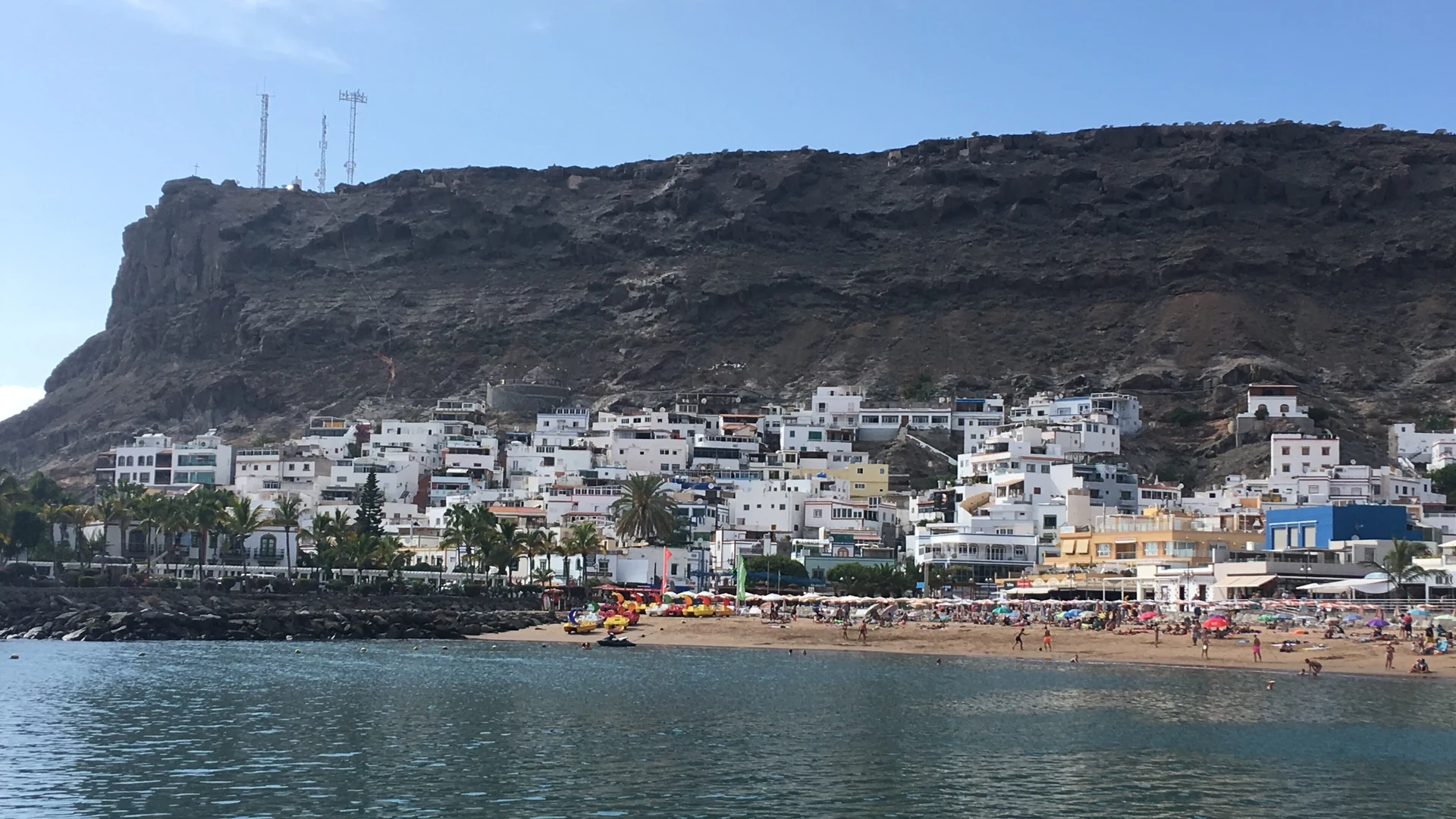
Puerto de Mogán is the harbour village nicknamed "Little Venice", with a small beach, a marina and fish restaurants. It is the island's most romantic base, and noticeably quieter than the main resort belt.
The price of that quiet is distance. It is the furthest of the five bases from the airport, and the journey time is where sources genuinely disagree: Global, the bus operator, gives 60 minutes on line 91, while a local Mogán business puts the same trip at about 90 minutes. Plan for the longer figure on arrival day and be pleasantly surprised.
Our Puerto de Mogán guide covers the Friday market, the submarine tour and getting around once you're based there. A car matters more here if you book a villa rather than a hotel – our Gran Canaria villas guide covers the private-pool clusters near Mogán and Salobre.
Can you stay in Gran Canaria without a car?
Yes, and more comfortably than on most of the Canaries. Several 2026 transport guides agree that Las Palmas, Playa del Inglés, Maspalomas and Puerto Rico all work without hiring a car, combining buses, taxis and walking. Puerto de Mogán also works if your accommodation sits near the harbour and the bus stop.
Here is what the airport run looks like from each base. Sources quote different times for the same routes depending on which stop and which traffic they assume, so these are ranges, not promises.
| Base | Airport bus | Bus fare | Bus time | Taxi |
|---|---|---|---|---|
| Las Palmas | Line 60 | ~€2.30 | – (hourly) | ~€25–35 |
| Playa del Inglés | Line 66 | ~€2.40–3.90 | ~29–60 min | ~€30–55 |
| Maspalomas (Faro) | Line 66 | ~€4.05 | ~30 min | – |
| Puerto Rico | Line 91 | ~€3–6.25 | ~37–70 min | ~€55–75 |
| Puerto de Mogán | Line 91 | ~€6.80–6.90 | ~60–90 min | – |
A taxi from the airport to Las Palmas takes about 20–30 minutes. Line 66 is the service most sources name for Playa del Inglés and the Faro de Maspalomas, but the airport arrivals board is the final word on the day. The Gran Canaria airport transfers guide weighs bus against taxi against private transfer for families and late arrivals.
Which areas should you be careful in?
Every source we checked describes Gran Canaria as very safe, with violent crime against tourists extremely rare. The realistic risk is petty theft in crowds, and it is localised rather than island-wide.
In Las Palmas, the San Lorenzo district is flagged as best avoided because of documented gang-related activity, and La Isleta is noted for elevated petty crime, as are Jinámar in Telde and Vecindario in Santa Lucía. None of those is one of the five tourist bases above. Santa Catalina Park in Las Palmas is best avoided late at night.
In the south, the warnings are about opportunism rather than danger: pickpocketing in the busy nightlife zones around the Yumbo and Kasbah centres in Playa del Inglés, and on crowded beaches generally. Zipped bags, the hotel safe and ordinary late-night sense cover it.
So which base should you book?
Pick the line that describes your trip, then book in that area and nowhere else.
- First visit, or a couple wanting comfort: Maspalomas or Meloneras – resort polish, the dunes on foot, car optional
- Nightlife, Pride, or a tight budget: Playa del Inglés – stay near the Yumbo if the nights are the point, a few streets away if not
- Young children and calm water: Puerto Rico – but on the valley floor, not up the hillside
- Romance and a slower pace: Puerto de Mogán – accept the longer airport run
- City, food and culture with a beach: Las Palmas – accept more cloud than the south
- No car at all: Playa del Inglés, Maspalomas or Las Palmas, which are the easiest to get around without one
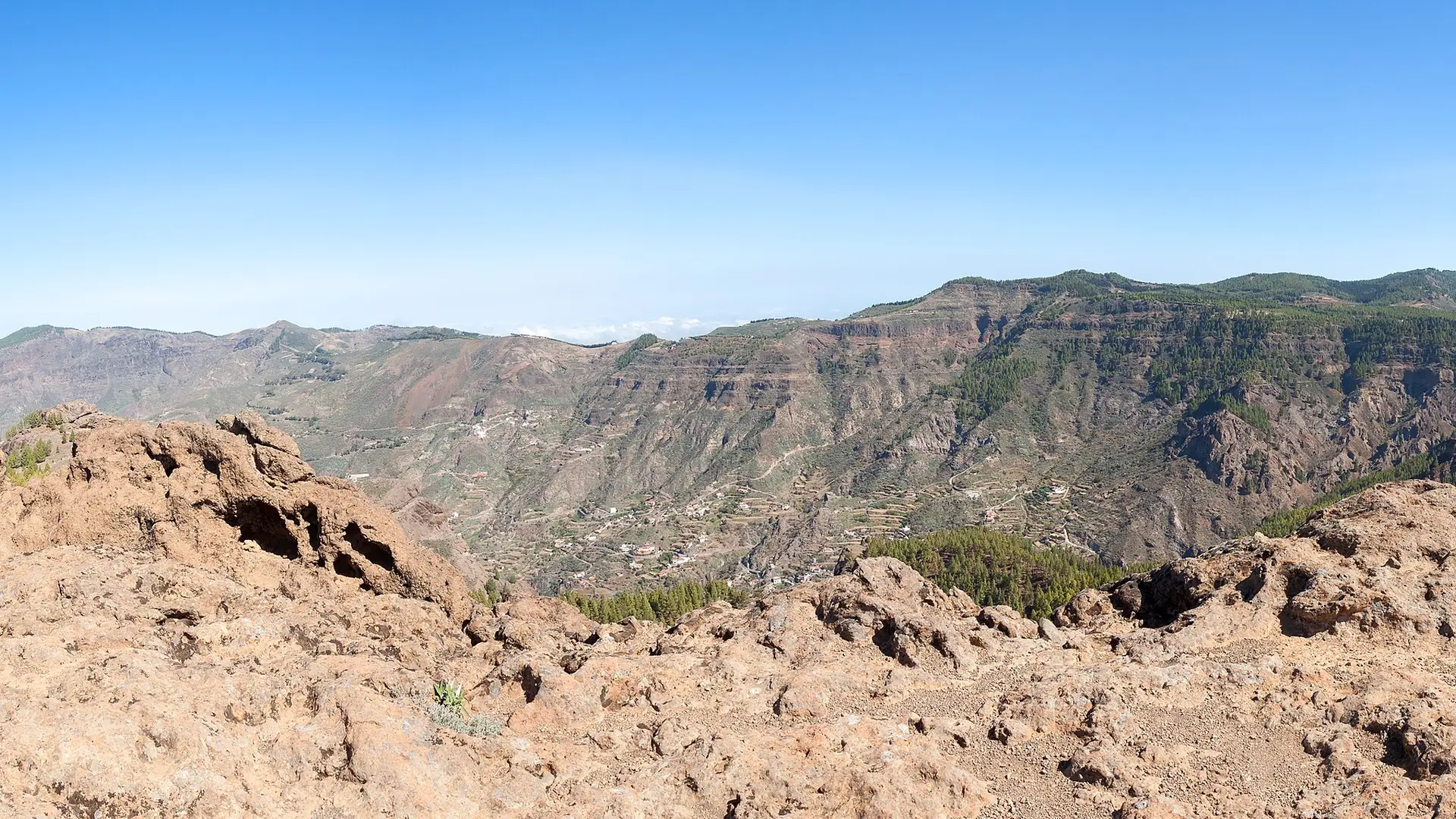
If Roque Nublo is on the list, work out the mountain logistics before you choose a base, because the old roadside car park has closed. Our Roque Nublo hike guide explains the booking and parking system that replaced it.
Once the base is settled, our things to do in Gran Canaria guide maps the island's attractions against where each one is, and which now need booking ahead.
FAQ – where to stay in Gran Canaria
Featured image: Cardoso / Wikimedia Commons / CC BY-SA 4.0