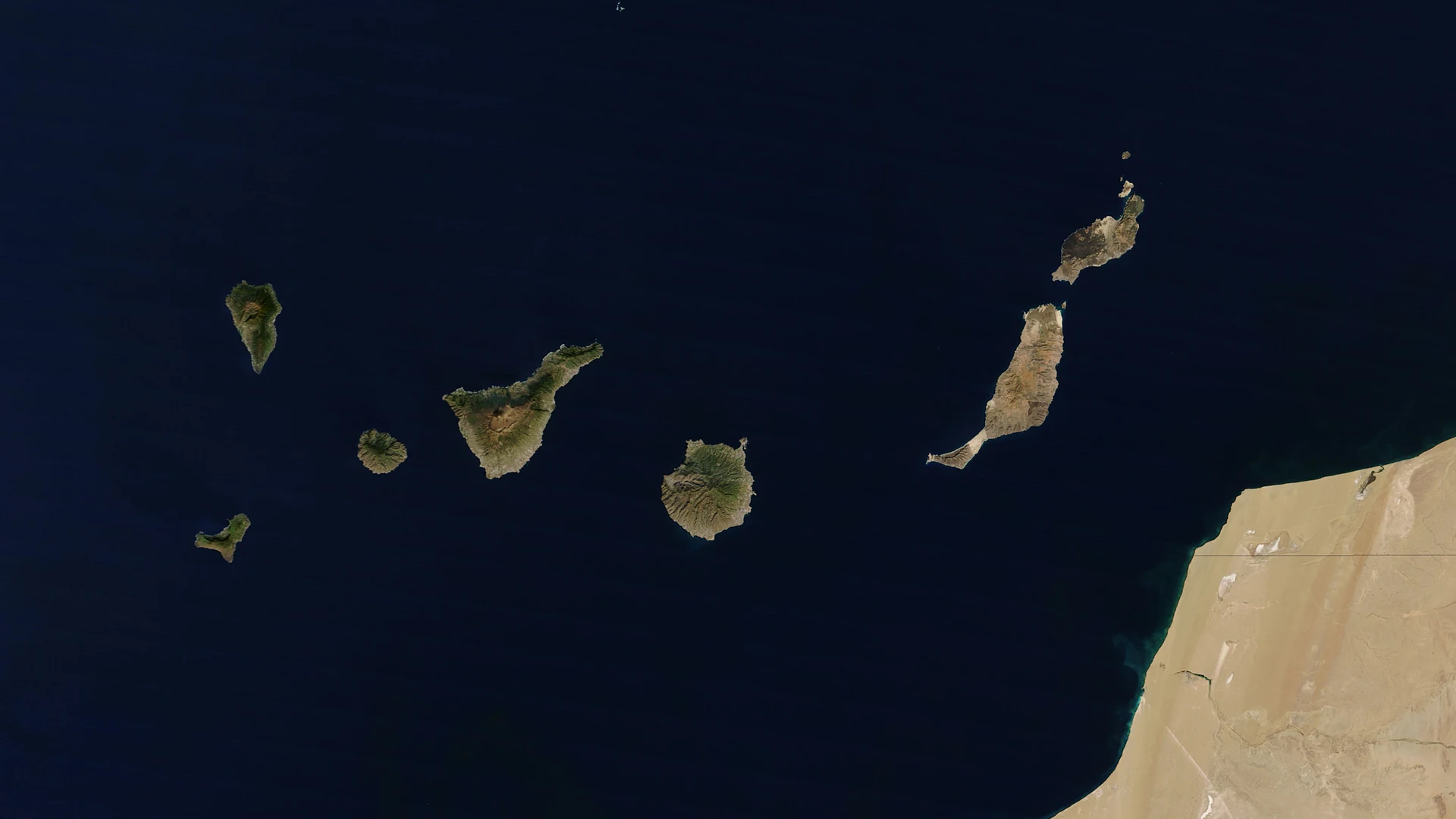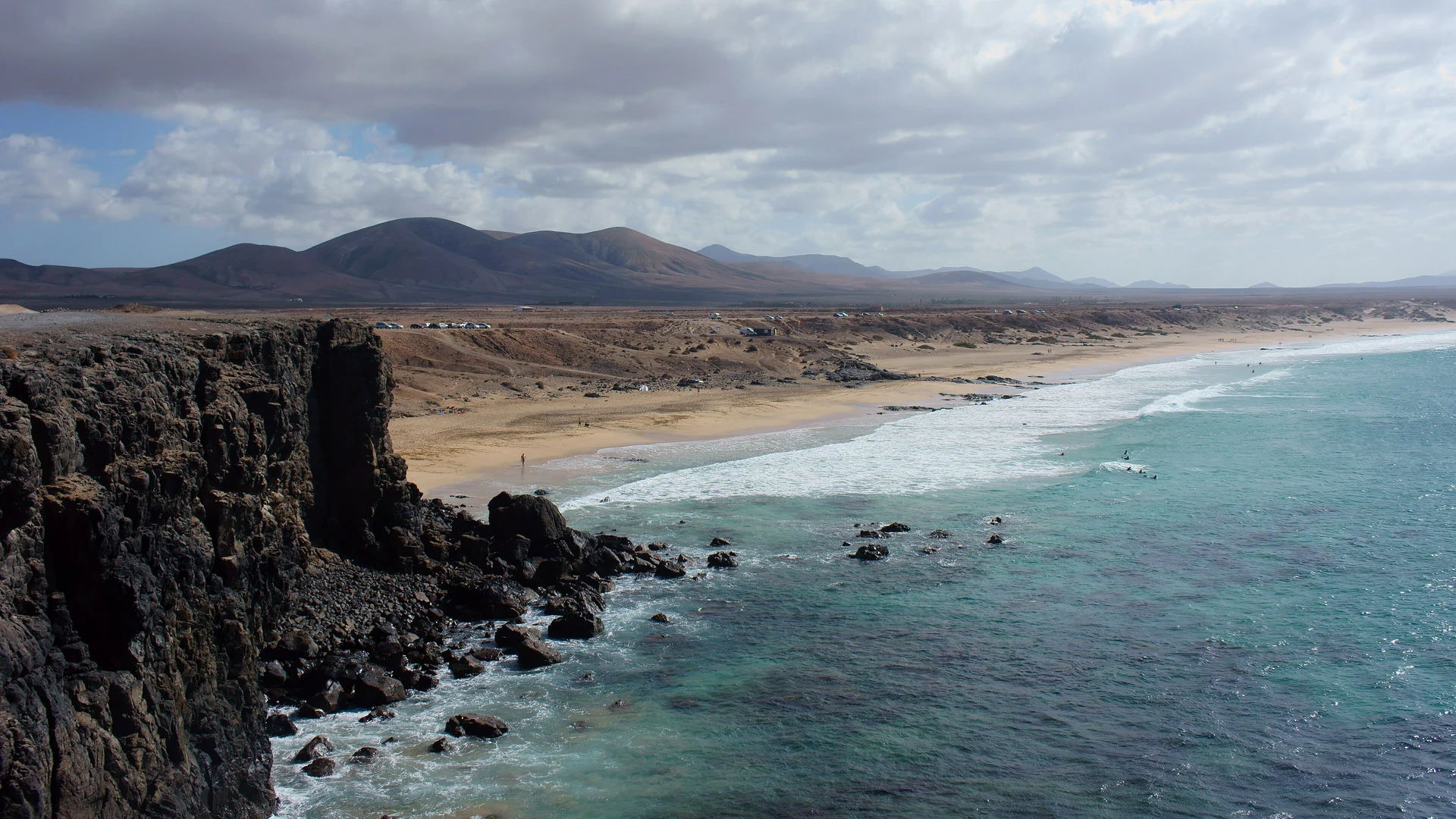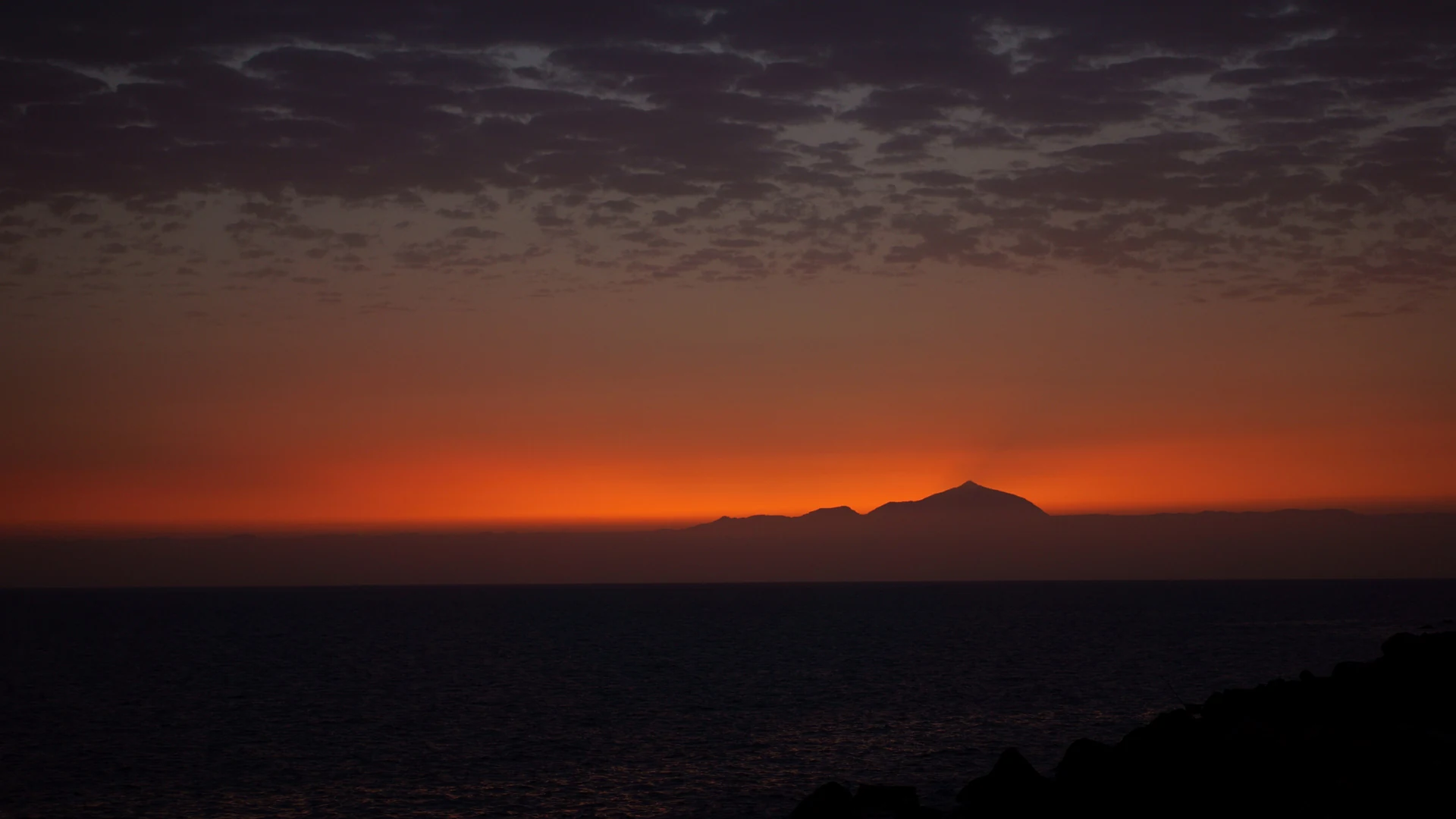
The weather will not settle it: in winter the two southern coasts are almost identical. Airport station averages give Tenerife South 22°C and 15mm of rain in January, against 21.1°C and 25mm at Gran Canaria's airport. So choose on everything else. Pick Tenerife for Teide, Spain's highest peak at 3,715m, Siam Park, Loro Parque and serious walking. Pick Gran Canaria for a long natural beach, a capital you can stay in and a holiday that works without a car.
Tenerife vs Gran Canaria at a glance
| Tenerife | Gran Canaria | Edge | |
|---|---|---|---|
| Winter sun, south | 22°C, 15mm in January | 21°C, 25mm in January | Level |
| Summer heat, south | ~29°C in August | ~28°C in August | Level |
| Beaches | Black by nature, gold imported | ~6km of golden sand and dunes | Gran Canaria |
| Mountains and hiking | Teide, Masca, Anaga | Roque Nublo, Pico de las Nieves | Tenerife |
| Big family attractions | Siam Park, Loro Parque | Aqualand, Palmitos Park | Tenerife |
| Whales and dolphins | Resident pilot whales | Resident, peak Apr–Oct | Level |
| Nightlife | Veronicas strip | Yumbo Centre | Level, different scenes |
| Capital city | Santa Cruz, carnival | Las Palmas, old town and beach | Gran Canaria |
| Holiday without a car | Coast yes, Teide no | Main bases work car-free | Gran Canaria |
| Arrival | Two airports; South serves the resorts | One airport, central | Gran Canaria |
Gran Canaria takes four rows to Tenerife's two, and the weather rows are level. The decision is whether Teide and the parks matter more to you than beaches and an easy week.
Is Tenerife or Gran Canaria better for winter sun?
Neither, in the south: the two resort coasts get almost the same winter. On Climates to Travel's station averages for 1991–2020, checked 23 September 2026, Tenerife South airport records about 85mm of rain from November to March, against about 100mm at Gran Canaria's airport, and Tenerife's is marginally the warmer of the two.
| Station average | Tenerife South airport | Gran Canaria airport |
|---|---|---|
| January high / low | 22°C / 15°C | 21.1°C / 15.2°C |
| January rain | 15mm | 25mm |
| January sunshine | 6.5h a day | 6h a day |
| August high | 28.6°C | 27.9°C |
| Sea, February / September | 19 / 24°C | 18.8 / 23.5°C |
Two caveats. The Gran Canaria station is the airport on the east coast near Ingenio, not the Maspalomas resort area, and the source rounds rainfall to the nearest 5mm. A one-degree gap on figures like these is a draw.
The real weather divide runs through Tenerife itself. The station at La Laguna, a hill town at about 540m behind Santa Cruz, averages 16.3°C and 80mm of rain in January on the same source. That is the rain shadow our where to stay in Tenerife guide explains, and the reason nearly every resort on the island sits in the south.
Which island has the better beaches?
Gran Canaria, if you mean long natural sand. Tenerife is a volcano, so its natural beaches are black. Most of the pale gold ones in the south are engineered, with sand dredged from the seabed or shipped from the Sahara and held by breakwaters. Playa de las Teresitas near Santa Cruz was built with Saharan sand in 1973.
Gran Canaria's signature is natural: Maspalomas and Playa del Inglés form about 6km of golden sand, backed by the protected Maspalomas dunes. In Las Palmas, Playa de las Canteras runs for more than 3km through the city, with a reef that keeps its water calm.
Which is better for hiking and volcanic landscape?
Tenerife, on scale. Teide is Spain's highest point at 3,715m, in a national park that has been a UNESCO World Heritage Site since 2007. The cable car climbs to 3,555m in about eight minutes, and the summit crater needs a separate permit the cable car ticket does not include; our Mount Teide guide explains both bookings.
Tenerife adds two different walks. The Masca ravine has needed an advance booking since 2025, and the laurel forest of the Anaga massif was declared a UNESCO Biosphere Reserve in 2015.
Gran Canaria's interior is smaller and still dramatic. Roque Nublo's main trail has needed a free timed reservation since 3 February 2025, and Pico de las Nieves, the island's highest summit, tops out at about 1,950m. The cultural landscape of Risco Caído and the Sacred Mountains of Gran Canaria joined the UNESCO World Heritage list in July 2019.
Which is better for a family holiday?
Tenerife for older children who want the big parks, Gran Canaria for toddlers who want calm water. Tenerife's headliners, Siam Park and Loro Parque, are run by the same group at opposite ends of the island, and most of Siam Park's biggest slides need a height of 125cm, one of the limits gathered in our Tenerife with kids guide.
Gran Canaria's south has calm, breakwater-sheltered bays such as Playa de Amadores, plus Aqualand Maspalomas, the island's largest water park with more than 40 slides, and Palmitos Park. For a grey day, Poema del Mar in Las Palmas holds around 350 species across 35 ecosystems.
Nightlife and resort style: which suits you?
Level, because the scenes are different rather than better. Tenerife's nightlife centres on Veronicas in Playa de las Américas, roughly 300 metres of clubs and bars. Costa Adeje next door is the upmarket end, and Los Cristianos the older, flatter ferry town.
Gran Canaria's centre is the Yumbo Centre in Playa del Inglés, the island's LGBTQ+ hub and the base for Maspalomas Pride. Maspalomas and Meloneras are the calmer end, Puerto Rico the family bay and Puerto de Mogán the quiet harbour. Our where to stay in Gran Canaria guide compares those areas one by one.
Santa Cruz or Las Palmas: which capital is worth a day?
Las Palmas, and it is worth more than a day. Its old quarter, Vegueta, dates from the late 15th century, with the Catedral de Santa Ana, begun in 1497, and the Casa de Colón a few streets apart. With Las Canteras across town, it is a city you can stay in, not just visit.
Santa Cruz de Tenerife stages one of the largest carnivals in the world, usually in February, and its tram runs to La Laguna, whose old town is UNESCO-listed. It sits about 50km from Tenerife South airport, so from the southern resorts it is a day trip rather than a base.
Which island is easier to get to and around?
Gran Canaria. Its one airport, LPA, sits roughly halfway between Las Palmas and Maspalomas on the toll-free GC-1, about 32km from Maspalomas and 25km from Las Palmas. Las Palmas, Playa del Inglés, Maspalomas and Puerto Rico all work without a hire car, as our where-to-stay guide sets out.
Tenerife has two airports, so check your booking. Tenerife South (TFS) takes almost all UK and Irish charter and low-cost flights, about 20 minutes from Costa Adeje; Tenerife North (TFN) handles mostly inter-island flights. TITSA buses reach almost every town, but Teide and Anaga are a hire-car day.
Choose Tenerife if…
Teide is the reason you are going, your children are tall enough for Siam Park's big slides, or you want serious walking in Masca or Anaga. Stay in the south, where the dry weather is, and hire a car for at least the Teide day.
Choose Gran Canaria if…
You want a long natural beach with the dunes on foot, you would rather not hire a car, or you want a real city with a beach for part of the week. Our things to do in Gran Canaria guide maps the sights and which need booking.
If neither fits, because you want somewhere quieter, windier or greener, our guide to choosing a Canary Island covers the other five.
FAQ – Tenerife or Gran Canaria
Featured image: Jarek Prokop / Wikimedia Commons / CC BY 3.0