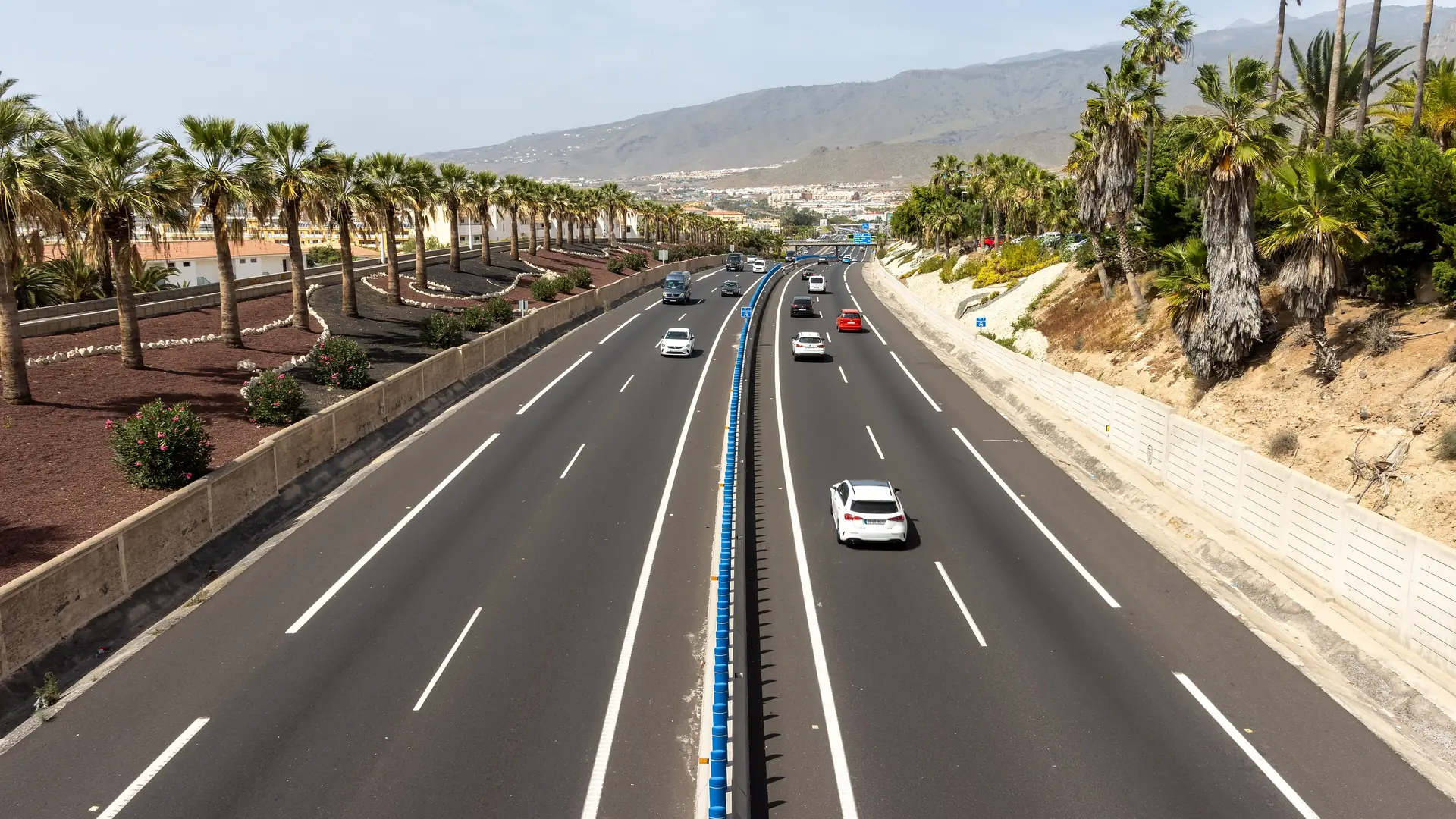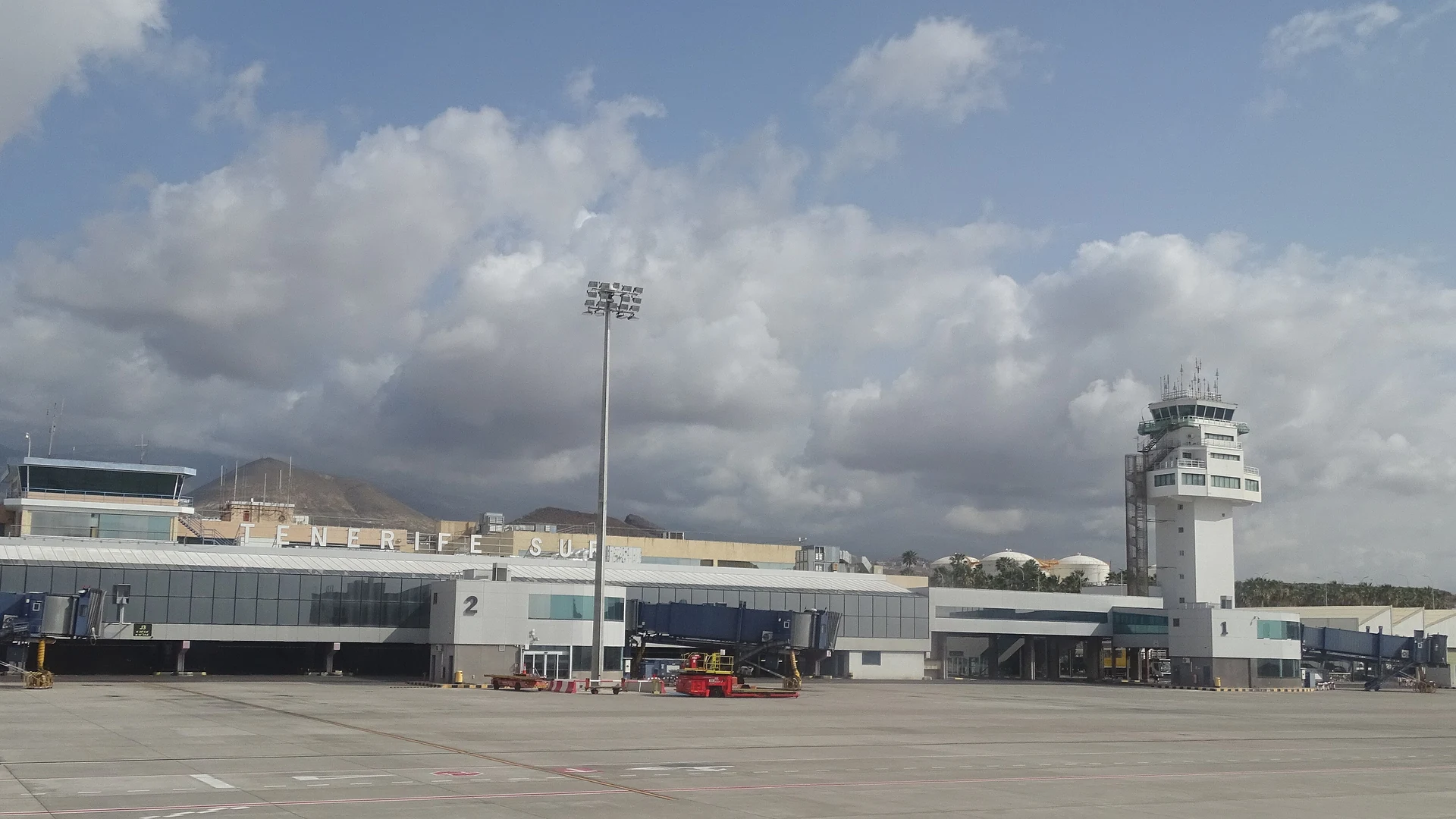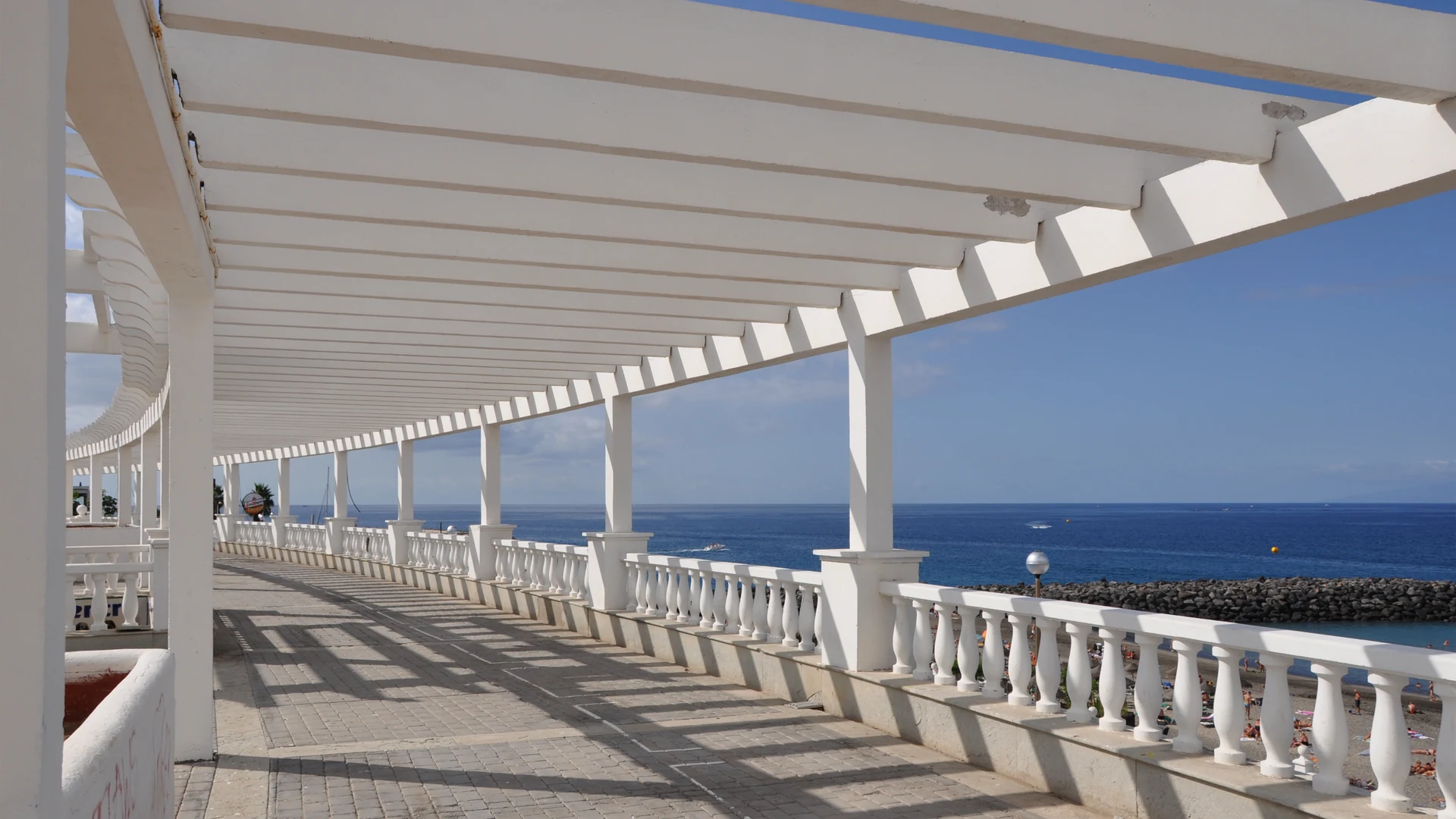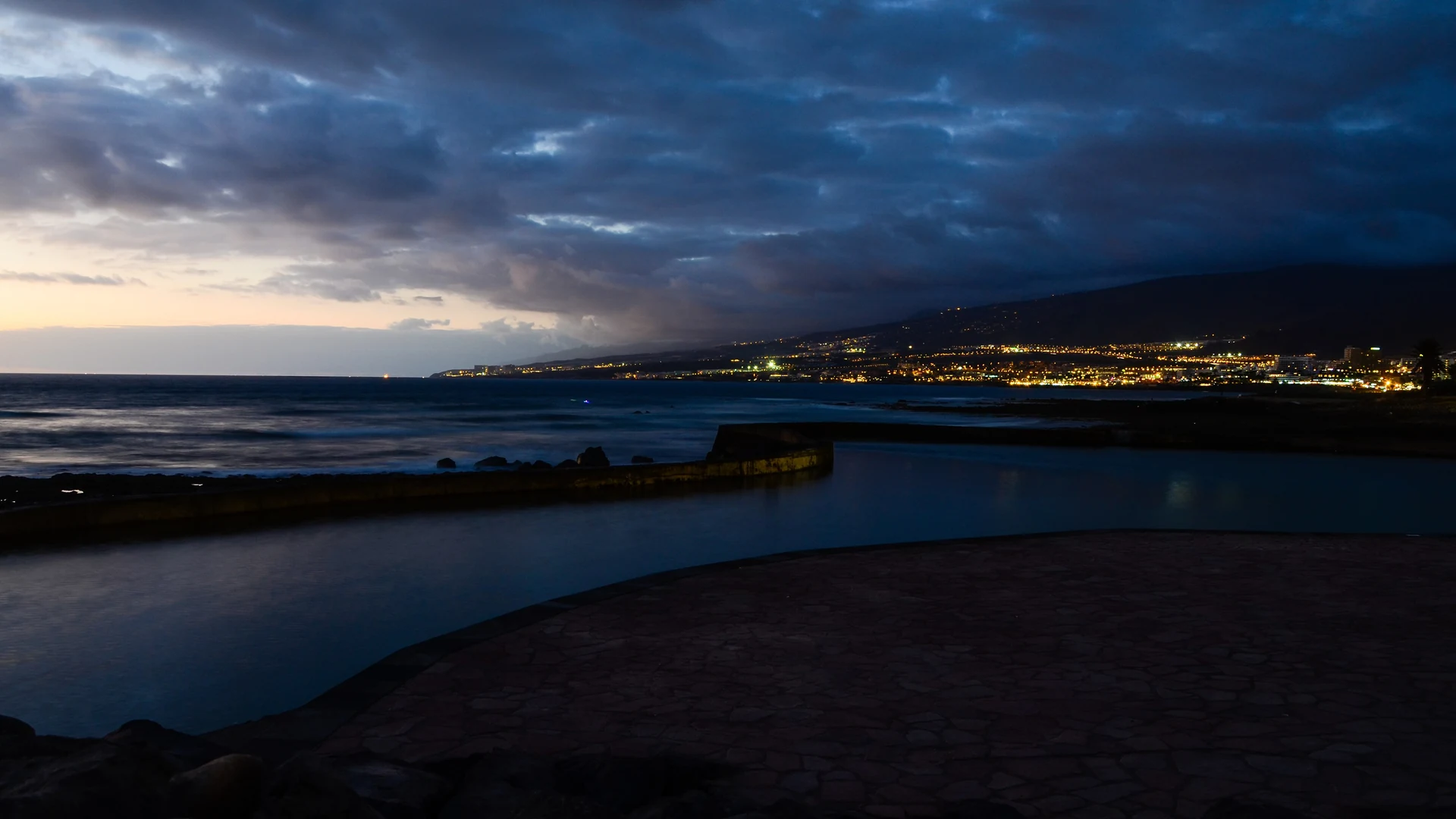
The single decision that shapes a Tenerife holiday is which coast you book, and the two are not variations on a theme. Costa Adeje sees over 300 sunny days a year and about 22°C even in January. In the same month, Puerto de la Cruz in the north averages roughly 16–20°C by day and 11–14°C overnight, depending on the dataset, and is often under cloud.
That gap is not luck or marketing. It is a rain shadow: the central massif around Teide intercepts the moist Atlantic trade winds before they reach the southern coast. The raw temperature difference is only a few degrees – it is the sunshine and cloud cover that diverge, and that is what you feel. The Tenerife weather by month guide has the full year-round figures for both coasts.
Why the south is sunnier, mechanically
Trade winds arrive from the north-east carrying Atlantic moisture. They hit a 3,715m volcano and are forced upwards, dumping that moisture on the northern slopes as cloud and rain. What crosses to the south is dry air.
So the north is green, cooler and frequently overcast, and the south is arid and clear-skied. Once you know that, the resort map stops looking arbitrary: nearly every large hotel on the island sits along the southern strip because that is where the reliable weather is.
The temperature gap is only a few degrees, and the exact figure depends on the dataset and the station. The direction is not in doubt; the precise figure is, and the perceived difference is far bigger than the thermometer suggests because it is really about hours of sun.
The southern resorts, compared
All four southern zones sit within about a quarter of an hour of each other, so this is a choice of character rather than of logistics.
| Area | Character | Suits | Drive from TFS |
|---|---|---|---|
| Costa Adeje | Upmarket, newer builds | Couples, quieter families | ~20–25 min |
| Playa Fañabé | Beachfront, all-inclusive | Families with young children | ~20–25 min |
| Playa de las Américas | Busy, nightlife-led | Groups, under-30s | ~15–20 min |
| Los Cristianos | Older resort, ferry port | Walkable base, boat trips | ~15–22 min |
The distances between them are trivial: Costa Adeje to Los Cristianos is about 11km and 14 minutes, Los Cristianos to Playa de las Américas about 3km and 8 minutes, and Costa Adeje to Playa de las Américas about 10km and 12 minutes. Airport drive times come from our own Tenerife airport transfer guide, which prices the bus, taxi and private options for each.
Costa Adeje, and the Fañabé distinction
Costa Adeje is the island's upmarket end, and its Duque area is the upscale core of that. It is newer than the resorts to its south, lower-rise in places, and it holds a real cluster of adults-only hotels rather than one or two token ones – the adults-only hotels guide compares the age policies, since 16+ and 18+ are both common here.
Playa Fañabé sits inside Costa Adeje and reads differently: closer to the beach, heavily weighted towards family all-inclusive stock, and directly adjacent to Playa de las Américas. That adjacency is the thing to check on a map before booking – Fañabé is family-oriented, and the party strip starts a short walk away. The family hotels guide covers the kids'-club options on this stretch.
For the actual hotels rather than the areas, the best hotels in Tenerife guide names the general pick across the whole south, and the Costa Adeje hotels guide goes deeper on the luxury tier specifically in this zone.
Playa de las Américas, Los Cristianos and the Veronicas question
Playa de las Américas is the nightlife resort, and Veronicas Strip is its centre: roughly 300 metres of clubs and bars running into the early hours. If that is what you came for, staying inside walking distance of it is the whole point.
If it is not, book away from it, and know the honest picture. In July 2025, local police closed two venues on the strip for operating without the required licences and for serious safety, hygiene and public-order breaches, as part of an operation prompted by complaints about disturbances in the area. Individual TripAdvisor reviews also report drink spiking and theft.
Not every evening on this coast has to mean the strip. Our best dinner shows in Tenerife guide covers a family-friendly medieval banquet and an over-16s cabaret that sit well outside the Veronicas question entirely.
Los Cristianos is the older, flatter, more Spanish-feeling of the two, built around a working ferry port. It suits anyone who wants to walk everywhere and anyone planning boat days, since it is one of the ports the whale watching trips leave from.
When the north is the right answer
Puerto de la Cruz and the north are not a downgrade – they are a different holiday. You trade sunshine hours for greenery, cooler walking weather, a town that existed before tourism, and generally lower prices.
Stay north if the trip is about landscape, hiking and towns rather than a lounger, or if you are visiting in high summer when the south is at its hottest and busiest. It is also the practical base for Loro Parque, which sits in Puerto de la Cruz itself.
Stay south if you are travelling in winter, bringing small children, or want a beach day you can rely on. The things to do in Tenerife guide sets out how far the island's main attractions sit from either base, and the best beaches in Tenerife guide explains why the sand changes colour depending on which coast you wake up on.
If the dates themselves are still open, the best time to visit Tenerife guide works through which months suit which trip. And if you have not yet settled on the island, our Tenerife vs Gran Canaria comparison sets the two side by side.
FAQ – choosing where to stay in Tenerife
The south for reliable sun, the north for landscape and lower prices. Costa Adeje in the south sees over 300 sunny days a year and around 22°C even in January, while Puerto de la Cruz in the north averages roughly 16–20°C by day and 11–14°C overnight in the same month, depending on the dataset, frequently under cloud. The temperature gap between the coasts is only a few degrees; the real difference is in sunshine hours and cloud.
Because of a rain-shadow effect created by the island's central volcanic massif. Moist Atlantic trade winds arrive from the north-east and are forced upwards by the mountains around Teide, which is 3,715m high, releasing their moisture as cloud and rain on the northern slopes. The air that reaches the southern coast is dry, which is why the south is arid and clear-skied while the north is green and often overcast.
Playa Fañabé, within Costa Adeje, is the most family-weighted southern zone: it sits close to the beach and holds a large amount of all-inclusive family stock. Costa Adeje more broadly is the quieter, more upmarket end of the southern strip. Note that Fañabé sits directly adjacent to Playa de las Américas, which is the island's nightlife resort, so check the exact position on a map before booking.
It is a concentrated late-night nightlife district about 300 metres long in Playa de las Américas, and it warrants the caution any such area does. In July 2025, local police closed two venues on the strip for operating without the required licences and for serious safety, hygiene and public-order breaches, following complaints about disturbances in the area. Individual TripAdvisor reviews also report drink spiking and theft. Staying a few streets back from the strip avoids most of the issue.
Very close. Costa Adeje to Los Cristianos is about 11km and around 14 minutes by car, Los Cristianos to Playa de las Américas about 3km and 8 minutes, and Costa Adeje to Playa de las Américas about 10km and 12 minutes. All of them sit within roughly 15 to 25 minutes of Tenerife South airport, so the choice between them is about the character of the resort rather than about logistics.
Featured image: Tuxyso / Wikimedia Commons / CC BY-SA 3.0
Some links on this page are affiliate links – we may earn a commission at no extra cost to you. Details