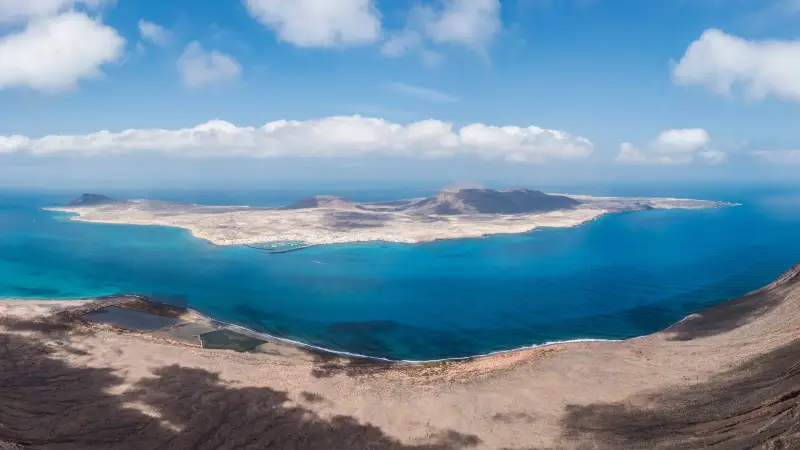
Lanzarote has three kinds of beach, and the wind decides which one you want. Sheltered resort beaches such as Playa Dorada, Flamingo and Playa Chica are calm enough for small children. The white-sand coves of Papagayo and La Graciosa take a dirt track, a boat or a ferry. The black-sand and surf beaches, Famara and El Golfo, are for looking at. The south and east have the calm water; the north-west takes the waves.
Lanzarote's beaches compared
Sand and sea conditions below come from Turismo Lanzarote's beach sheets and Hello Canary Islands, the official Canary Islands tourism site.
| Beach | Area | Sand | Sea | Good for |
|---|---|---|---|---|
| Playa Dorada | Playa Blanca | Fine white | Calm | Young children |
| Playa Flamingo | Playa Blanca | White | Calm | Families, step-free access |
| Papagayo | Los Ajaches | Fine white | Calm, sheltered | Snorkelling, scenery |
| Playa Grande | Puerto del Carmen | Golden | Calm | Town beach, lifeguards |
| Playa Chica | Puerto del Carmen | Golden | Calm | Snorkelling, diving |
| Los Pocillos | Puerto del Carmen | Golden | Calm, breezy | Long walks |
| Las Cucharas | Costa Teguise | Fine golden | Calm, breezy | Windsurfing |
| El Jablillo | Costa Teguise | Golden | Calm | Families |
| Caletón Blanco | Órzola, north | White | Calm | A quiet day |
| La Francesa | La Graciosa | Fine white | Almost always calm | Swimming |
| Las Conchas | La Graciosa | Fine white | Strong waves | Looking, not swimming |
| Famara | North-west | Pale golden | Strong waves | Surfing, walks |
| El Paso | West coast, Yaiza | Black | Strong waves | Scenery |
Which part of Lanzarote has the best beaches?
The south has Lanzarote's best beaches for swimming: Playa Blanca's sheltered town beaches and, beyond them, the white coves of Papagayo, where Turismo Lanzarote records calm water and no wind. The east-coast resorts, Puerto del Carmen and Costa Teguise, also have calm water but more breeze. The north-west, around Famara, has the biggest and wildest beach on the island, with the waves to match.
If you are choosing a base around the beach, our best hotels in Lanzarote guide compares the three resorts.
Sheltered resort beaches
Playa Blanca: Playa Dorada and Flamingo
Playa Dorada is a small artificial bay about 300 metres long, with fine white sand, calm water, showers, parking and sunbed hire, according to Hello Canary Islands, which also warns that it is busy in summer, so arrive early.
Playa Flamingo, at the western end of town, is about 200 metres of white sand with calm water, sunbeds, showers and an adapted access for disabled visitors, with shops and cafés along the promenade behind it. Playa Dorada and the small town beach had short bathing closures in 2026; our Playa Blanca hotels guide lists the dates and which hotels sit nearest the sand.
Puerto del Carmen: Playa Grande, Playa Chica and Los Pocillos
Playa Grande is the resort's main beach, about 1,190 metres of golden sand with calm water, and Turismo Lanzarote lists lifeguards among its services. Playa Chica is the small sheltered cove where most beginners take their first dive; our Lanzarote scuba diving guide covers it.
Los Pocillos runs about 1,130 metres further east, with golden sand, calm water but more wind, and adapted access. It continues into Matagorda towards the airport. Our Puerto del Carmen hotels guide shows which hotels sit along it.
Costa Teguise: Las Cucharas, El Jablillo and Bastián
Las Cucharas is Costa Teguise's main beach, about 640 metres of fine golden sand that Turismo Lanzarote calls one of the windsurfers' favourites, with lifeguards and a seafront promenade. The water is calm, but the wind is part of the deal.
El Jablillo is the smaller, family beach, about 150 metres of golden sand with calm water, and Playa Bastián, about 375 metres of fine golden sand, completes the resort's three main beaches. Our Costa Teguise hotels guide explains which hotel opens onto which.
Papagayo and the wild south
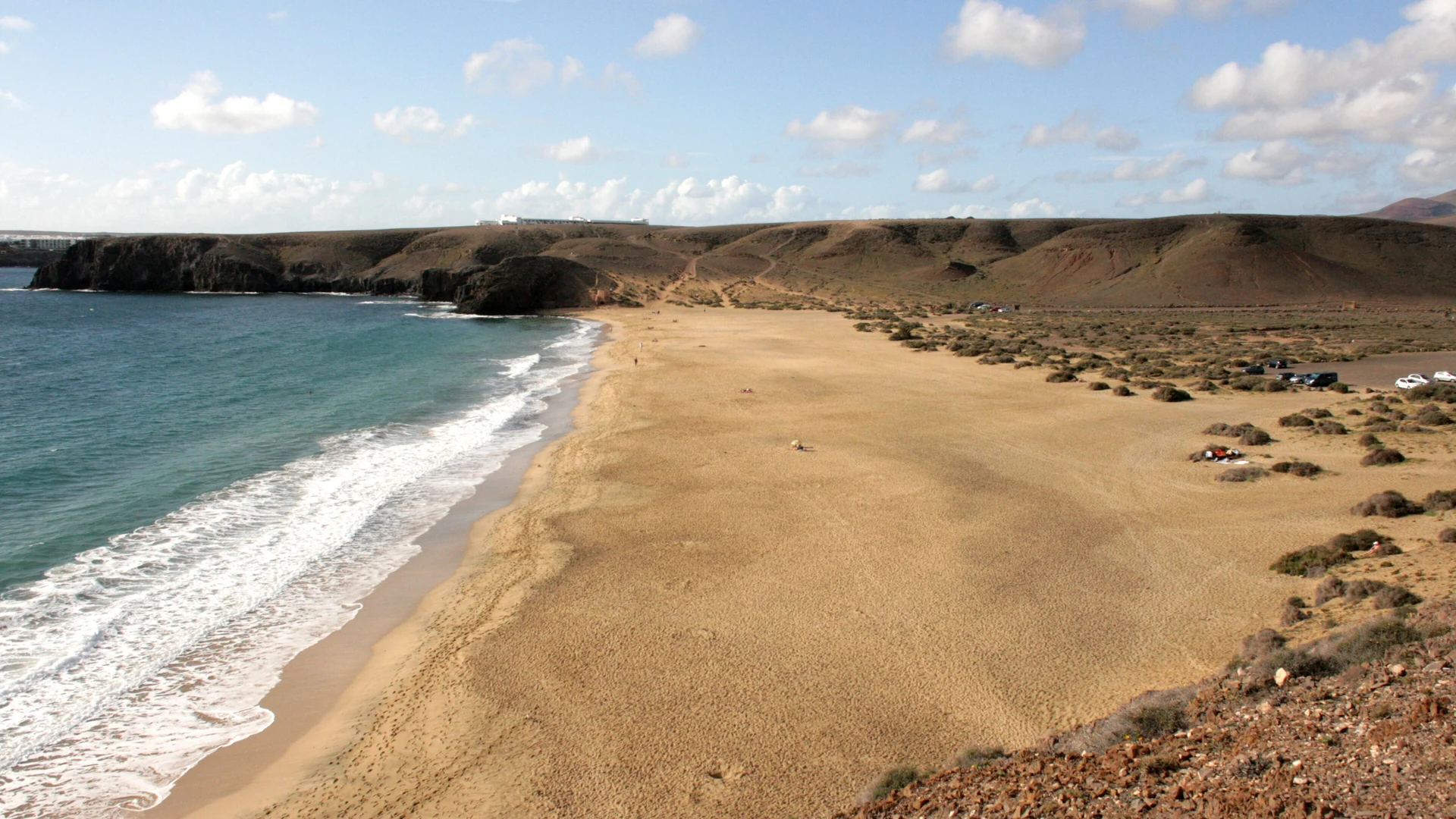
Playa de Papagayo is a 120-metre white-sand cove in the Los Ajaches Natural Monument, described by Hello Canary Islands as sheltered from the wind, with water that stays still all day and is good for snorkelling. It is one of several coves along this protected coast.
Getting there is the catch. You drive a dirt track from Playa Blanca, and non-residents pay €3 per vehicle at the barrier, by card only, with the car park open 09:00–19:00, according to Living Lanzarote in August 2026. Hello Canary Islands notes a small beach bar on the hillside, but bring water and shade.
There are no lifeguards at Papagayo, according to Hello Canary Islands. If you would rather not drive the track, the coves are a boat trip away; our Lanzarote boat trip guide covers the catamarans that anchor off them.
La Graciosa: the whitest sand
The island across the strait from Lanzarote's north tip has the whitest beaches of all. Playa de la Francesa is a 435-metre horseshoe of fine white sand facing south, with water that is almost always calm, about 2 km from Caleta de Sebo along a coastal dirt track, according to Hello Canary Islands. It is unsupervised.
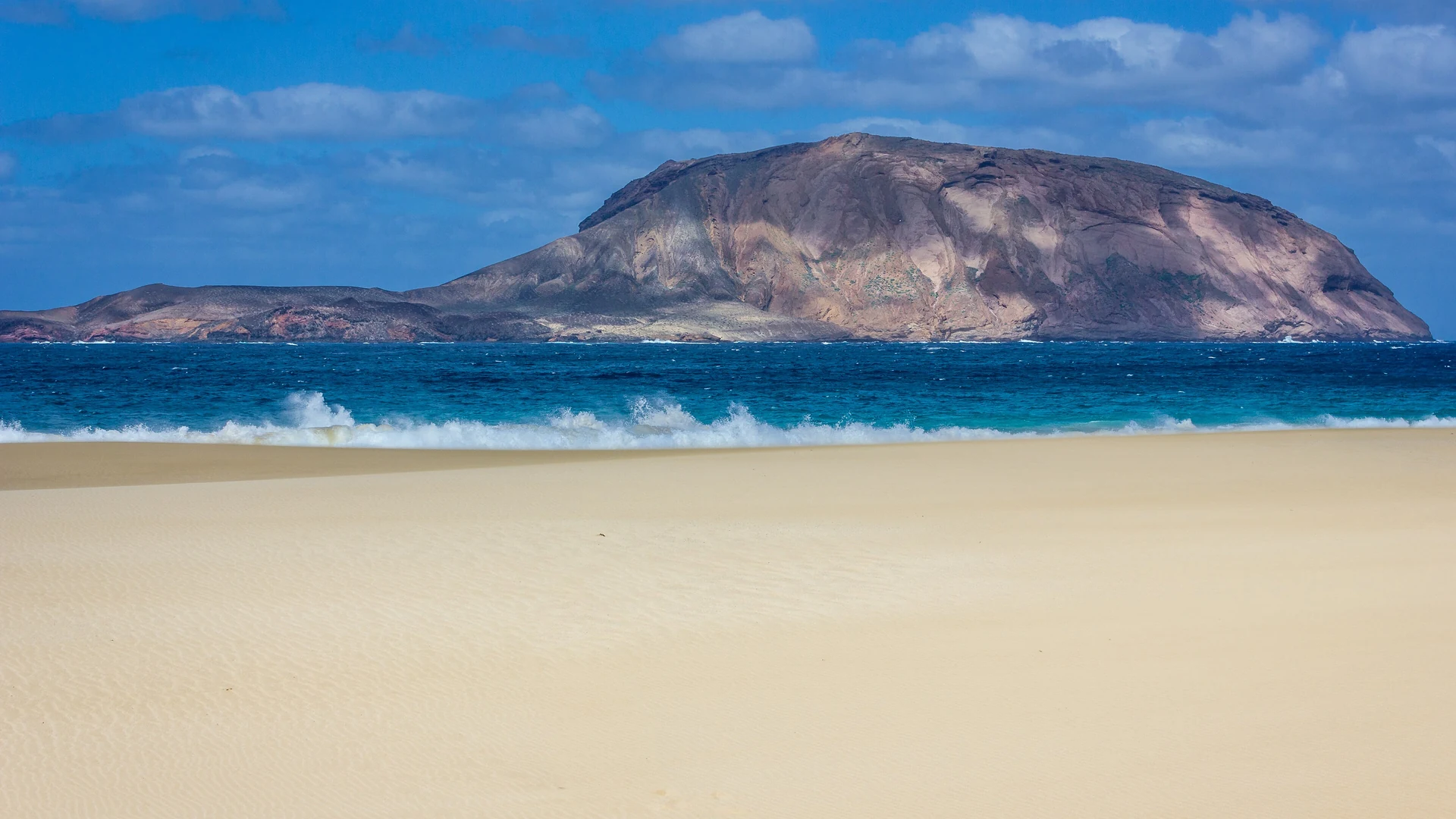
Playa de las Conchas, on the north coast, is the more dramatic of the two: fine white sand, but Turismo Lanzarote rates its waves as strong and marks it as not for families, with no services at all. Our La Graciosa guide covers the ferry and how to reach both beaches.
Black sand and surf: Famara and the west
Famara is a beach of pale golden sand more than 5 km long, inside the Chinijo Archipelago Natural Park between the village of La Caleta de Famara and the Famara cliffs. At low tide the wet sand mirrors the cliffs, and Hello Canary Islands calls it a sports beach for surfing, bodyboarding, windsurfing and kitesurfing because of the swell and constant wind.
Turismo Lanzarote rates Famara's waves as strong, and lists lifeguards and danger signage among its services. Playa del Risco, under the same cliffs to the north, is golden sand with moderate waves, no public transport and few visitors; walkers reach it by a steep path down from the cliff, so allow for the climb back.
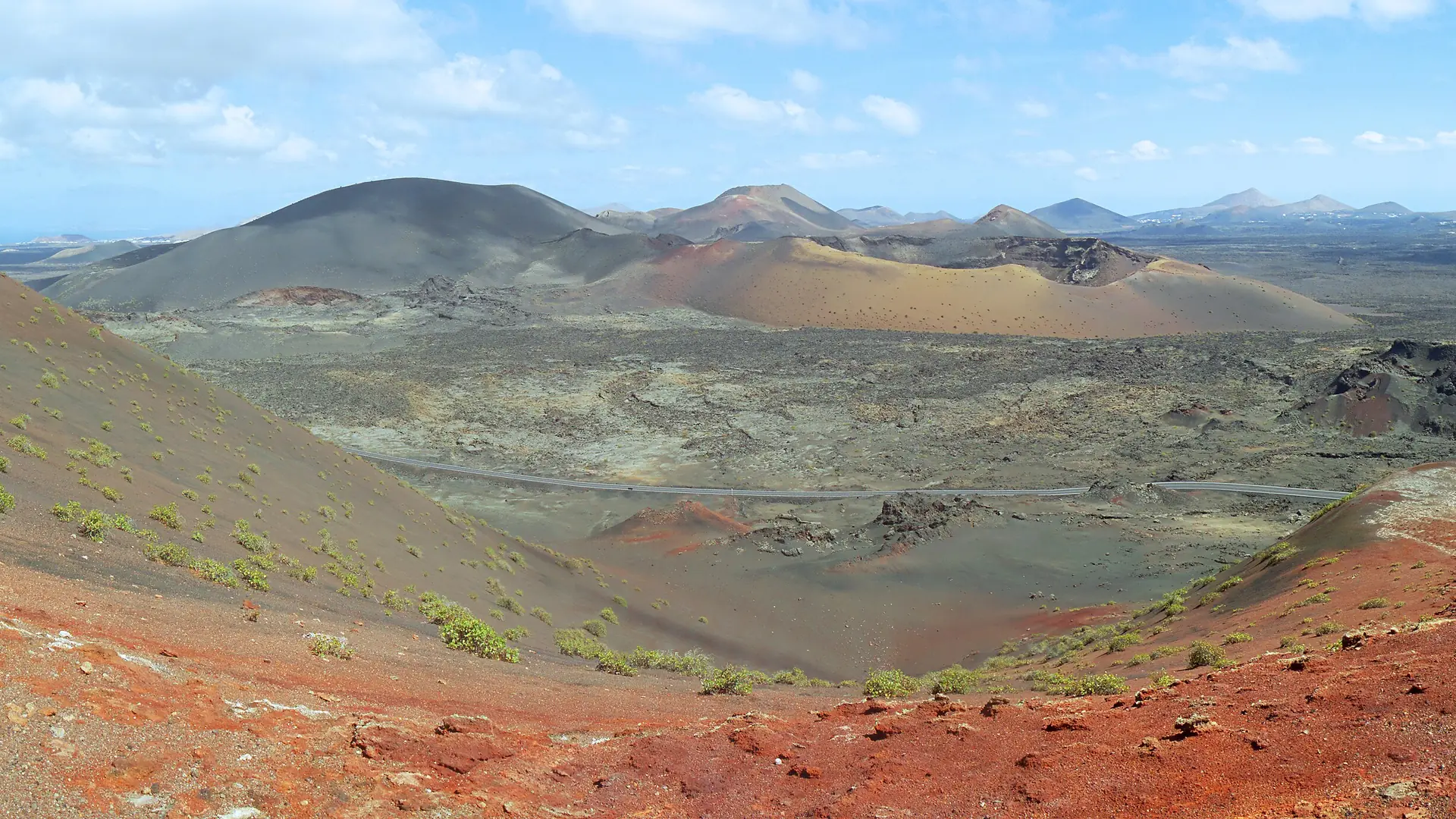
The west coast is black volcanic sand. El Golfo has a black beach about 100 metres from its green lagoon, and El Paso, also in Yaiza, is black sand with strong waves, according to Turismo Lanzarote. Treat both as places to look, walk and photograph.
Quiet beaches and the north
Caletón Blanco, near Órzola in the far north, is a set of white-sand coves against black volcanic stone, according to Hello Canary Islands, with calm water and only a car park, according to Turismo Lanzarote. It is a rural spot rather than a resort beach, and the north's best answer if you want a quiet one.
On the same north-east coast, Punta Mujeres has about 2 km of natural rock pools, two of them well protected from the open sea, with sunbathing areas and a children's zone, according to the Canary Islands tourism site. The village sits close to Jameos del Agua and Cueva de los Verdes, so it fits into a day in the north.
For more of what to do between beach days, see our things to do in Lanzarote guide.
Are there white-sand beaches in Lanzarote?
Yes. Playa Dorada, Playa Flamingo, the Papagayo coves and Caletón Blanco all have white or fine white sand, according to Turismo Lanzarote and Hello Canary Islands, and La Graciosa's Playa de la Francesa and Playa de las Conchas are the whitest of all. The resort beaches of Puerto del Carmen and Costa Teguise are golden, and the west coast is black.
Can you swim in the ocean in Lanzarote?
Yes, at the sheltered beaches and when the flag allows it. The Canary Islands health service's guidance is that a green flag means bathing is allowed, yellow means take care and red means bathing is prohibited; an orange or jellyfish flag warns of jellyfish or contamination, and a black flag closes the beach.
The official sheets rate the sea strong at Famara, Las Conchas and El Paso, so those are not swimming beaches for children. Lifeguards are listed at Playa Grande, Las Cucharas and Famara, and none at Papagayo or La Francesa. Six Lanzarote beaches hold the 2026 Blue Flag, according to ADEAC's list: El Reducto in Arrecife; Playa Grande, Matagorda, Pila de la Barrilla (Playa Chica) and Los Pocillos in Tías; and Playa Blanca in Yaiza.
Before you go: wind, sun and parking
Check the wind as well as the sun. Turismo Lanzarote marks the Costa Teguise beaches, Los Pocillos and Famara as windy, while Flamingo and Papagayo are not, so on a breezy day head south.
The wild beaches have few services: Papagayo has a kiosk at most, La Francesa and Las Conchas have none, and Caletón Blanco only parking. Take water, shade and reef shoes for the lava. If you are driving, our Lanzarote car hire guide explains what rental terms say about dirt tracks.
FAQ – beaches in Lanzarote
The south has Lanzarote's best beaches for swimming: Playa Dorada and Playa Flamingo in Playa Blanca are calm and sheltered, and the white-sand Papagayo coves in the Los Ajaches Natural Monument are sheltered from the wind. The east-coast resorts of Puerto del Carmen and Costa Teguise also have calm water but more wind, while the north-west around Famara has strong waves.
Yes. Playa Dorada, Playa Flamingo and the Papagayo coves in the south and Caletón Blanco near Órzola in the north have white sand, according to Turismo Lanzarote and Hello Canary Islands. The whitest are on La Graciosa, a short ferry from Órzola: Playa de la Francesa, which is usually calm, and Playa de las Conchas, which has strong waves.
Yes, at sheltered beaches and when the flag allows it. Under the Canary Islands health service's guidance, green means bathing is allowed, yellow means take care, red means bathing is prohibited and a black flag closes the beach. Turismo Lanzarote rates the waves as strong at Famara, Playa de las Conchas on La Graciosa and El Paso on the west coast.
Playa de Papagayo is the usual answer: a 120-metre cove of white sand in the Los Ajaches Natural Monument near Playa Blanca, with calm, clear water sheltered from the wind. Access is by a dirt track where non-residents pay €3 per vehicle by card, according to Living Lanzarote in August 2026, or by boat. There are no lifeguards.
Playa Dorada in Playa Blanca, a small artificial bay about 300 metres long with fine white sand, calm water, showers and sunbed hire, according to Hello Canary Islands. Playa Flamingo, also in Playa Blanca, is similar, with calm water and an adapted access. In Costa Teguise, El Jablillo is the calm family beach.
According to ADEAC's 2026 list, six Lanzarote beaches hold the Blue Flag: El Reducto in Arrecife; Playa Grande, Matagorda, Pila de la Barrilla (Playa Chica) and Los Pocillos in Tías, the municipality that includes Puerto del Carmen; and Playa Blanca in Yaiza. Four of the Tías beaches regained the award in 2026.
Featured image: Frank Vincentz / Wikimedia Commons / CC BY-SA 3.0