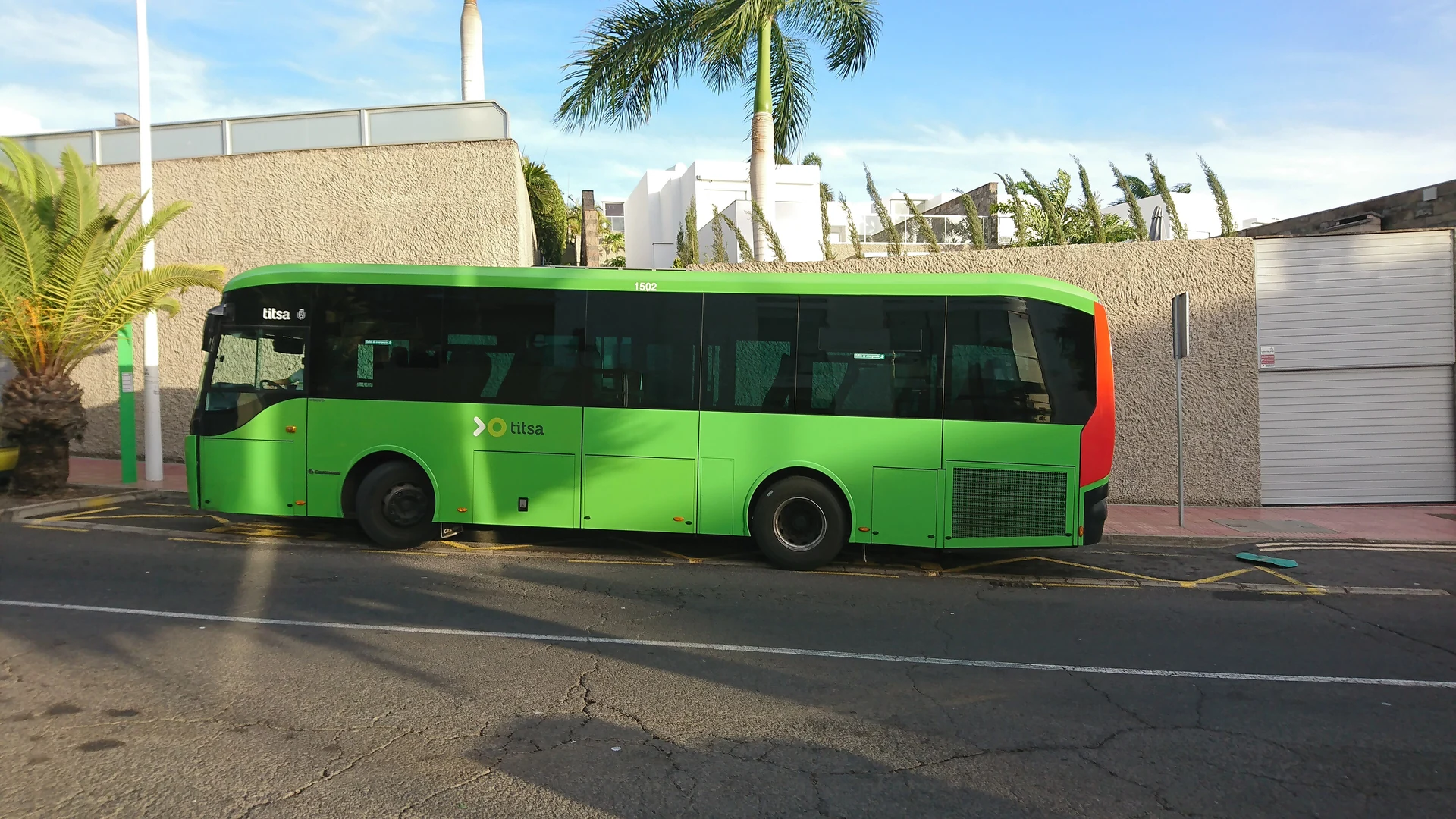
Tenerife has a genuinely good public bus network, and it is cheap enough that most visitors could skip the hire car for half their trip. The operator is TITSA, its green buses reach almost every town on the island, and a ten+ travel card costs €2 and cuts the fare on every journey you make with it.
There is one rule that catches people out and it is expensive. You must scan the card again when you get off, not just when you board. Miss that and the system charges you as though you rode to the last stop on the route, which on a long island line is a considerable difference.
The network: buses nearly everywhere, a tram in one place
TITSA runs the island's buses, known locally as guaguas, and the network is genuinely comprehensive: the southern resort corridor, the capital, the north coast and the mountain roads all have services.
Metro Tenerife runs the tram, and it covers exactly one corridor: Santa Cruz to La Laguna. It is excellent for that route and irrelevant to a holiday spent in the southern resorts. The same ten+ card works on both.
Single tickets can be bought from the driver, in cash or by card, including contactless. That is fine for a one-off journey and a poor deal for anything more.
The ten+ card, and the €2 that confuses everyone
Here is the confusion worth clearing up, because two different €2 and €5 figures circulate and they are not the same thing.
- The card itself costs €2, described by TITSA as the coste de la tarjeta
- Top-ups run from €2 to €100
- The balance is valid for one year from your last top-up, so it renews itself whenever you add credit
The old €5 minimum top-up was reduced to €2, which is where the outdated figure in most guides comes from. If you read that the minimum is €5, you are reading a page that predates the change.
Against a single ticket, the card is widely reported to save around 20% on short journeys and 30% on longer ones, though TITSA's own fares page does not publish those percentages. Take the direction as reliable and the exact figure as approximate. One card can generally be used for more than one passenger on the same journey, which makes it worth buying even for a couple.
The mistake: scan on the way off, every time
This deserves its own section because it is the single most common way visitors overpay.
Tenerife's bus fares are distance-based. Scanning on entry tells the system where you got on; scanning on exit tells it where you got off. If you only scan once, the system has no end point and charges you to the terminus of that route.
The validators are usually near the rear door. Tap on the way in, tap on the way out, and the screen shows you the fare taken and your remaining balance.
The free-travel scheme is not for visitors
You will read about free bus and tram travel in the Canary Islands and it is real, but it is not available to you. The Bono Residente Canario requires registered residency in the islands.
Visitors pay the standard fares. There is no tourist equivalent, no weekly pass sold to non-residents that replicates it, and anyone offering you one is not selling a TITSA product.
Arriving from the airport
The airport runs are their own question and we have covered them separately. In short, TITSA line 40 connects Tenerife South to the southern resorts for €3.70, with lines 343 and 711 also serving the airport, and taxi and fixed-price transfers costing considerably more.
Our Tenerife airport transfer guide sets out the full comparison, including why every source quotes a different taxi fare for the same journey.
When the bus is enough, and when you need a car
This is the decision that actually matters, and the honest answer depends entirely on where you are going.
The bus is enough if you are staying on the southern strip and moving between resorts, going into Santa Cruz or La Laguna, or making a straightforward run to a single well-served town. The corridor services are frequent and the fares are trivial.
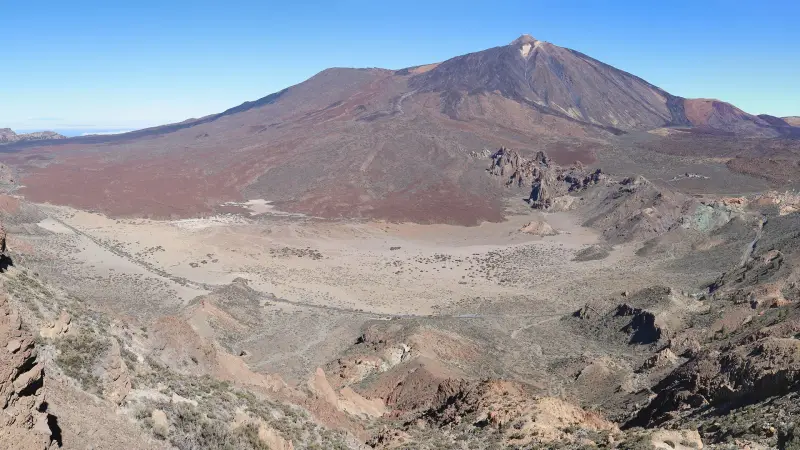
The bus is not enough for the island's best landscape. Reaching Mount Teide by public transport is possible but ties you to a sparse timetable that fits the mountain badly, and Anaga is the clearest case of all: buses reach the main access points but not the trailheads between them, which rules out most linear walks.
The practical compromise most visitors land on is buses for resort days and a hire car for two or three days of exploring. Our Tenerife car hire guide covers the pickup options, and the things to do in Tenerife guide sets out how far apart the headline attractions really sit.
FAQ – getting around Tenerife
Featured image: Cs-wolves / Wikimedia Commons / CC BY-SA 4.0