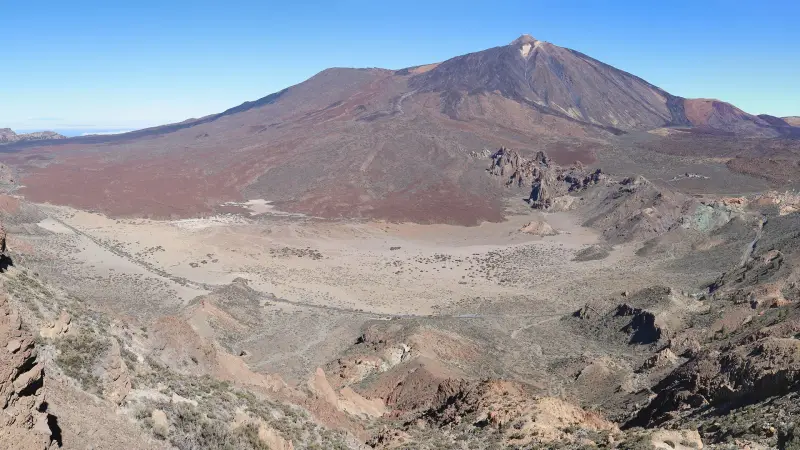
Tenerife is a volcano, so its sand is black. That is the default, and on the north coast it is still what you get. The pale gold beaches the island is sold on are mostly in the south, and a good deal of that gold did not come from here – resort beaches were built with sand dredged from the seabed or shipped in from the Sahara, then held in place with breakwaters.
Which means the colour under your feet is a reliable shorthand. Gold usually means engineered: groomed daily, sunbeds for hire, lifeguards, a Blue Flag. Black usually means natural: cooler water, fewer facilities, and in the wilder spots, currents that make swimming a bad idea. Five beaches follow, and the last two break the rule in opposite directions.
The south: built, groomed and flagged
Playa del Duque in Costa Adeje is the polished end of the island. The official Tenerife tourism board describes its sand as pale, and confirms Blue Flag status; one Blue Flag summary lists its season as running the full calendar year rather than a summer window.
The facility list is the reason it costs what it costs to stay behind it: toilets, showers, changing rooms, municipal cleaning, bars and restaurants, sun loungers and parasols for hire, parking, disabled access and a bus service. It is groomed daily, and it shows.
One point of disagreement worth flagging, since you may read otherwise. Most sources, including the tourism board, describe Playa del Duque's sand as pale or pale-golden and specifically non-volcanic; a single travel blog calls it fine black sand. The weight of evidence sits firmly with pale, and that matches every photograph of the place.
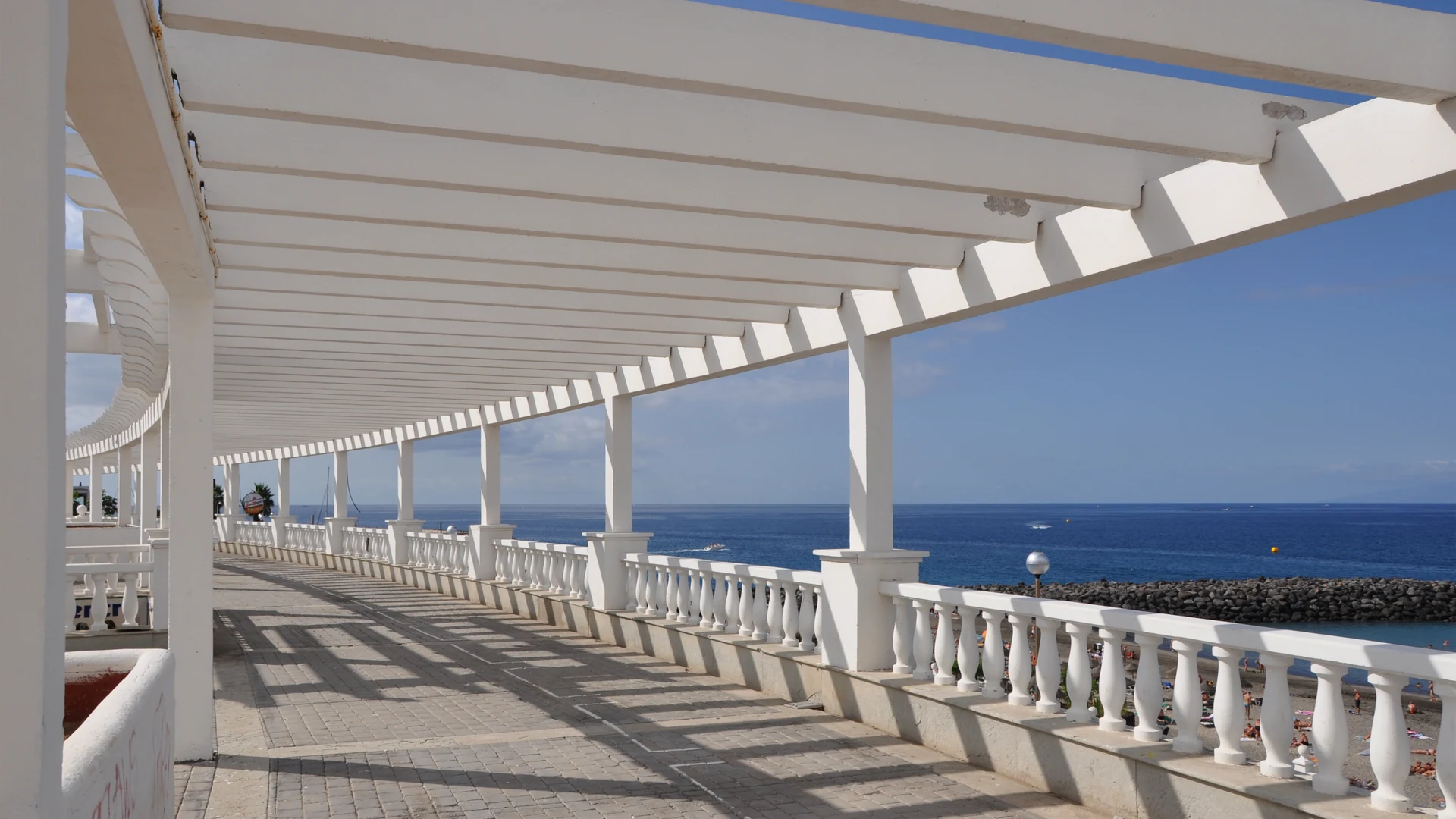
Further along the same coast, the beaches at Playa de las Américas are the resort archetype: largely imported golden or light sand, protected by breakwaters, backed by promenade. Neither Playa de las Américas I nor II carries a Blue Flag on the current 2026–2027 award list, despite older guides still crediting them with one.
The resort beaches still run the usual kit of lifeguards and sunbed hire, at around €6 for a sunbed at Playa de Troya.
The resort is not uniform, though. Troya is described as fine golden sand, while sections such as Playa Honda are dark sand with pebbles and stones – the volcanic original showing through between the engineered stretches.
The north: black sand, and a beach that was rebuilt
Playa Jardín in Puerto de la Cruz is the north coast done properly. It is a black volcanic sand beach, which sources agree is simply normal for this coastline, running about 250m, redeveloped rather than left wild. It does not currently carry a Blue Flag – it is missing from the 2026–2027 ADEAC award list, despite still being described as flagged in some older guides.
Facilities are real: showers, toilets, changing cabins, sunbed and parasol hire, cafes and restaurants, children's play areas and accessible walkways. It is the answer if you want the north's landscape without giving up the infrastructure of the south.
Do check one thing locally. Sources contradict each other on lifeguard cover at Playa Jardín – one describes water-rescue services and breakwater-protected swimming, another states plainly that there is no lifeguard. On an Atlantic-facing north-coast beach that difference matters, so look for the flag and the post when you arrive rather than assuming.
Playa de las Teresitas: the exception that proves the rule
Here is where the north-black, south-gold shorthand breaks. Playa de las Teresitas sits about 6km from Santa Cruz on the north-east coast, and it is golden – because the sand was brought from the Sahara in 1973 and the beach was built behind breakwaters.
It is over a kilometre long and is patrolled by lifeguards daily from 10:00 to 18:00, with a Red Cross post that has adapted vehicles for beachgoers with reduced mobility. Changing cabins, toilets and showers are free; lockers run about €2 a day and a sunbed and umbrella about €6.
The breakwaters are the point. They turn a north-coast beach into calm, family-usable water, which is not something the rest of this coastline offers. If you are based in Santa Cruz or heading up to Anaga, this is the swim.
Benijo: the one you do not swim at
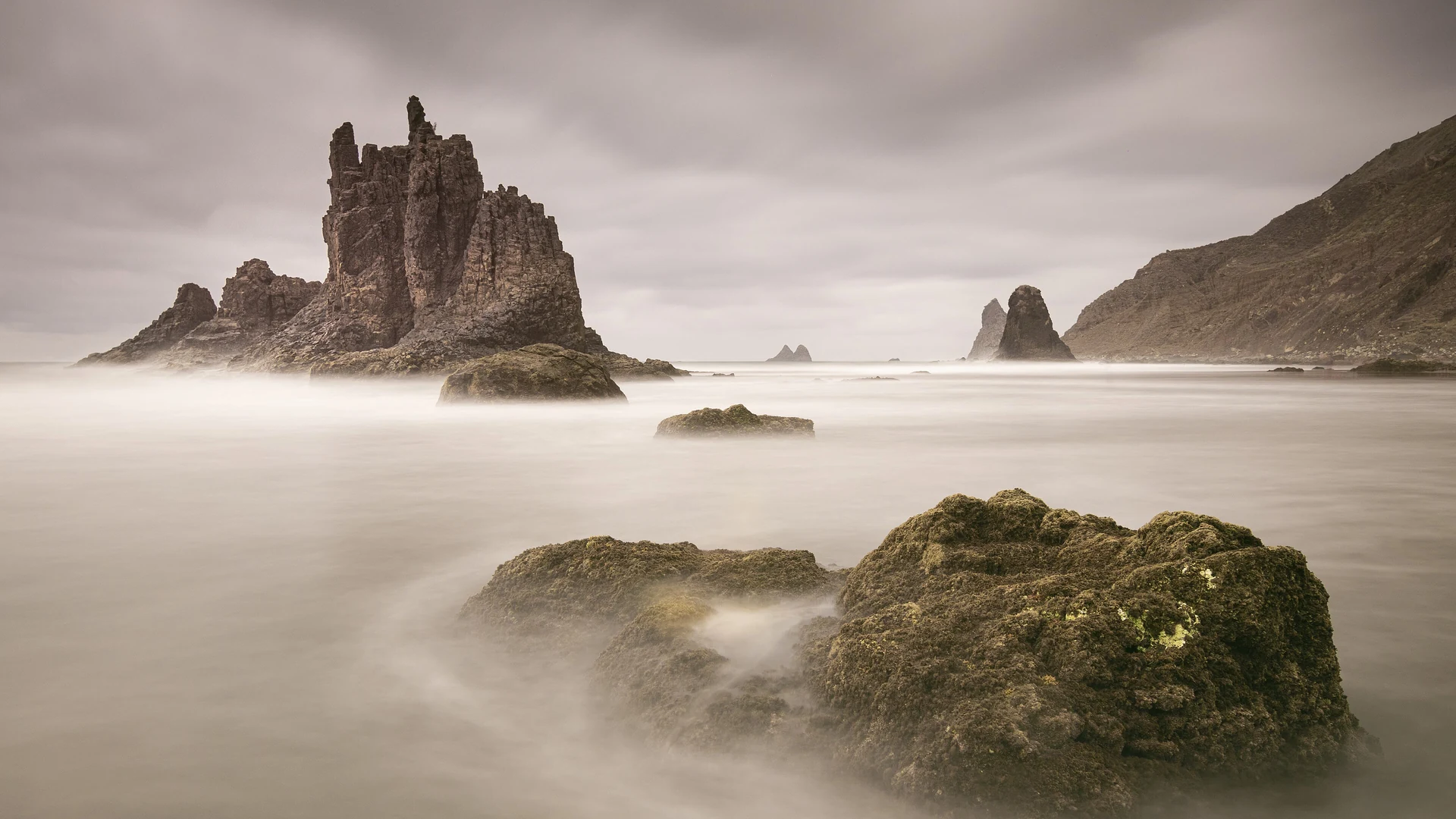
Playa de Benijo, on the Anaga coast, is the opposite proposition and the reason the north has a reputation. Black volcanic sand, offshore rock stacks, and almost no infrastructure – bins and municipal cleaning, and not much else. No Blue Flag, which is unsurprising for a beach this remote and this lightly serviced.
Getting there involves a short walk or hike down, and the sunsets are the thing people come for. But be direct about the water: currents here are strong and swimming is genuinely risky, with no lifeguard cover to fall back on. Treat Benijo as a place to look at the Atlantic, not to get into it.
These facts come from ordinary web sources rather than the verified research behind the rest of this page, so they are worth a second check before you build a day around them.
Which beach for which day
| You want | Go to | Sand | Watch for |
|---|---|---|---|
| Full facilities, calm water | Playa del Duque | Pale gold | Priciest end of the coast |
| Resort strip, sunbeds, bars | Playa de las Américas | Gold, some dark patches | Not uniform between sections |
| North coast with infrastructure | Playa Jardín | Black volcanic | Lifeguard cover disputed |
| Family swim in the north-east | Playa de las Teresitas | Imported gold | Busy at weekends |
| Landscape and sunsets | Playa de Benijo | Black volcanic | Strong currents, do not swim |
The southern beaches are walkable from the resorts; the northern ones are not, and Benijo in particular needs your own transport and a head for single-lane roads. If you are weighing that up, our car hire options cover pickup at both airports.
Where you sleep largely decides which of these you will actually use, and nearly all the island's hotels sit behind the southern strip – the best hotels in Tenerife guide explains what that means for your booking. And if the beach is only part of the plan, the things to do in Tenerife guide covers the volcano, the parks and the boat trips, and which coast each one is on.
FAQ – Tenerife beaches
Featured image: David Perez Perez / Wikimedia Commons / CC BY-SA 4.0