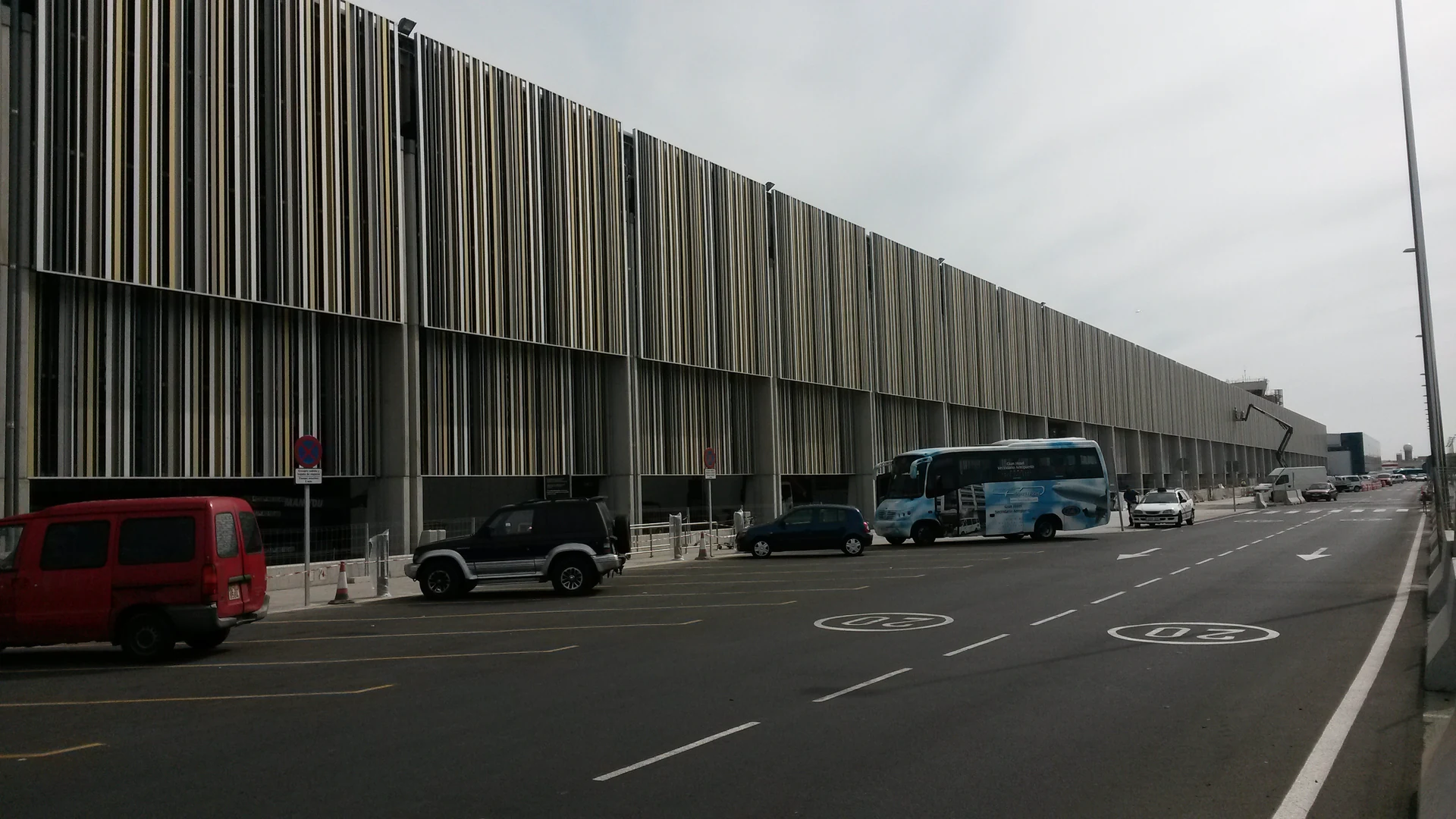

Gran Canaria has one airport, LPA, and it sits on the east coast roughly halfway between Las Palmas and Maspalomas, connected to both by the GC-1 motorway. That is unusual and it works in your favour: there is no bad end of the island to land at – see our where-to-stay guide for which of the two actually suits you.
The numbers are short in both directions. LPA to Maspalomas is about 32km and around 23 minutes; LPA to Las Palmas is about 25km. A bus runs to the southern resorts for roughly €2.40–4, a taxi to Maspalomas is typically quoted at about €40, and a private transfer starts near €54.
Why does the airport's position matter?
On Tenerife, the airport you land at largely decides your holiday, because the two airports sit at opposite ends of a much bigger island. Gran Canaria has no such problem: one airport, and it is roughly equidistant from the capital and the resort south.
The practical effect is that every transfer option stays viable. A 23-minute run to Maspalomas is short enough that the bus is genuinely comfortable and short enough that a taxi does not become a motorway fare.
It also means you do not need to check an airport code against your hotel before booking flights, which on some islands is the single most expensive mistake a traveller can make.
The decision, priced
| Option | Cost to the south | Best when |
|---|---|---|
| Public bus | ~€2.40–4 | two of you, light bags, daytime |
| Taxi from the rank | ~€40 | three or four people, or a late landing |
| Private transfer | from ~€54 | children, car seats, heavy luggage |
The split is about group size and hour rather than distance. Two adults with cabin bags should take the bus. Four people with a pushchair landing late are a different problem, and at that point the taxi fare divides down close to the bus fare each.
A private transfer is the version you agree before you fly: fixed price, driver tracking the flight, name board in arrivals.
The bus, and the line-number problem
The bus is the cheap option and it is a good one over a distance this short. Line 66 is the principal Global service from the airport to the southern resorts, with a fare of around €2.40–4 depending on your exact stop (Playa del Inglés is at the lower end, Faro de Maspalomas at the upper end).
An older-style guide may also name line 36 for this route – a handful of sources still list it alongside 66 – but every current (2026) source we checked names 66 as the main airport-to-south line.
For a short daytime hop with hand luggage, the bus is the obvious answer. For a late landing it is worth checking the last departure before you rely on it, the same way you would anywhere.
The taxi, and whether the fare is fixed
A taxi from LPA to Maspalomas or Playa del Inglés is commonly quoted at around €40 for a journey of about 40 minutes.
Treat that as a typical fare rather than a fixed price. Canary Islands taxis generally run on a meter, with a base fare plus a per-kilometre rate, so the figure moves with traffic, time of day and how much luggage goes in the boot. We could not confirm a fixed airport tariff or the exact per-kilometre rate.
The honest guidance: expect something around €40, expect the top of any range at night and at weekends, and ask the driver to confirm before you set off if a fixed price matters to you.
Private transfers, and the child-seat point
For families this is usually the deciding detail rather than the headline price. A private sedan transfer from LPA to Maspalomas is quoted from around €54, which is more than a taxi and buys you certainty rather than speed.
What you are actually paying for is a fixed price agreed in advance, a driver who tracks your flight number if it lands late, and the ability to request approved child and baby seats at the time of booking. A taxi taken from the rank will not normally carry one.
That €54 figure comes from a single source, so treat it as indicative rather than a rate card. Compare it against the taxi estimate for your specific group size before deciding, because for two adults it rarely wins and for a family of four it often does.
Should you skip the transfer and hire a car?
If your plans stay inside one resort, no. A short transfer in each direction beats a week of parking charges.
If you intend to see the island, the maths changes quickly. Gran Canaria's interior is mountainous and its public transport is built around the coast, so a car is the difference between the resorts and the island. Our Gran Canaria car hire guide covers the deposit rules, the fuel policy and what the mountain roads actually demand of a driver.
The middle path works too: transfer in, hire a car for two or three days from a resort desk, hand it back before you fly. You avoid airport pickup queues and pay for the car only on the days you use it.
For what to do once you have arrived, dolphin and whale watching runs from the south-west coast near most resorts, and the capital is covered in our things to do in Las Palmas guide.
FAQ – Gran Canaria airport transfers
Featured image: Blueplatinum / Wikimedia Commons / CC BY-SA 3.0