Gran Canaria is two driving experiences wearing one number plate. The GC-1 motorway down the east coast is fast, modern and toll-free – there are no tolls anywhere on the island – and it connects the airport, the capital and the southern resorts without demanding anything of you.
Then there is everything above it. The interior roads are narrow, steep and built from tight hairpins, with minimal guard rails in places, and they are the reason to think about whether you want a hire car rather than simply booking the cheapest one.
The motorway is not the problem
Most of the driving a visitor actually does is on the GC-1, and it is unremarkable in the best sense. The speed limit is 120km/h on the motorway, 90km/h on ordinary roads and 50km/h in towns.
No tolls anywhere on the island is worth stating plainly, because it removes a whole category of admin that catches people out in mainland Spain and France. What you pay for is fuel and parking.
If your itinerary is airport, resort, a couple of beaches and the capital, this is all the driving you will do, and it needs no special preparation beyond remembering which side of the road you are on.
What the interior actually demands
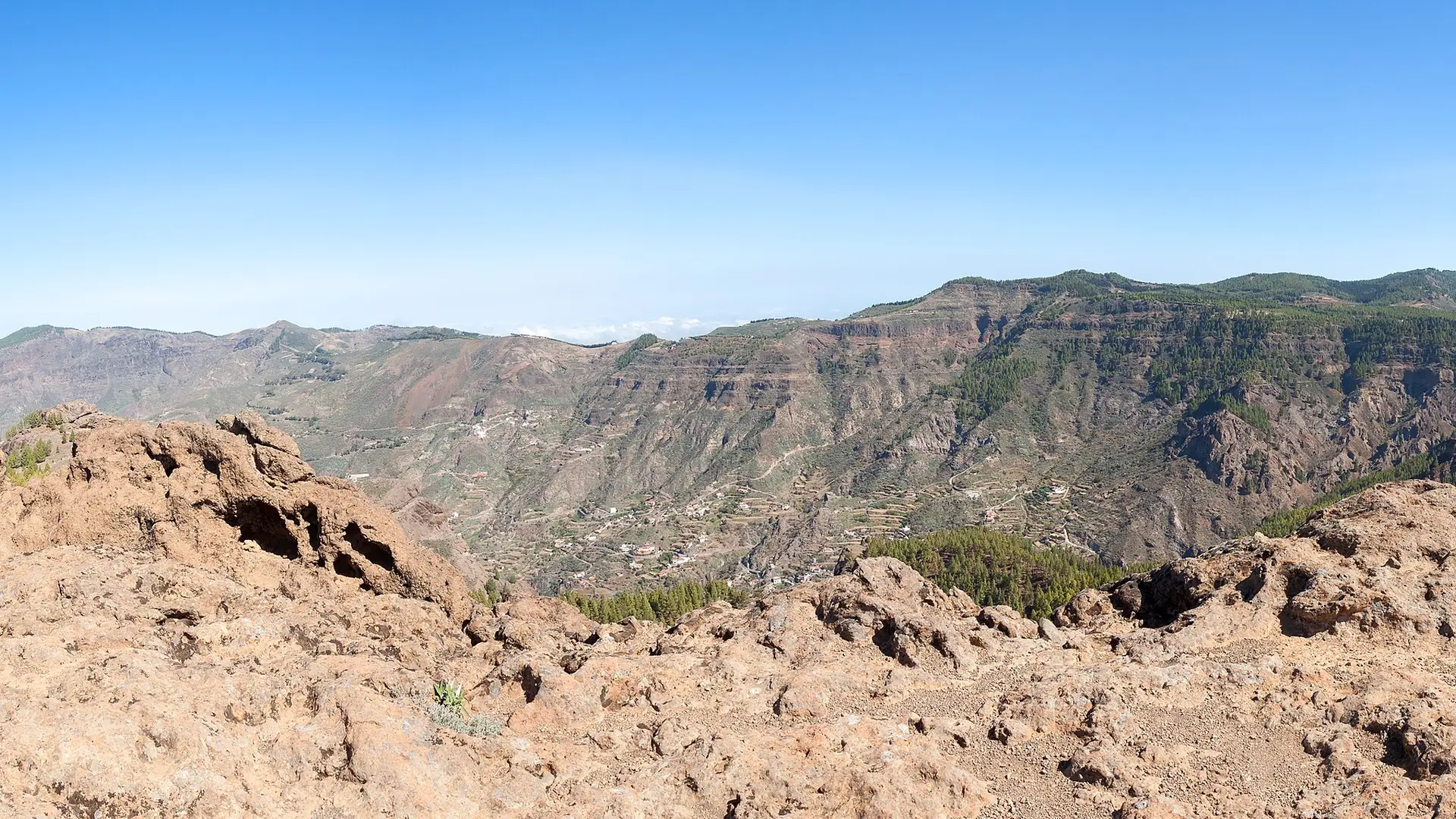
The mountain roads are a different skill. Expect narrow lanes, sustained steep gradients, tight hairpin bends and stretches with minimal guard rails, on routes where meeting a coach coming the other way is a genuine event.
None of that makes them dangerous for a careful driver. It does make them slow, which is the thing people underestimate: a distance that looks like twenty minutes on a map can take an hour, and the map does not know about the hairpins.
Fill the tank before you head inland. Services in the interior are sparse, and a fuel gauge that would be fine on the coast is not a comfortable margin on a mountain road with no petrol station for the next valley.
What you need at the desk
The paperwork is standard across the island and consistent across rental comparison sites, but two details cause almost all the problems.
- A credit card in the main driver's name is required for the security deposit. A debit card is frequently refused, and a card in a partner's name will not do.
- Full-to-full is the standard fuel policy and the one to choose: you collect the car full and return it full.
- The main driver must be present with their own licence at pickup.
Full-to-full matters because the alternative policies are where hire companies make their margin. Returning a car under a full-to-empty arrangement means paying for a whole tank at the desk's rate and giving back whatever you did not burn.
Fill up near the airport or the resort before returning the car, keep the receipt, and photograph the fuel gauge and the odometer when you hand the keys over.
Do you actually need a car in Gran Canaria?
Honestly, it depends entirely on whether your holiday is a resort holiday or an island holiday, and the answer flips completely between the two.
If you are staying put in Maspalomas, Playa del Inglés or Puerto Rico, no. The resorts are walkable, the beaches are on your doorstep, and two airport transfers cost less than a week of hire plus parking – see our where-to-stay guide if you haven't picked a base yet. Even the Maspalomas dunes are reachable by bus from any of those bases.
If you want the interior, yes, and it is not close. Gran Canaria's public transport is built around the coastal corridor, which leaves the mountain villages, the reservoirs and the viewpoints awkward or impossible to reach on a timetable. Roque Nublo is the clearest example: since 2025 you can't even drive to the old trailhead car park, so a hire car mainly buys you the drive to Tejeda, not a shortcut past the new booking system.
The middle path is the one most people should take: transfer in, hire a car for the two or three days you actually intend to explore, and hand it back. Our Gran Canaria airport transfers guide covers the bus, taxi and private options for the arrival leg.
Parking, and where it gets awkward
The resorts are straightforward: hotels and apartment blocks generally provide parking, and the beaches have car parks.
Las Palmas is the exception. It is a real city of some size, and city-centre parking around the Vegueta old town is the usual mix of paid bays and underground car parks rather than something you will find on the street. Factor it into a day trip rather than being surprised by it. Our things to do in Las Palmas guide sets out what the day looks like once you have parked.
In the mountain villages, parking is limited by geometry rather than by charges. Arrive early at popular viewpoints, and do not assume a coach-sized car park exists at the end of a single-track road.
FAQ – hiring a car in Gran Canaria
Featured image: El Coleccionista de Instantes Fotografía & Video / Wikimedia Commons / CC BY-SA 2.0