For most first trips the answer is Tenerife or Gran Canaria, each with a capital city, a resort coast and a mountainous interior on one island. After that, the choice is about character: Lanzarote for volcanic landscape and design, Fuerteventura for long beaches and wind. The three small western islands, La Palma, La Gomera and El Hierro, suit a second trip, and most visitors reach them by ferry from Los Cristianos on Tenerife.
Which Canary Island suits your trip?
Find the line that describes you. The trade-off column is the part brochures leave out.
| Your trip | Island | Why | Trade-off |
|---|---|---|---|
| First visit, a bit of everything | Tenerife or Gran Canaria | Capital, resorts, mountains | Busy in peak weeks |
| Volcanoes and design | Lanzarote | Timanfaya, César Manrique | Park seen by coach only |
| Long beaches, wind sports | Fuerteventura | Corralejo dunes, Sotavento | Beaches can be very windy |
| Forest walking | La Gomera | Garajonay laurel forest | Ferry or island hop in |
| Stars and mountain hiking | La Palma | Observatory, Caldera | Few direct UK flights |
| Diving and total quiet | El Hierro | Marine reserve, volcanoes | The longest journey |
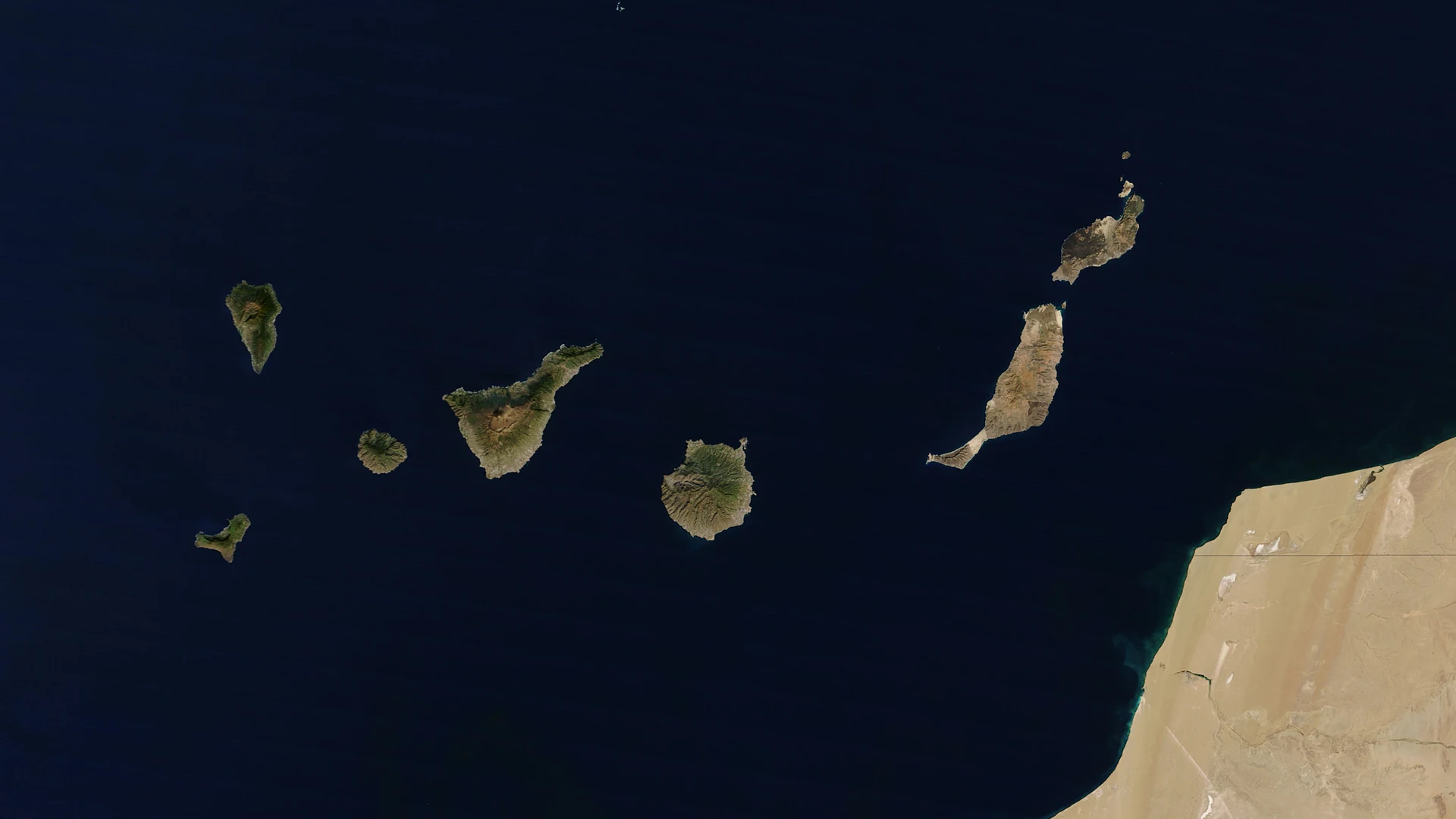
The seven are more different than their shared name suggests. The eastern pair sit close to the African coast and are dry and open; the western islands are higher, greener and far quieter.
Tenerife or Gran Canaria: the first-timer's choice
Tenerife and Gran Canaria are the safest first choice because they are the main gateways. Aena, Spain's airport operator, counted 15.8 million passengers at Gran Canaria airport and 14.0 million at Tenerife South in 2025, the two busiest airports in the islands. The Canary Islands also share two capitals, Santa Cruz de Tenerife and Las Palmas de Gran Canaria, one on each.
Between the two, the decision turns on whether you want a volcano and big theme parks or a long natural beach and a week without a car. Our Tenerife vs Gran Canaria comparison settles it row by row, from beaches to airports.
Lanzarote or Fuerteventura?
Choose Lanzarote for landscape, Fuerteventura for beaches. They are neighbours, separated by the Strait of La Bocayna, and the ferry between Playa Blanca on Lanzarote and Corralejo on Fuerteventura takes 25 to 35 minutes, with up to 12 daily departures, according to Fred. Olsen Express.
Lanzarote: the volcanic island
Lanzarote's centrepiece is Timanfaya National Park, created by six years of eruptions between 1730 and 1736. You see it on the Route of the Volcanoes by coach: CACT, which runs Lanzarote's tourist centres, states that exploring the park freely by car or on foot is not permitted.
The rest of the island carries the stamp of César Manrique, the Lanzarote artist who designed that volcano route and the park's El Diablo restaurant, which grills food over the heat of a 5-metre well. The best-known beaches, the Papagayo coves near Playa Blanca, are small bays between volcanic cliffs rather than long strands.
Fuerteventura: the sand-and-wind island
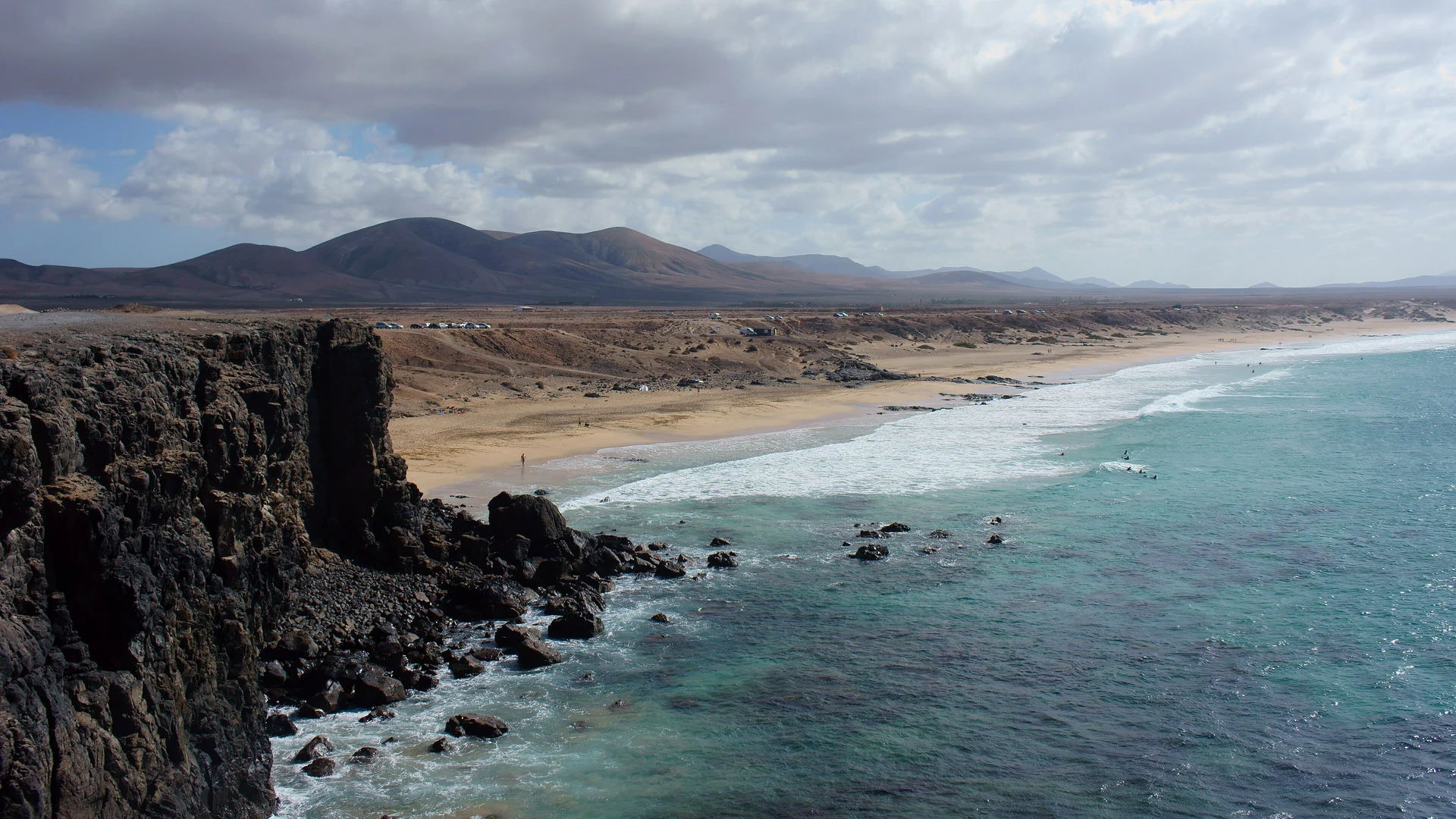
Fuerteventura is the beach island. Corralejo Natural Park, in the north-east, holds the largest expanse of dunes in the Canary Islands, and the official Canary Islands tourism site puts its Grandes Playas at 9 kilometres of beach.
The wind is the other defining fact. Playa Barca at Sotavento, on the south-east coast, has hosted a windsurfing World Cup since 1986, most recently in July 2026. Windsurfers and kitesurfers love it; anyone who wants a still afternoon on a lounger should pick a sheltered beach, or a different island.
La Gomera, La Palma and El Hierro: the quiet west
These three suit a second trip, walkers and anyone avoiding resorts. None has a large resort coast, and two have no direct flights from the UK at all. What they share is the fastest way in: Fred. Olsen Express ferries from Los Cristianos, in the south of Tenerife.
La Gomera: forest, a day trip away
La Gomera is 50 minutes from Los Cristianos by fast ferry, with up to five departures a day to San Sebastián de La Gomera, which makes it the one small island that works comfortably as a day trip.
Its heart is Garajonay National Park, a UNESCO World Heritage Site since 1986, protecting laurel forest over some 11% of the island. La Gomera also keeps Silbo Gomero, a whistled form of Spanish added to UNESCO's intangible heritage list in 2009, still taught in its schools.
La Palma: stars, a caldera and a young volcano
La Palma is the island for stargazing and serious mountain walking. The Roque de los Muchachos Observatory stands at 2,396m on the rim of the Caldera de Taburiente National Park, and the whole island is a UNESCO Biosphere Reserve. If you would rather not leave Tenerife for dark skies, our Teide stargazing tour guide covers the night trips up the volcano.
It is also the island of the 2021 Tajogaite eruption, which began on 19 September and lasted 85 days. The ferry from Los Cristianos to Santa Cruz de La Palma takes about 2 hours 30 minutes, and Jet2 has flown twice a week from Manchester since April 2026 and has announced London Stansted from 26 October 2026.
El Hierro: the smallest and most remote
El Hierro is the island for divers and for people who want real quiet. It is a UNESCO Biosphere Reserve and a UNESCO Global Geopark, with more than 500 open volcanic craters. Off its southern tip, the La Restinga–Mar de las Calmas marine reserve is the reason divers make the journey.
That journey is the catch: the ferry from Los Cristianos to El Hierro takes 2 hours 20 minutes, and Aena lists only two routes from its airport, to Gran Canaria and Tenerife North.
How do you get to the smaller islands?
By ferry from southern Tenerife, or by inter-island flight. Aena lists the La Gomera and El Hierro airports as served by Binter to Gran Canaria and Tenerife North only. Fred. Olsen Express route times, as published in September 2026:
| From Los Cristianos to | Port | Crossing |
|---|---|---|
| La Gomera | San Sebastián | 50 min |
| El Hierro | Valverde | 2h 20 |
| La Palma | Santa Cruz de La Palma | 2h 30 |
A base in the south of Tenerife therefore doubles as a springboard for the west. Our Los Cristianos guide covers the port town the boats leave from, which is worth a night either side of an island hop.
Timing matters too. The islands differ more in rain, sunshine and wind than their shared "eternal spring" reputation suggests, and our guide to the best time to visit the Canary Islands compares them on one set of station averages.
FAQ – choosing a Canary Island
Featured image: Jeff Schmaltz, MODIS Land Rapid Response Team, NASA GSFC / Wikimedia Commons / Public domain