Puerto de la Cruz is not Costa Adeje with worse weather. It is a working Canarian town that took its first foreign visitors in the 19th century, on the recommendation of British doctors, and it has been a designated National Tourist Interest Site since 1955. The whole municipality is 8.7 km², the smallest on Tenerife, which means you walk everywhere.
The weather is the honest trade. January days here average around 14°C against roughly 22°C in the south, often under cloud. What you get back is a town with over 140 protected buildings, a street-art quarter, seawater pools designed by César Manrique and an evening that belongs to residents rather than to a strip of bars.
Lago Martiánez: the seawater pools that stand in for a beach
The north coast does not do calm swimming, so in the 1970s the town built its own. Costa Martiánez is a complex of seawater pools laid out by the Lanzarote artist César Manrique, filled by high-pressure pipes from the Atlantic, with black volcanic rock, white sculpture and planting used as the architecture.
It is the single best-value paid attraction in town, and the pricing is municipal rather than commercial. Current published rates and the seasonal timetable:
| Item | Price |
|---|---|
| Adult, over 10 | €7.00 |
| Child, 4 to 10 | €4.00 |
| Sunshade | €3.00 |
| Jacuzzi, 18+ | €2.00 |
| Resident adult | €3.00 |
Sun loungers are included in the ticket. Opening hours are 10:00 to 19:00 from 1 July to 30 September, and 10:00 to 18:00 for the rest of the year. One rule catches people out: a ticket admits you once, so a walk into town at lunchtime means paying again on the way back.
The free half of the town is the better half
Plaza del Charco is the centre of Puerto de la Cruz and always has been. The full name translates as the square of the shrimp puddle, from the days when high tides flooded it and left shrimp behind in the pools. It is where the town sits out, under Indian laurel trees, and it costs nothing.
West of the square is La Ranilla, the old fishing quarter and the reason this town beats its rivals on a wet afternoon. Since 2014 it has carried the Puerto Street Art open-air exhibition: large-scale murals painted on the fishermen's houses by international artists, most of them added during the MUECA festival each May. The tourism board credits 13 artists to the project; later counts put the quarter at 17 large-scale murals.
Around those two are the buildings the town protected instead of demolishing. The Church of San Francisco dates from 1599 and is the oldest building in the town. The Church of Nuestra Señora de la Peña de Francia went up in 1684, with its steeple added in 1898. The Casa de la Real Aduana, the old customs house by the harbour, was founded in 1620.
Walk the harbour front and the Paseo Marítimo between them and you have a half-day that costs the price of a coffee.
Castillo de San Felipe, and where to stand at sunset
The Castillo de San Felipe was begun in 1599 and finished on 6 January 1604, built against the pirate raids that were a working risk for a port this exposed. It is pentagonal, was once ringed by a moat and drawbridge, and held its guns until it was disarmed in 1878. It was listed as a monument of historical and artistic interest in 1949.
It now works as a cultural venue, hosting concerts and exhibitions rather than sitting as a museum piece. The exterior and setting near Playa Jardín cost nothing to visit; what is on inside changes, so check the programme rather than assuming an open door.
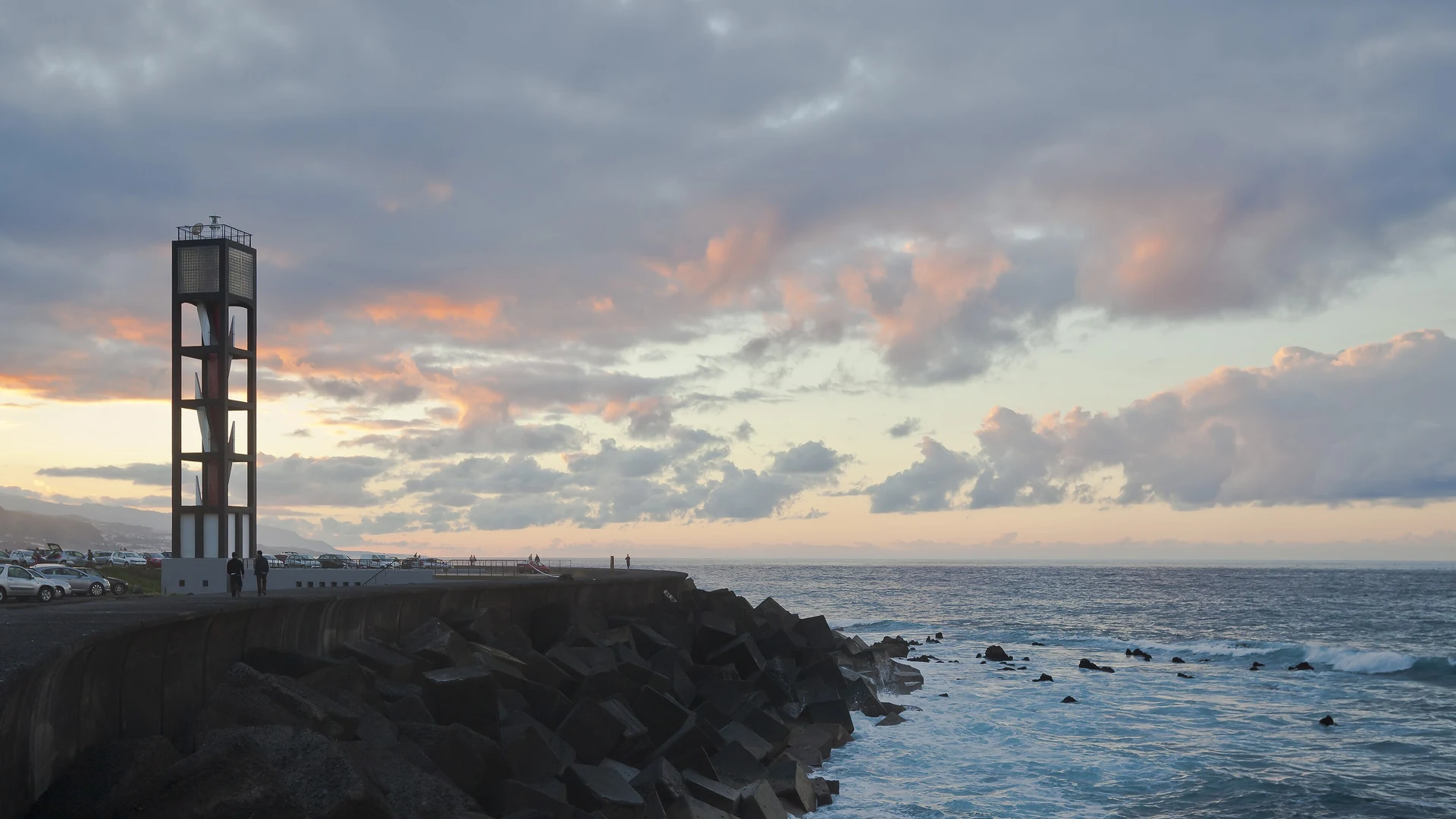
For the view, go up. The Mirador de la Paz sits on the Martiánez cliffs and looks back over the coast and the pools, and it is at its best at dusk. Above it, Parque Taoro covers roughly 100,000 m² of gardens, paths, fountains and lookouts over the town, and is open permanently. Neither charges anything, and the walk up is the point.
This stretch – the castle programme, the viewpoint at dusk, the garden paths – is where the town works best without children in tow.
With children: pools, parrots and black sand
The seawater pools are the easy win, because the complex includes shallow children's pools and the water is enclosed rather than open Atlantic. On a north-coast holiday that distinction matters more than it does in the south.
Then there is the obvious one. Loro Parque is physically in Puerto de la Cruz, not an excursion from it, which is the strongest practical argument for basing a family here rather than driving up from the south for the day. Our Loro Parque guide covers what the ticket includes, the twin-ticket rules and the orca question.
For the beach, Playa Jardín is the town's own: black volcanic sand, redeveloped rather than left wild, with real facilities. It is covered properly in the best beaches in Tenerife guide, including the one thing worth checking locally before anyone swims.
The Botanical Garden is the cheapest good hour in town
The Jardín Botánico was founded by royal order in 1788, to acclimatise tropical species on their way from the Americas to mainland Spain. Its formal name is still the Jardín de Aclimatación de La Orotava, because Puerto de la Cruz was part of the La Orotava municipality when it was planted.
Entry is €3, or €2 for Canary Islands residents, and it opens 9:00 to 18:00 daily. It closes on 1 January, 25 December and Good Friday. An hour is enough, the shade is welcome, and two-and-a-half centuries of growth is a different proposition from a municipal park.
The evening: a town that goes out, not a strip that gets shipped in
This is where Puerto de la Cruz separates itself from the southern resorts, and where most guides go quiet. The town does not have a nightlife district that exists purely for visitors. It has Avenida de Colón along the seafront and the streets running back off Plaza del Charco, and both fill up because residents are in them.
The practical consequence is timing. Places wake up from around 21:00, and eating at 19:00 puts you in a half-empty room. Individual bars turn over faster than any guide can keep up with, so we are not going to print a list of names that may be a barber's shop by the time you land. Walk the avenue and the square and pick by how full a place is.
The festival calendar is the other reason to check your dates. Puerto de la Cruz runs Carnival in February, the MUECA street arts festival in May, San Juan on 23 and 24 June, Bavarian Week in late August, the Fiesta de San Andrés in November for the year's young wine, and a Bach Festival in December.
San Juan is the one worth planning around. On the morning of 24 June, herds are driven down to the old dock for the baño de las cabras, a goat-bathing ritual of Guanche origin that runs from around 08:00 to 13:00 and is meant to purify and protect the livestock for the year ahead. It is a genuine survival, not a re-enactment staged for coaches.
Using the town as a base for the rest of the island
Puerto de la Cruz works as a base if the trip is about landscape rather than loungers. It sits on the green side of the island, near the Orotava valley, La Laguna and the Anaga forests, and it is a far shorter run to the mountain than the southern resorts are. The balcony streets of La Orotava are 7.6km up the hill and the easiest half-day out of town.
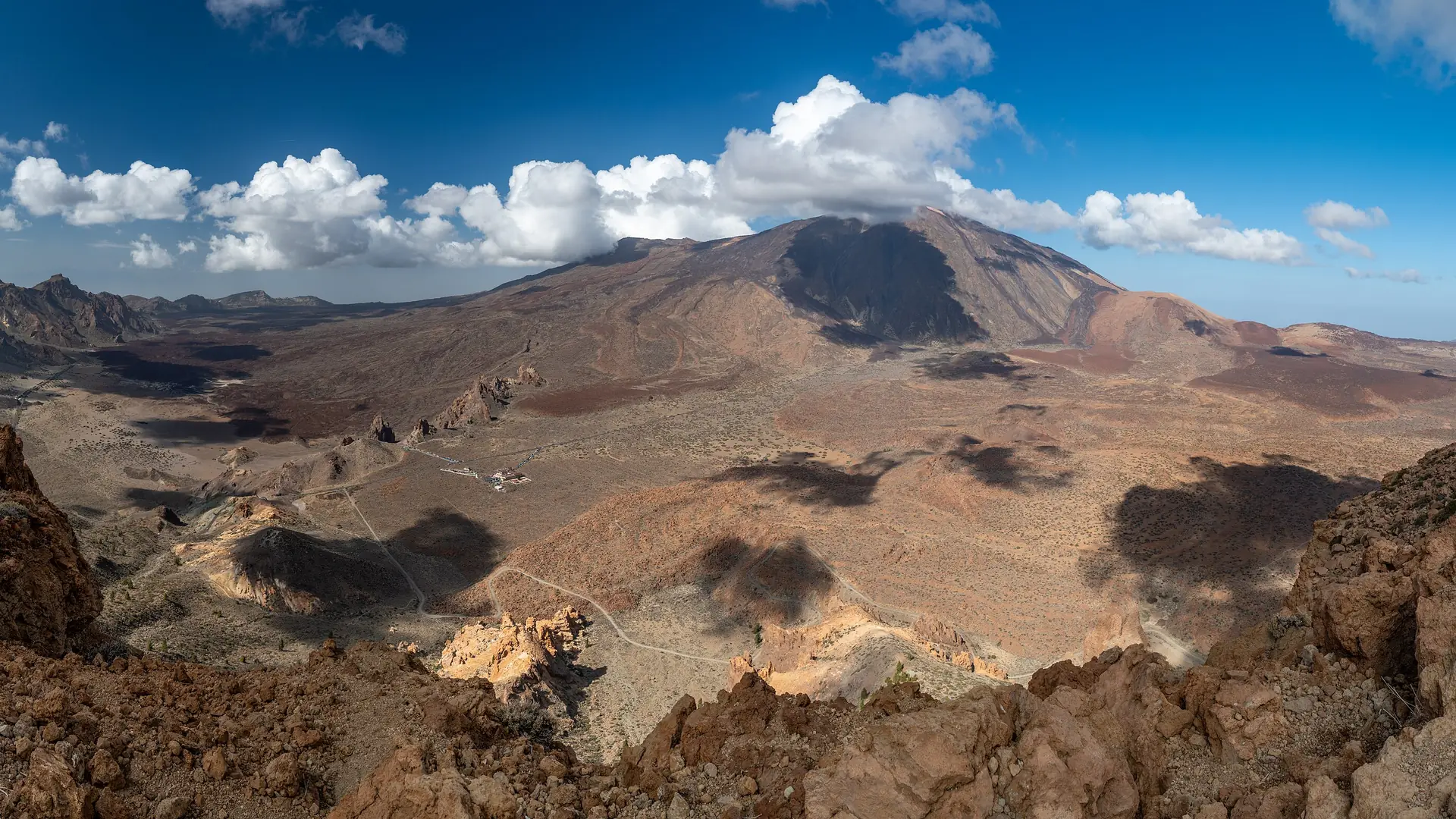
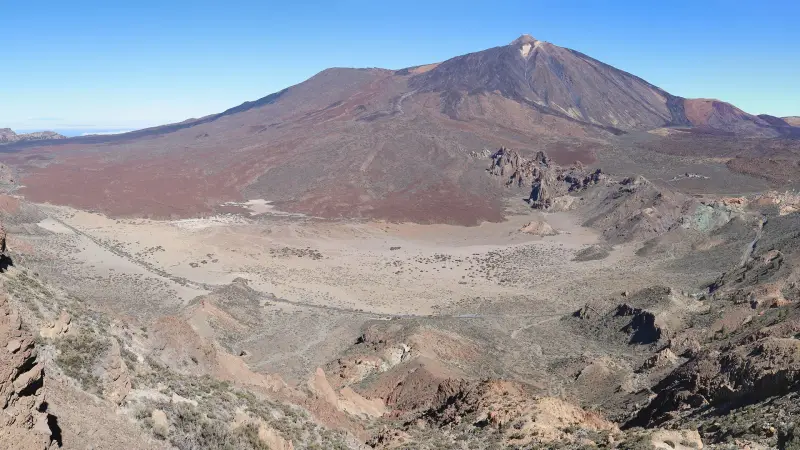
That is the case for staying here rather than visiting. Teide is the obvious day out, and the Mount Teide guide covers the cable car, the separate summit permit and the timing that decides whether the day works.
Before booking, be clear-eyed about the weather trade, because it is the one thing people regret. The where to stay in Tenerife guide sets out why the two coasts differ so sharply and which one suits which kind of trip. If you are still deciding what the island itself is for, start with the things to do in Tenerife guide.
Two full days covers the town properly: one for the pools, the plaza and the murals, one for the garden, the castle and the miradores, with Loro Parque as a third if children are involved.
FAQ – visiting Puerto de la Cruz
Featured image: Diego Delso / Wikimedia Commons / CC BY-SA 3.0