La Orotava sells itself on one building, and the building is smaller than the marketing implies. Casa de los Balcones is a 17th-century Canarian house-museum whose visitor access covers the first floor and the courtyard only, self-guided, with an optional audio guide. Reviewers who expected a full house regularly say so.
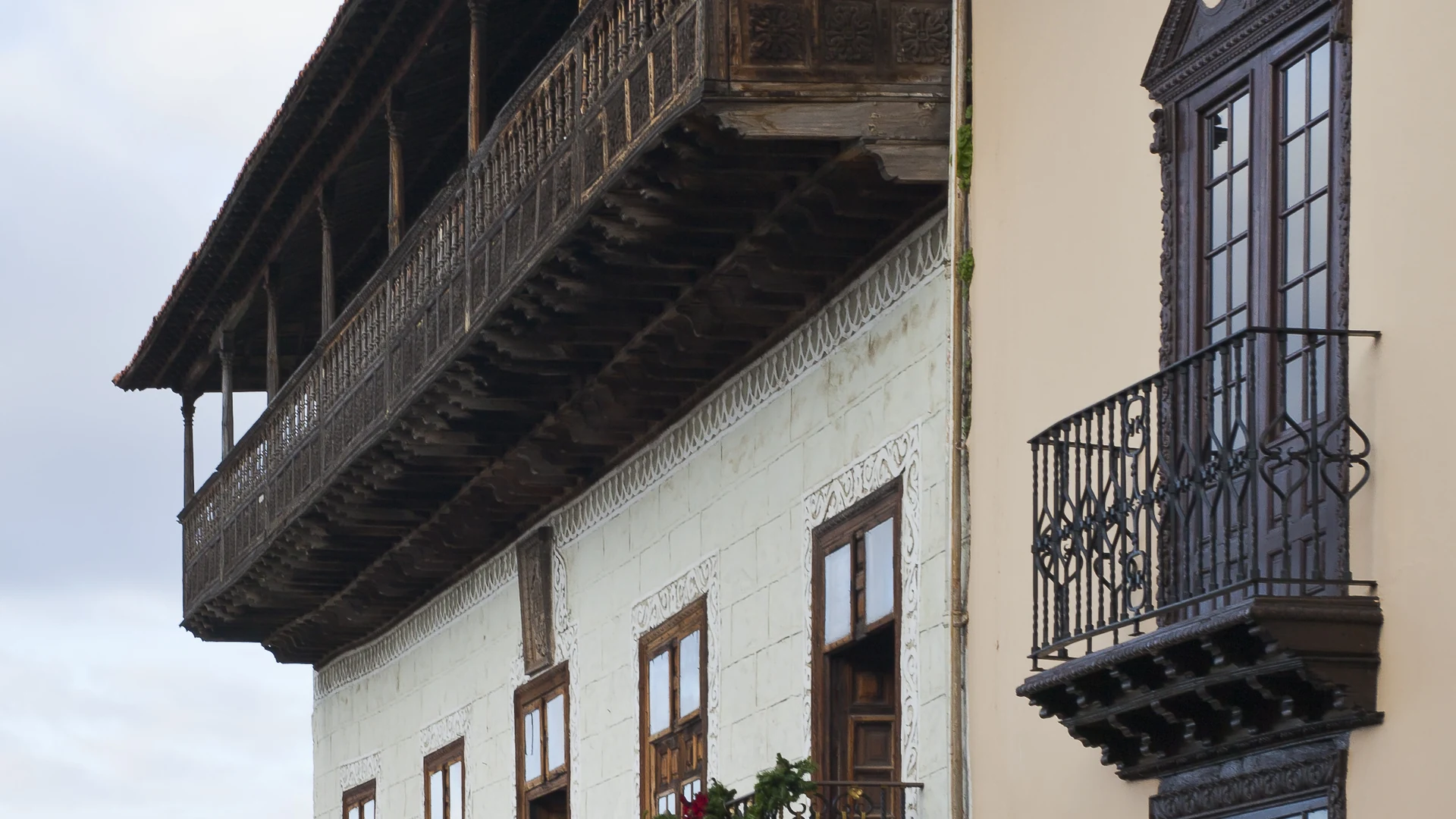
The town around it is the better proposition, and it is free. Carved wooden balconies are a street-level feature here, not a ticketed one, and the same craft tradition that produced the famous house produced the façades along the streets running up the hillside from it. Come for the town, then decide about the ticket.
What do you actually get inside Casa de los Balcones?
The house dates from the 17th century and is the standard reference for Canarian domestic architecture of the period: heavy carved wood, an internal courtyard, balconies overhanging the street.
What the visit gives you is narrower than that description suggests. Access is limited to the first floor and the courtyard, it is self-guided rather than led, and an audio guide is offered as an extra rather than included. Published opening hours are 10:00 to 18:00.
Some visitors find that thin for the money, and it is a fair complaint rather than a snobbish one. Go in if the interior craft detail is the point of your visit; skip it without guilt if you mainly wanted the balconies, which you can see from the pavement.
The Corpus Christi carpets, and why the date is hard to pin down
The event La Orotava is genuinely known for nationally is its alfombras: street carpets laid out in flower petals and coloured volcanic sand, built directly onto the road surface.
The scale is the thing. Roughly 30 carpets run from Casa Monteverde to the town hall and the main church, and they exist for a single day. The procession walks straight over them and destroys them the same day, which is deliberate symbolism rather than an accident of scheduling.
If you want to see them, the date is the problem, and we are going to be blunt about it.
The streets are the attraction, not the museum
The reason to give La Orotava half a day rather than an hour is that the balcony architecture is not concentrated in one paid building. It is spread across the old town, on houses people still live in, above shops that are still trading.
That is the honest distinction from a preserved old town: nothing here has been fenced off and interpreted for you. You walk up the hill, look up a lot, and stop when the gradient wins.
The town sits in the Orotava valley on the green, northern side of the island, which is why the setting looks nothing like the southern resorts and why the weather can differ sharply from them on the same day.
What is not in La Orotava, despite what you may have read
Two things get attributed to this town that are not really in it, and both cause wasted journeys.
The famous botanical garden is not in La Orotava. The Jardín Botánico is in neighbouring Puerto de la Cruz, and its formal name, the Jardín de Aclimatación de La Orotava, is a historical artefact of municipal boundaries rather than a location. Our Puerto de la Cruz guide covers the garden along with the rest of that town.
El Bollullo beach is technically inside the La Orotava municipality, but it sits down on the coast, nowhere near the historic centre, and is reached from the Puerto de la Cruz stretch of coastline rather than from the old town. Do not plan to walk to it. The best beaches in Tenerife guide covers the north coast's black-sand coves properly.
Getting to La Orotava
The practical answer for most visitors is that you go from Puerto de la Cruz, because the two towns are close and one has all the hotels.
- Distance: about 7.6km from Puerto de la Cruz
- Driving time: about 24 minutes
- By bus: TITSA routes 345, 350, 352 and 353 connect the two towns
The gradient is the thing to plan around. The old town climbs steeply, so park or get off the bus as high up as you can and walk down rather than up. Our getting around Tenerife guide covers the TITSA fare card if this is your first bus journey on the island.
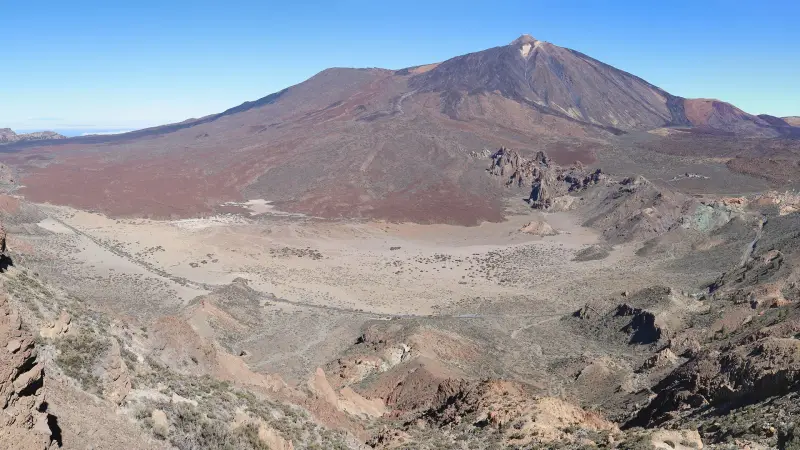
For a different side of Canarian tradition on the same trip, the pilgrimage basilica and Guanche statues at Candelaria sit on the opposite coast. And if the north is your base for a few days, a Teide stargazing tour is the obvious evening, since the drive up into the park starts from this side of the island.
FAQ – visiting La Orotava, Tenerife
Featured image: Diego Delso / Wikimedia Commons / CC BY-SA 3.0