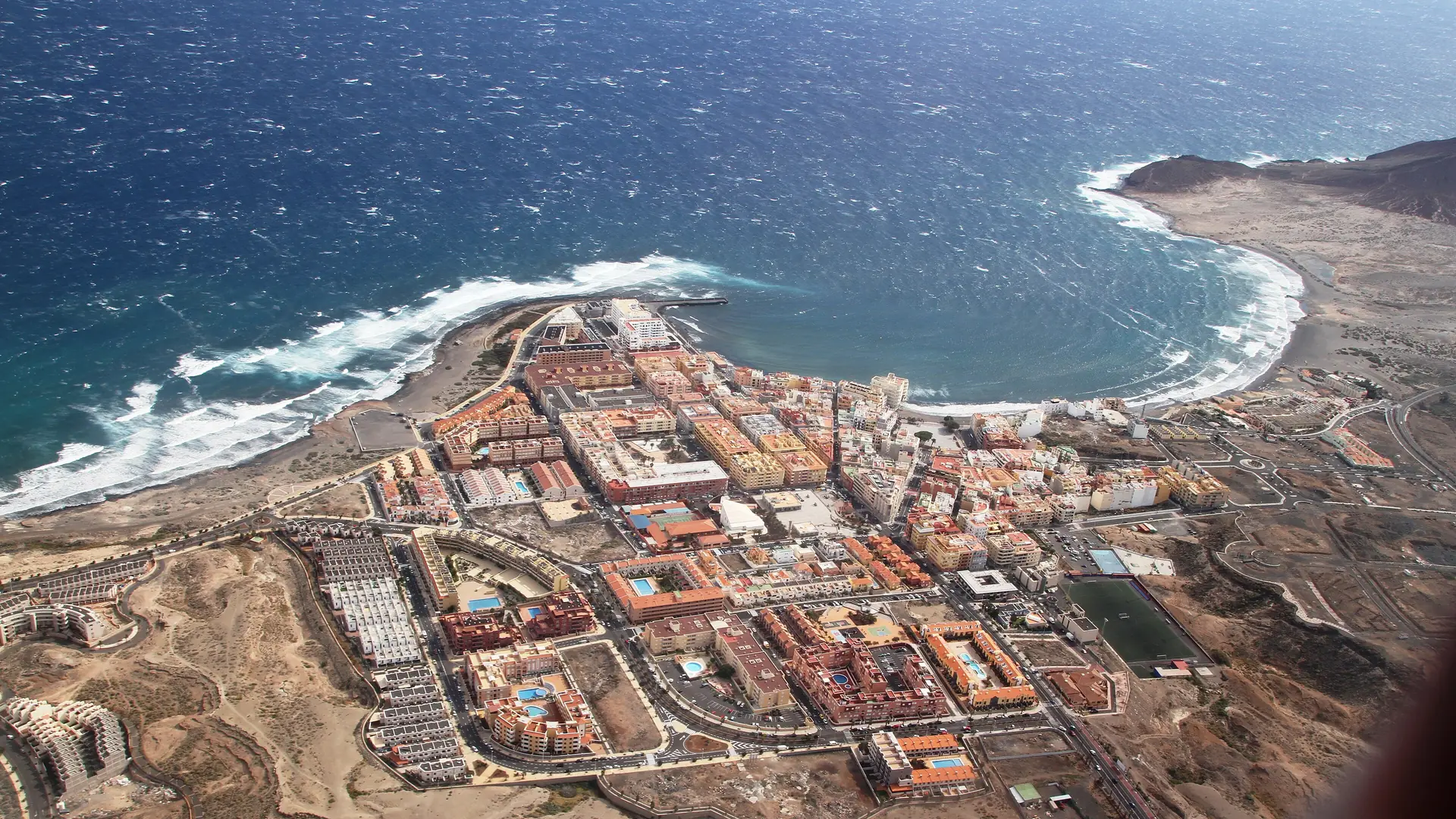
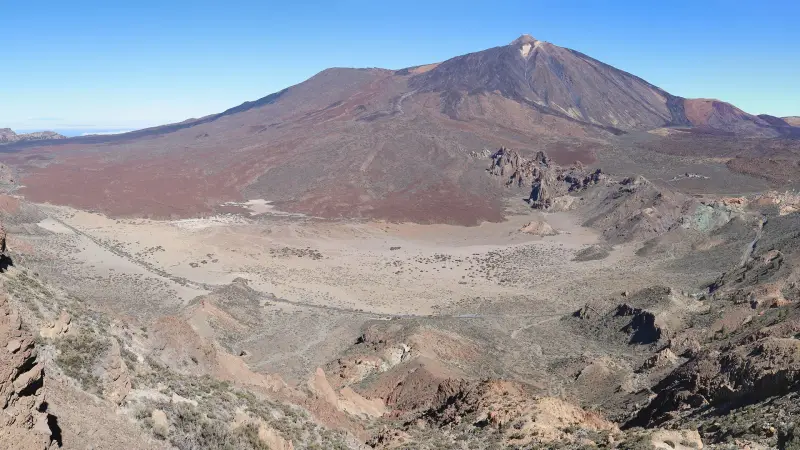
El Médano is what southern Tenerife looks like when nobody builds a resort. It is low-rise, the seafront is a promenade rather than a hotel wall, and the reason it exists in its current form is meteorological: the Tenerife tourism board puts the town at an average of 300 days of wind a year.
That wind made it the island's board-sports capital and gave it a completely different crowd from the strip 20 minutes west. It sits about 9km from Tenerife South airport, roughly 13 minutes by road, with a free 171m volcanic cone at one end of the beach and a fishing village at the other.
The wind is the whole point, and it is not seasonal
Two things create the conditions. The prevailing winds here are easterly and north-easterly, and Montaña Roja funnels them between the cone and the coastline, which compresses and accelerates the airflow across the bay.
The result is usable wind almost year-round rather than in a summer window. The tourism board splits the year in two:
- Winter, October to April: roughly 10 to 25 knots
- Summer, May to September: roughly 15 to 30 knots
Summer is the stronger, more consistent half and the busier one. Winter is the more forgiving season to learn in, which is the reverse of how most people assume a wind season works.
Where to learn, and where not to
The three named spots along this coast are not interchangeable, and the official guidance grades them differently. El Médano itself is rated intermediate to high and hosts competitions. La Tejita takes all levels, low through high, which makes it the more sensible place to start. El Cabezo is high-level and explicitly not recommended for beginners.
In El Médano's favour for a first lesson: the seabed is sandy rather than reef, so walking in is straightforward, and there is lifeguard cover on the main beach.
On schools, one word of caution. Operators in this town open and close faster than any guide can track, so the only one worth naming is the one the tourism board itself lists: Wind Center Playa Surf, teaching windsurfing, wing foil, surfing and paddle surf across all levels. Others are perfectly good; check they are currently trading and insured rather than trusting a list.
Montaña Roja is the best free hour in the south
The red cone at the end of the beach is a Reserva Natural Especial covering about 166 hectares in the municipality of Granadilla de Abona, protecting one of the island's best surviving examples of inorganic sand habitat, with wetlands alongside it.
At 171m it is a short climb rather than a hike, and the summit gives you the whole bay, the airport runway and La Tejita on the far side. There are three starting points: from El Médano itself, from La Tejita beach, or from a marked dirt car park on the TF-643 between El Médano and Los Abrigos.
It costs nothing and needs no booking. Treat the protected status seriously though: stay on the marked paths, because the sand habitat is exactly what the reserve exists to protect.
Seeing the cone from the water is the other option. Guided jet ski safaris running along this stretch of coast use Montaña Roja as their turning point, which is a different view of it entirely.
La Tejita is the wilder half of the same bay
On the other side of the cone, La Tejita runs over a kilometre and is the undeveloped counterpart to the town beach. Fewer facilities, far less building behind it, and a long-standing reputation as a clothing-optional beach at its quieter end.
It is the better beach to look at and the harder one to spend a full day on, since shade and services are limited. It is also, per the official grading, the more beginner-friendly stretch of water for board sports.
For the island-wide picture of which sand is natural and which was engineered, the best beaches in Tenerife guide covers how sharply that changes between coasts.
Los Abrigos, for the evening
Los Abrigos is a small working fishing village in the same municipality, a short run east along the coast, sitting between El Médano and Amarilla Golf. Its harbour front is lined with fish restaurants, and it is where people staying in El Médano tend to go when they want dinner rather than a bar.
The pattern is straightforward: the day's catch, grilled simply, with papas arrugadas and mojo. It is not cheap by Canarian standards and it does not need to be, because the alternative on this coast is a resort menu.
The town itself, and when to come
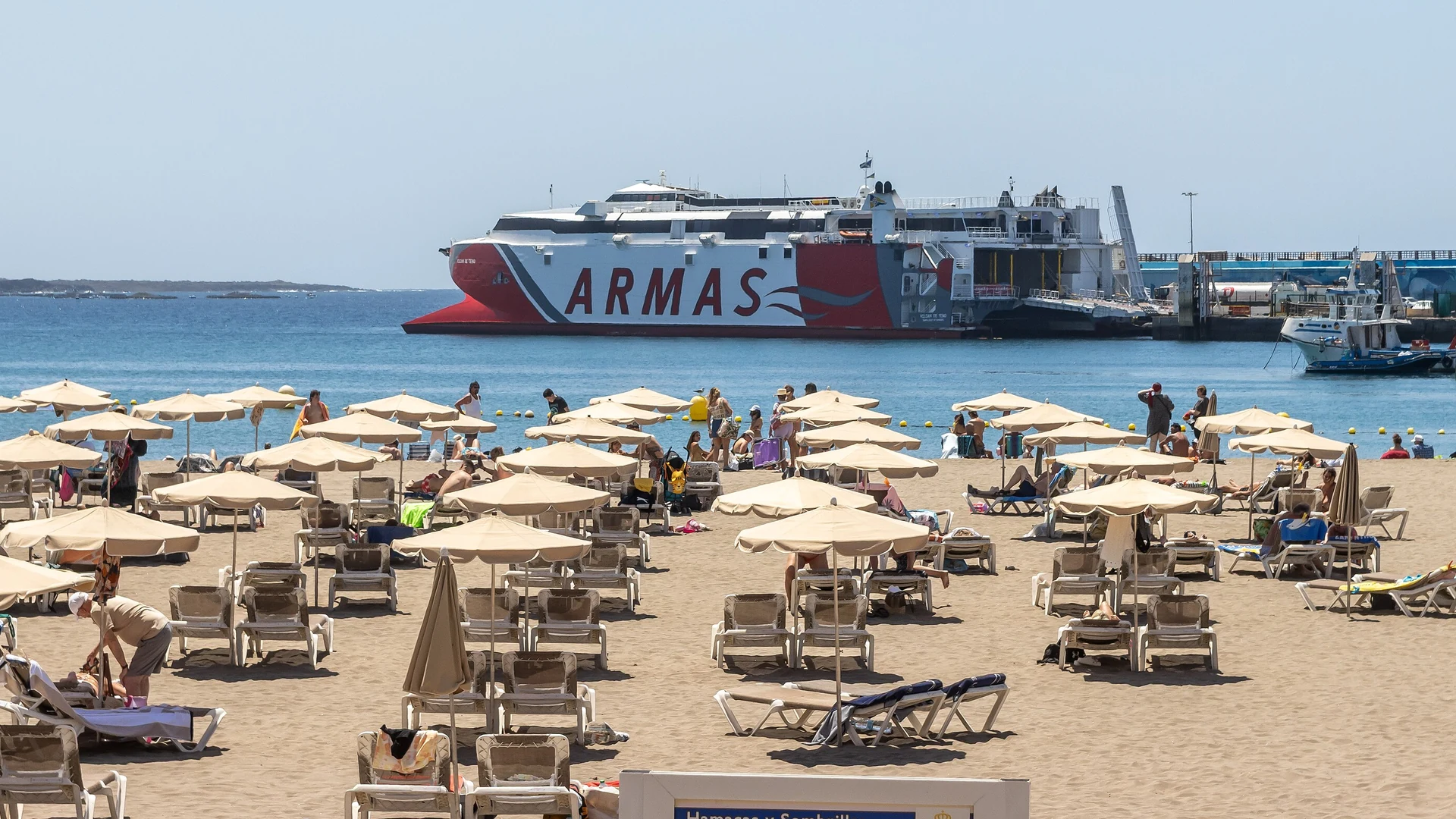
The town is small enough to cross on foot in twenty minutes, and the promenade is the spine of it, running along the front and linking the main beach to the foot of the cone. It is flat, pushchair-friendly and busiest at the end of the day rather than the middle of it.
What you will not find is a purpose-built centre. The bars and cafes sit around the plaza and along the front, they fill with people who have just come off the water, and the evening tends to end earlier than it does in the resorts. That is the town's character rather than a shortcoming.
On timing: summer brings the strongest and steadiest wind and the biggest crowds, and it is when the competition calendar lands. Winter is milder, quieter and the better half of the year for learning, with the compromise that the water is cooler and lighter days are shorter.
Who El Médano is wrong for
This is the part most guides skip. The wind that makes the town does not switch off for your sunbathing. A parasol is often unusable, sand moves, and a still, hot beach afternoon is not what this place reliably offers.
It also has no resort infrastructure: no water park on the doorstep, limited all-inclusive stock, and a crowd weighted towards board sports and long-stay remote workers rather than package holidays. If that sounds like the appeal, it is the best-value base in the south. If it sounds like a compromise, book the strip instead.
The where to stay in Tenerife guide sets out how the southern resort areas differ from each other and from the north, which is the decision this really sits inside.
Getting there
El Médano is the closest town of any size to Tenerife South, about 9km and roughly 13 minutes by road, which makes it the one place on the island where a taxi from the airport is genuinely cheap. TITSA buses connect it to the airport and along the southern corridor.
The trade-off for that proximity is aircraft noise on the approach path, which is noticeable but intermittent. Our Tenerife airport transfer guide covers the bus, taxi and fixed-price options and why quoted taxi fares vary so widely.
If the trip is about more than the wind, the things to do in Tenerife guide covers the volcano, the parks and the permit rules that catch people out.
FAQ – visiting El Médano
Featured image: Bjoertvedt / Wikimedia Commons / CC BY-SA 4.0