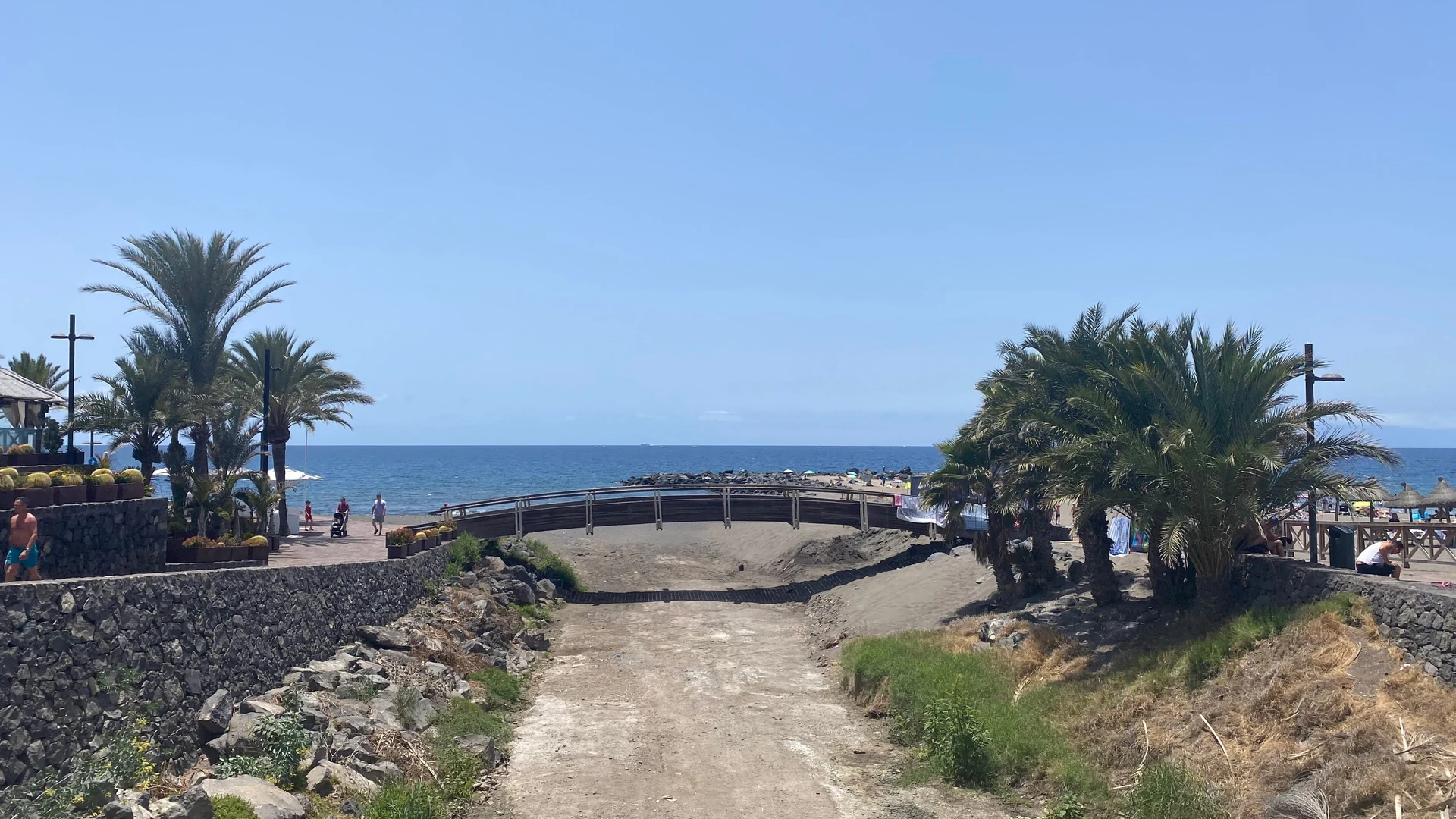
Tenerife's reputation for eternal spring is roughly accurate on the south coast and misleading everywhere else. On that coast the average daily high never drops below 22°C and never exceeds 28.6°C, which is a narrower annual band than almost anywhere in Europe.
The figures below are for southern Tenerife, where nearly all the resorts sit. Read them as a description of one coast rather than of the island, because the north runs cooler and cloudier, and the mountain runs colder than either in every month of the year.
The twelve months on the south coast
Average daily highs and lows, monthly rainfall, sea temperature and daily sunshine hours.
| Month | High | Low | Rain | Sea | Sun |
|---|---|---|---|---|---|
| January | 22.0°C | 15.0°C | 15mm | 19.5°C | 6.5h |
| February | 22.2°C | 14.9°C | 20mm | 19.0°C | 7.5h |
| March | 23.0°C | 15.3°C | 10mm | 19.0°C | 8h |
| April | 23.3°C | 16.0°C | 10mm | 19.5°C | 8h |
| May | 24.3°C | 17.1°C | 0mm | 20.5°C | 8.5h |
| June | 25.8°C | 18.8°C | 0mm | 21.5°C | 9h |
| July | 27.8°C | 20.2°C | 0mm | 22.5°C | 10h |
| August | 28.6°C | 21.2°C | 0mm | 23.0°C | 9.5h |
| September | 27.9°C | 21.0°C | 5mm | 24.0°C | 7.5h |
| October | 27.0°C | 19.9°C | 15mm | 23.5°C | 7h |
| November | 25.0°C | 18.2°C | 10mm | 22.5°C | 6.5h |
| December | 23.2°C | 16.4°C | 30mm | 21.0°C | 6.5h |
Three things stand out. May through August record no meaningful rainfall at all. December is the wettest month at 30mm, which is still less than most European cities get in a dry month. And the coldest sea is not in the coldest month: the water lags the air by about two months, bottoming out in February and March.
Sea temperature is the number most people get wrong
The Atlantic here is cooler than the Mediterranean at the same latitude, because of the Canary Current running down from the north.
September is the best month for swimming at 24°C, not August, and the sea stays above 22°C from July through to November. At the other end, February and March sit at 19°C, which is swimmable for the determined and bracing for everyone else.
If a warm sea is the point of the trip, the second half of the year beats the first by a clear margin, and September beats everything.
What the table does not show: the north
Every figure above describes the south. The northern coast, including Puerto de la Cruz, is a different climate produced by the same mountain.
The mechanism is a rain shadow: moist trade winds arrive from the north-east, hit the central massif, and drop their moisture on the northern slopes. The air that reaches the south is dry. In January the northern coast averages roughly 16–20°C by day against about 22°C in the south, depending on the dataset, often under cloud.
The counter-intuitive part is that the raw temperature gap between the coasts is only a few degrees. What diverges is sunshine hours and cloud cover, and that is what you actually feel. Our where to stay in Tenerife guide works through what that means for choosing a base.
Rainy days follow the same split. In January the north sees roughly 7 to 9 rainy days, the south around 3 to 5.
Altitude rewrites all of it
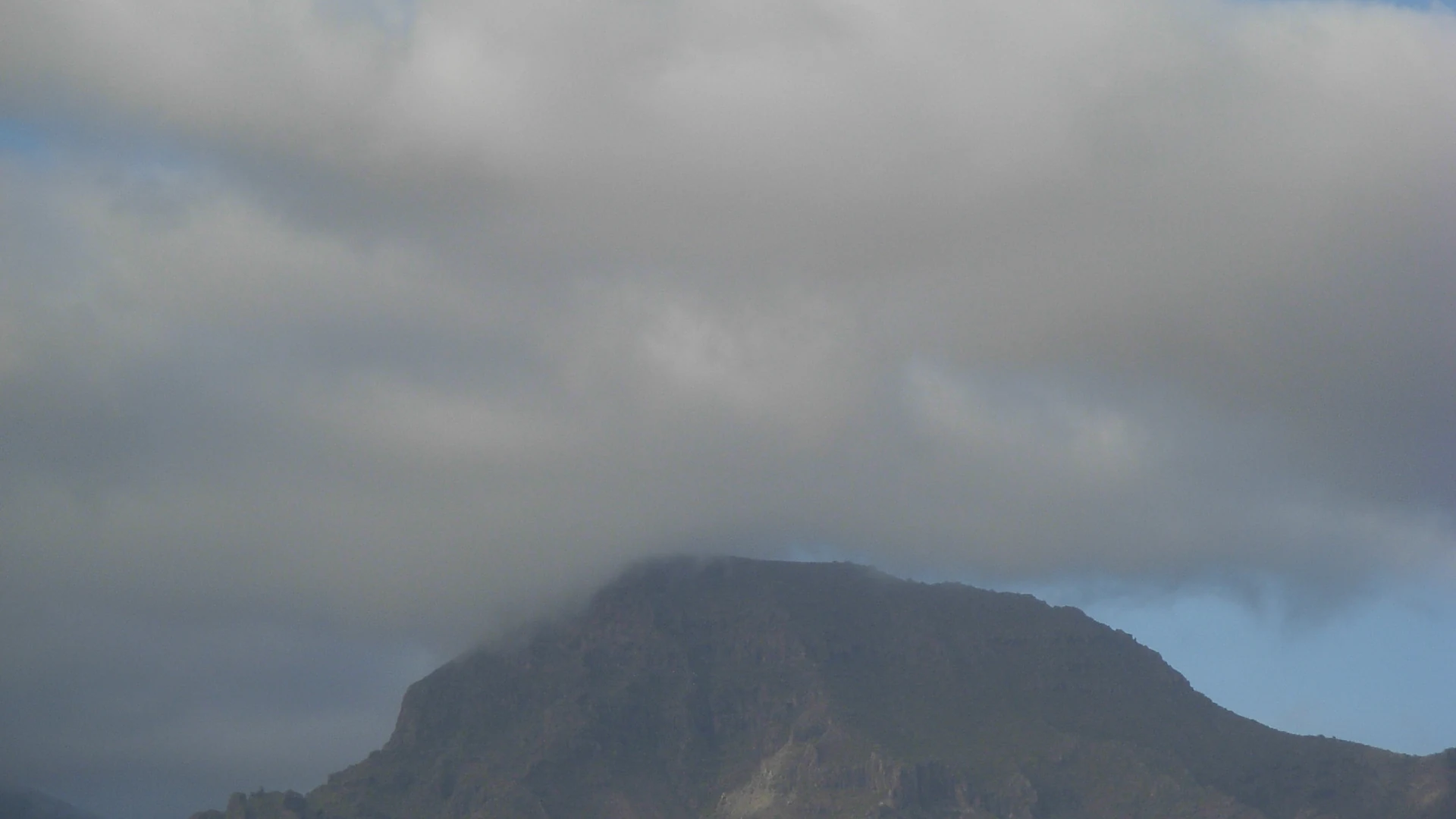
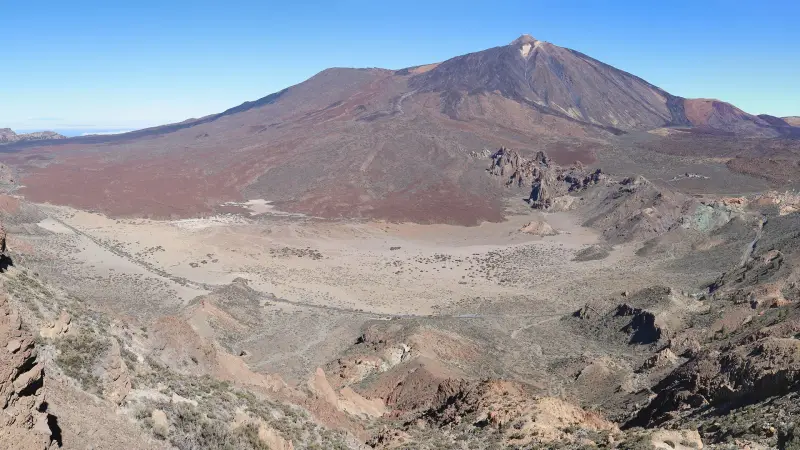
The table above becomes irrelevant the moment you drive inland and up. Teide's upper cable car station sits at 3,555m, and the temperature there bears no relation to the coast in any month.
This is the single most common packing error on the island: people fly in for 28°C in August, take the cable car, and find themselves genuinely cold. Our Mount Teide guide is blunt about it, and the rule is simple enough to remember: take a jacket up the mountain in every month of the year, including August.
Snow on the summit in winter is normal rather than remarkable, and the access road closes when it falls.
The calima, and the one weather event worth knowing
Occasionally a hot, dust-laden wind arrives off the Sahara. Locally it is the calima, and it does two things: it pushes temperatures well above the figures in the table, and it fills the air with fine dust that cuts visibility to a haze.
It is not seasonal in any reliable way and it does not last long, typically a few days. What it does do is ruin viewpoints, so if you have one clear day booked for Teide and the calima arrives, the view will not be there.
There is no forecasting it far enough ahead to plan around. The practical response is to keep flexible days rather than to avoid particular months.
Which month suits you
The table answers what the weather does; it does not answer when you should come, which depends on whether you want heat, quiet, a warm sea or walking conditions.
Our best time to visit Tenerife guide works through that decision by activity and by crowd levels, including why the months most people book are not the months most people should book.
FAQ – Tenerife weather month by month
Featured image: Piotrus (Piotr Konieczny aka Prokonsul Piotrus Talk) / Wikimedia Commons / CC BY-SA 3.0