"Best beach" means four different things in Gran Canaria, and the island has a clear answer for each. For calm swimming with children, the engineered bays of the south-west, Amadores and Anfi del Mar, sit behind breakwaters with imported sand. For a long walk and big sky, Maspalomas and Playa del Inglés run about 6km together.
For a beach inside a city, Las Canteras in Las Palmas stretches more than 3km, with a reef that holds its water calm. And for a beach with nobody selling anything, Güigüí on the west coast has no facilities at all and is reached only by a long hike or a boat. Pick the day first, then the sand.
Gran Canaria's beaches compared
| Beach | Area | Sand | Water | Best for |
|---|---|---|---|---|
| Playa de Amadores | South-west | Imported, pale | Calm, sheltered | Toddlers, families |
| Anfi del Mar | South-west | Imported, white | Calm, breakwater | Resort comfort |
| Maspalomas & Playa del Inglés | South | Golden, dunes | Windy afternoons | Long walks, sunsets |
| Las Canteras | Las Palmas | Golden, fine | Calm lagoon, surf south | City beach, snorkelling |
| Puerto de Mogán | South-west | Imported, golden | Calm, sheltered | Harbour day, couples |
| Patalavaca & Playa del Cura | South-west | Mixed | Calm, sheltered | Quieter swimming |
| San Agustín | South-east | Dark | Gently sloping | Quiet resort beach |
| Güigüí | West | Golden-dark, wild | Strong currents | Hikers, no crowds |
| Pozo Izquierdo | East | Dark, shingle | Wind, dangerous currents | Windsurfing only |
Which beaches are calmest for swimming?
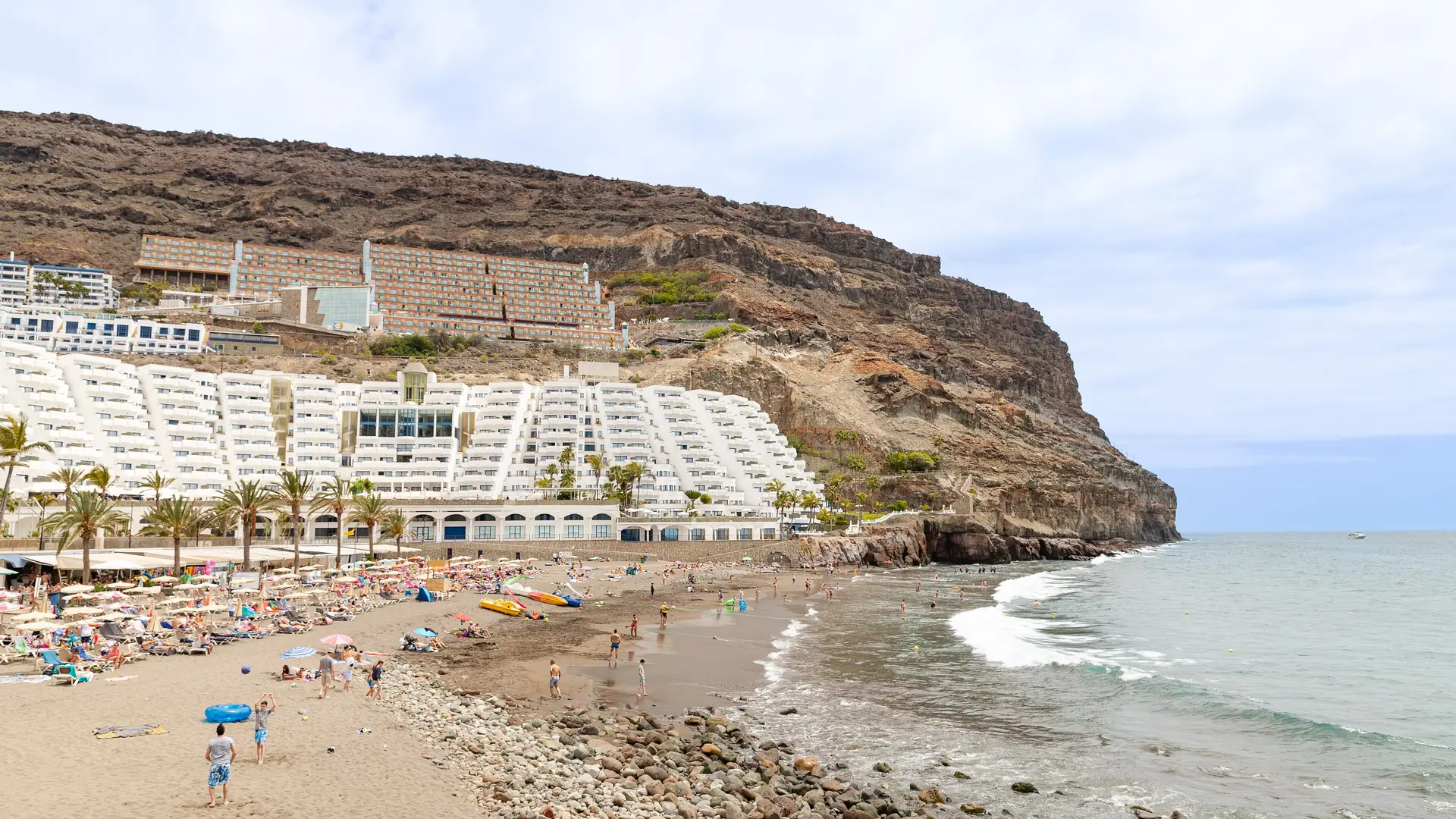
Some of the calmest water on the island is man-made. Playa de Amadores is a sheltered bay of about 400 metres, though other guides measure it longer, with imported pale sand and a breakwater holding the water calm and shallow. It is the default beach for families with small children, and it has sunbeds, parasols and paid parking.
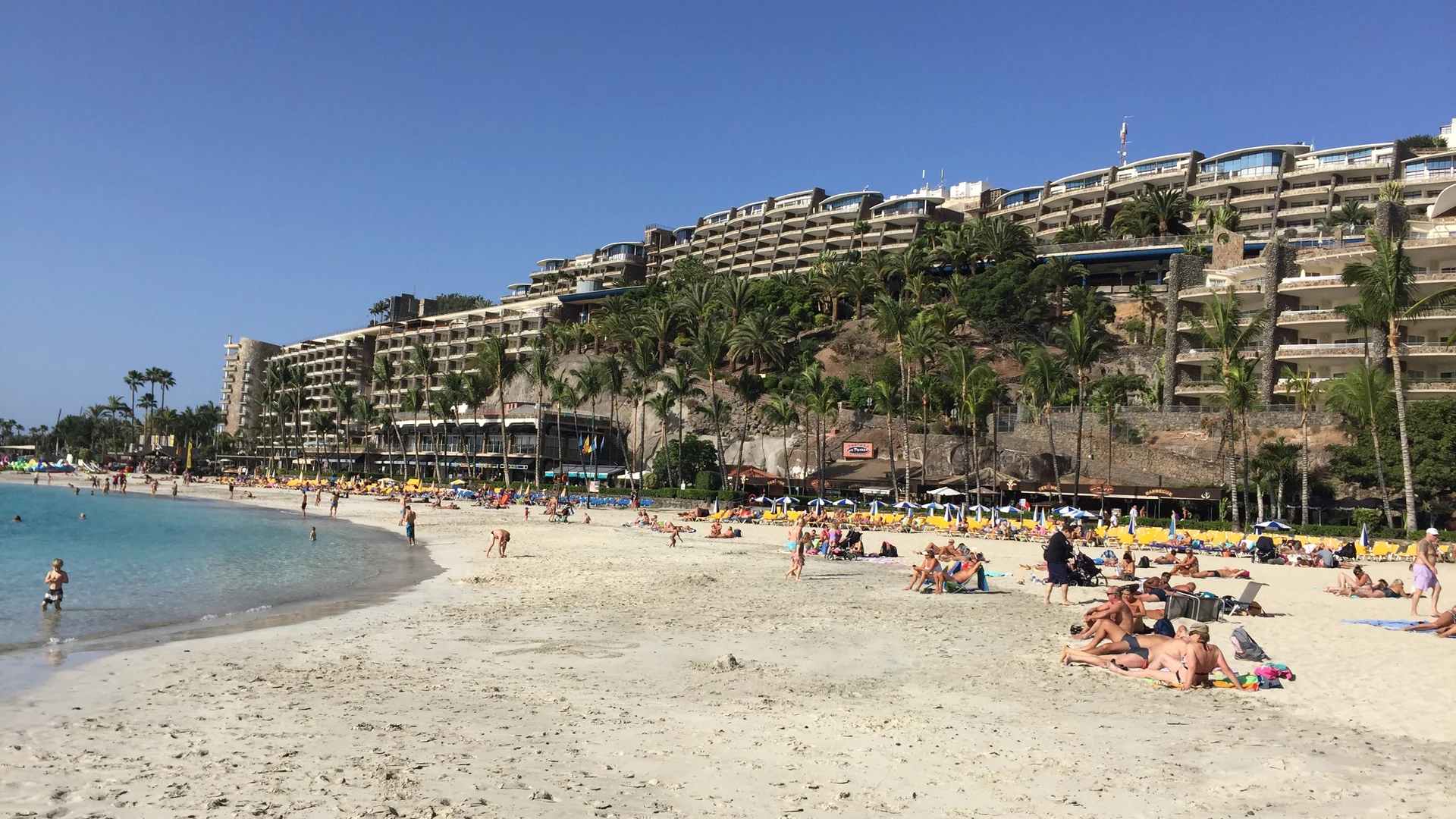
Anfi del Mar is the polished version, with imported white sand reportedly shipped from the Bahamas, breakwater-calm water, kayak and pedalo hire, and a shopping centre with cafés behind the beach. It is fronted by the Anfi resort and feels like one.
For something less manicured, Patalavaca and Playa del Cura, between Puerto Rico and Mogán, are each around 300 metres, calm and sheltered, with easier parking than Maspalomas. Amadores also has good snorkelling at its rocky edges; the entry points are in our Gran Canaria snorkelling guide.
Maspalomas and Playa del Inglés: the long walk
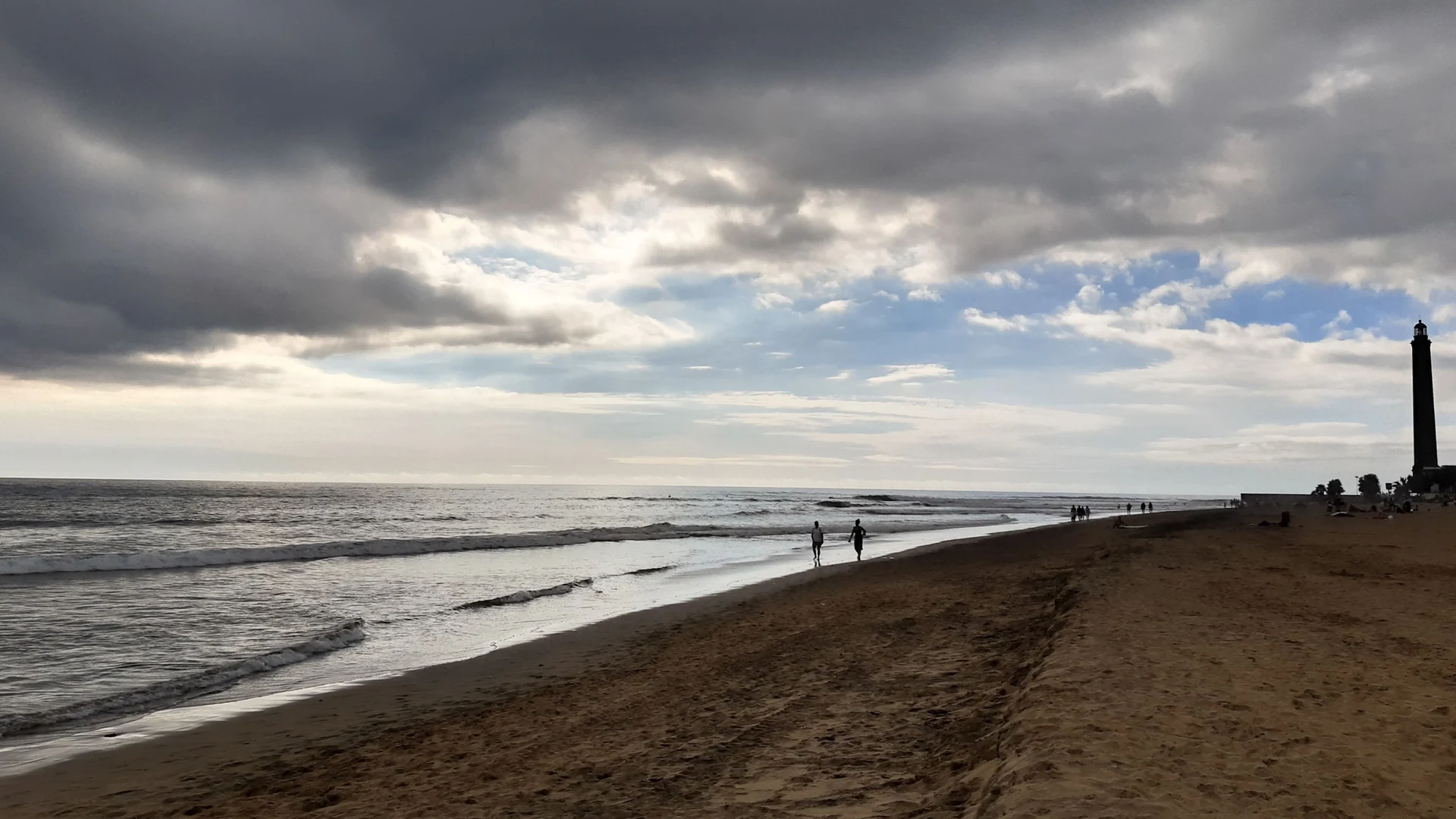
Maspalomas and Playa del Inglés together run to about 6km of golden sand in front of the dunes, the longest continuous beach on this list. The main stretches are lifeguarded, and the afternoons bring strong wind.
This is a walking beach more than a toddler beach. It has distinct sections, including a clothing-optional zone, and the dunes behind it are a protected reserve with marked-path rules and fines. Our Maspalomas dunes guide covers the rules, where the naturist section actually is, and the best time to go.
Las Canteras: the city beach
Playa de las Canteras runs for more than 3km along Las Palmas, and a natural reef keeps most of it a calm, lifeguarded lagoon. The southern end, known as La Cicer, is where the surf breaks, so surfers and swimmers each have their end.
It is the best beach on the island for combining a swim with a city day, and the only beach on this list on the cloudier north coast. Our things to do in Las Palmas guide covers why the reef makes the swimming so good and what to see in the old town.
Puerto de Mogán and San Agustín
Puerto de Mogán's beach is about 250 metres of imported golden sand, calm and sheltered beside the harbour, with restaurants a few steps away. It is the beach for a slow day with lunch rather than a full beach day, and the market and the submarine are in our Puerto de Mogán guide.
San Agustín, east of Playa del Inglés, is the quieter south-coast resort beach, gently sloping with dark sand. It suits a couple who want the sea without the Yumbo end of the south, and the adults-only and all-inclusive hotels on it are in our all-inclusive resorts guide.
Güigüí: the beach with nothing on it
Playa de Güigüí, inside the Güigüí natural reserve on the west coast, has no sunbeds, no bars and no lifeguards, and it has strong currents. That is exactly its appeal, and exactly the reason to be careful in the water.
Getting there is the effort. On foot it is a hike from Tasartico, which guides put at anywhere from two to two and a half hours to three to four hours each way, over roughly 6km. By sea, boats run from Puerto de Mogán in summer, and some operators depart from Puerto Rico or Arguineguín.
Pozo Izquierdo: look, don't swim
Pozo Izquierdo on the east coast is a windsurfing and kitesurfing venue, known for hosting world cup competition, with dark volcanic sand and shingle. It is not a swimming beach: the wind is strong enough to make sunbathing impractical, and the currents are dangerous.
Go to watch the windsurfers, or to take a lesson with one of the schools, not to swim.
North or south?
The south coast is drier and sunnier, which is why nearly every beach on this list is there. The north has Las Canteras and more cloud. Our Gran Canaria weather by month guide explains the difference and when the sea is warmest.
For what else fills a trip beyond the sand, our things to do in Gran Canaria guide maps the rest of the island.
FAQ – beaches in Gran Canaria
Featured image: Svend Aage Madsen / Wikimedia Commons / CC BY-SA 4.0