The best snorkelling in Gran Canaria's south does not need a booking. Playa de Amadores and the beach at Puerto de Mogán are both calm, sheltered, free entries where beginners see parrotfish, damselfish and cuttlefish a few metres from the sand. Bring a mask, neoprene socks for the sea urchins, and you are done.
Paying makes sense for one thing: reaching what the beach cannot. The guided kayak and snorkelling tour from Taurito runs about four hours at around €65 per person and paddles under the cliffs into volcanic sea caves. For divers, the island's standout shore site is on the other coast entirely, at Sardina del Norte, where angel sharks rest on the sand in winter.
Mogán: Guided Kayak to Caves and Snorkelling Tour
About four hours from Taurito beach, paddling under the cliffs into volcanic sea caves with guided snorkelling stops, kit and a snack included.
- About 4 hours, guided in English and Spanish
- Kayak, snorkel gear and insurance included
- Paddle into volcanic sea caves under the cliffs
- Must be able to swim and help carry the kayak 80m
Total price from
€65
Includes taxes and fees
Powered by GetYourGuide
Free spot or guided tour?
The decision comes down to three things: how confident you are in the water, whether you own kit, and whether caves are the point.
| Option | Cost | Kit | Suits |
|---|---|---|---|
| Playa de Amadores | free | bring your own | nervous beginners, children |
| Puerto de Mogán beach | free | bring your own | beginners, a harbour day |
| Taurito kayak and caves | ~€65 | included | confident swimmers |
| Sardina del Norte | free from shore | own or dive centre | divers, winter angel sharks |
If you have a mask and fins and just want fish, the free entries win outright. If you have no kit, want somebody watching the group, or want the cliffs and caves rather than a beach edge, the tour is what the money buys.
Playa de Amadores: the calmest start
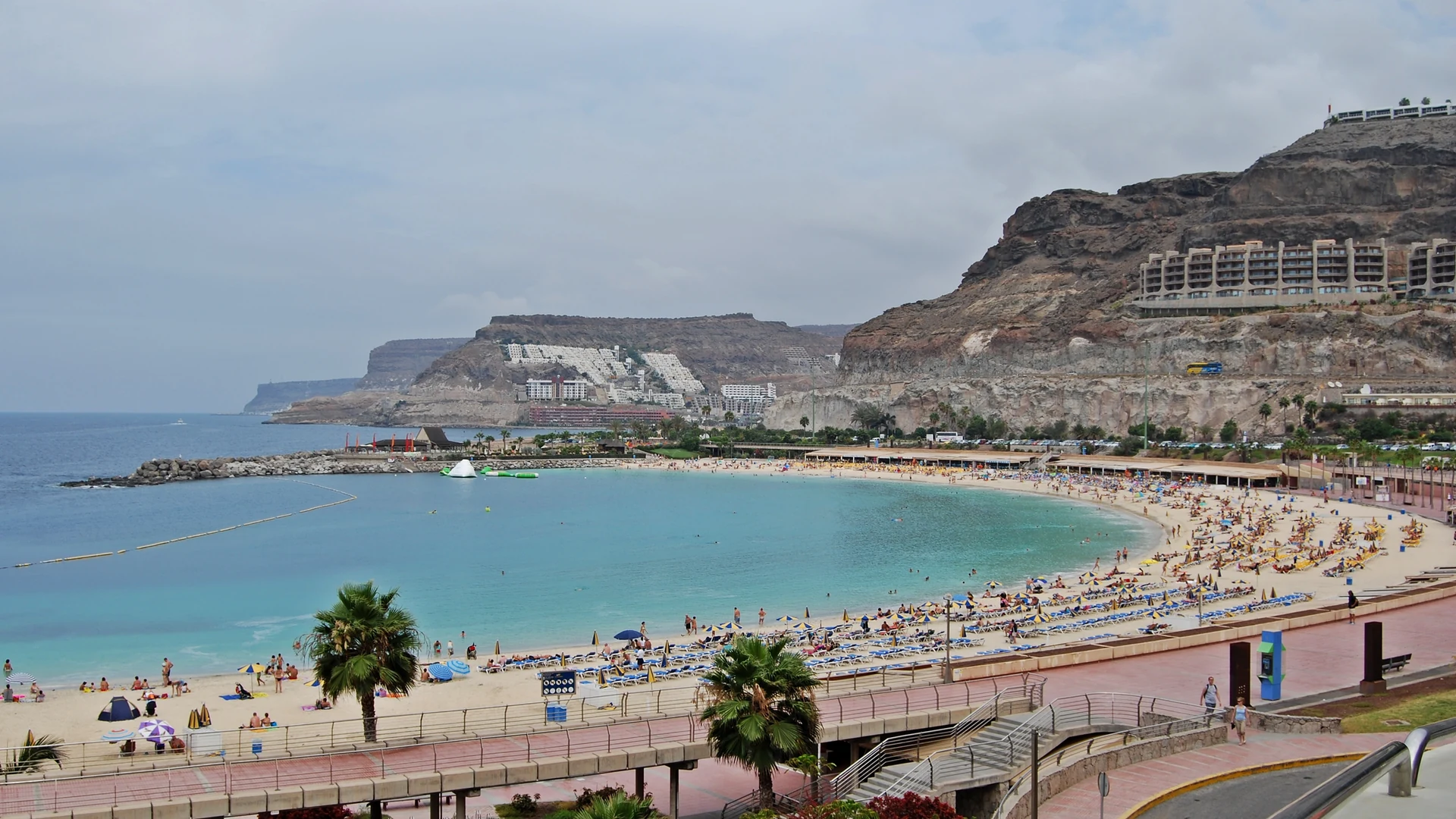
Playa de Amadores is an artificially protected bay next to Puerto Rico, with little or no swell and gentle entry, which makes it the easiest first snorkel on the island. The fish gather at the edges rather than over the sand.
Enter on the left side of the beach and follow the artificial rock formation, where parrotfish, damselfish, wrasse and bream are common and octopus are possible. Schools of fish, sea urchins and cuttlefish also turn up near the rocky ends, and a small group of rocks mid-beach draws more.
- Wear neoprene socks: the rocks carry sea urchins
- Arrive early: parking fills
- Use a buoy if you swim beyond the designated bathing area
Puerto de Mogán: snorkel off the end of the promenade
The beach at Puerto de Mogán is sheltered and clear, with easy entry for beginners. Walk to the far left end of the promenade, past the restaurants and bars, to the pebble entry, where boxfish, parrotfish, damselfish and cuttlefish are common, and there are small caves to look into.
More experienced snorkellers get more from the breakwater, where one source describes a more demanding swim with more marine life, including shoals of damselfish. Keep an eye on the tide at this spot.
It pairs well with a day in the village, the Friday market or the submarine. Our Puerto de Mogán things to do guide covers the rest of the day.
The Taurito kayak and caves tour
The tour meets at the kayak area on Taurito beach, a short way west of Puerto Rico along the Mogán coast. The listing describes paddling beneath tall cliffs into volcanic caves, snorkelling stops over shoals of silver fish, an optional jump into the sea from the rocks, and a search for octopus.
Three requirements are stated, and they decide who in your group can go:
- Be able to swim: mandatory, not a formality
- Be in healthy physical condition: this is four hours of active paddling and swimming
- Help carry the kayak about 80 metres to the water
What is included, per the listing: guide, kayak, snorkel gear, insurance and a snack with a sports drink, with free cancellation up to 24 hours ahead. At around €65 it costs more than a boat trip with a snorkel stop, and the difference is that the water is the whole day rather than one stop.
Where do divers go in Gran Canaria?
The south is where most visitors snorkel, but the island's best-known shore dive is in the north-west. Sardina del Norte, near Gáldar and Agaete, is a sheltered bay entered from an old port, with mild currents, a depth of about 10 to 25 metres and clear visibility year-round, which makes it suitable for most levels.
The reason divers make the trip is the sand. Angel sharks and several species of ray rest on the sandy bottom, most often between October and February. Angel sharks can reach two metres, lie camouflaged on the seabed and are harmless to people. Seahorses, garden eels, striped grunts and parrotfish are also regularly reported.
On the east coast, Risco Verde is a more remote entry for experienced snorkellers, with barracuda and eagle rays and visibility of roughly 10 metres in winter and 20 to 30 metres in summer. Enter on the left side and watch for urchins.
Dive centres in the south also run beginner dives from sheltered water such as Puerto de Mogán, if you want to try scuba before committing to a course – our scuba diving for beginners guide covers what a first dive actually involves.
Water temperature and what to wear
The sea off the south coast sits at around 19°C from January to April and peaks at about 23°C from August to October, according to the figures in our Gran Canaria weather by month guide. That makes snorkelling realistic year-round, with the second half of the year the comfortable end.
Most people snorkel in swimwear in summer. For a long session, or any time in the cooler months, a thin shorty wetsuit keeps you in the water longer. Divers need more: dive guidance commonly suggests around 5mm in summer and 7mm in winter, but your dive centre will set the kit.
If you would rather combine snorkelling with lunch and a paddleboard than make it the whole day, our Gran Canaria catamaran cruise guide compares the south-coast boat trips that include a snorkel stop.
FAQ – snorkelling and diving in Gran Canaria
Featured image: Felix König / Wikimedia Commons / CC BY-SA 3.0