Gran Canaria is often called a continent in miniature, and the weather is where that stops being marketing. The southern resort coast is dry and consistently sunny; the northern coast around Las Palmas catches the trade winds and is greener, cloudier and wetter – frequently on the same afternoon.
That makes the coast a bigger decision than the calendar. The southern figures below run from a January high of around 20°C to an August high of around 27°C, with the sea peaking in September and October rather than in midsummer. Which coast you book matters more than which month.
The twelve months on the south coast
These are weather2travel's published averages for Maspalomas, on the southern resort coast, where most visitors stay.
| Month | High | Low | Rain | Sea | Sun | Rain days |
|---|---|---|---|---|---|---|
| January | 20°C | 14°C | 27mm | 19°C | 7h | 3 |
| February | 20°C | 14°C | 29mm | 19°C | 7h | 3 |
| March | 21°C | 14°C | 17mm | 19°C | 7h | 2 |
| April | 21°C | 15°C | 11mm | 19°C | 8h | 2 |
| May | 22°C | 16°C | 3mm | 20°C | 9h | 1 |
| June | 24°C | 17°C | 1mm | 21°C | 9h | 0 |
| July | 26°C | 19°C | 0mm | 22°C | 9h | 0 |
| August | 27°C | 20°C | 0mm | 23°C | 9h | 0 |
| September | 26°C | 20°C | 9mm | 23°C | 8h | 1 |
| October | 25°C | 18°C | 16mm | 23°C | 7h | 2 |
| November | 23°C | 17°C | 31mm | 22°C | 7h | 3 |
| December | 21°C | 14°C | 33mm | 21°C | 6h | 4 |
Three things hold across every source. July and August record essentially no rainfall. The wettest months are at the turn of the year rather than in autumn. And the annual temperature range is narrow: about seven degrees separates the warmest month from the coolest.
Which month has the warmest sea?
Not the hottest month, which is the mistake most visitors make. The sea peaks at around 23°C in August, September and October, and holds 22°C into November, because the water lags the air by roughly two months.
At the other end it bottoms out around 19°C from January through April. That is swimmable rather than pleasant, and it is noticeably cooler than the Mediterranean at the same latitude because of the Canary Current running down from the north.
If a warm sea is the point of the trip, the second half of the year beats the first by a wide margin, and September and October are the sweet spot – warm water, still-high sunshine hours, and past the August crowds.
Why does the north feel like a different island?
Same mechanism as everywhere in the Canaries, and it is worth understanding rather than memorising.
The trade winds arrive from the north-east carrying moisture. They hit the island's high interior and drop it on the northern slopes, which is why the north is green. The air that continues over to the southern coast has already been wrung out, which is why the south is arid and reliably sunny.
The consequence for a visitor is direct. The north coast, including Las Palmas, is cooler, cloudier and wetter; the southern resorts – Maspalomas, Playa del Inglés, Puerto Rico, Puerto de Mogán – are drier with milder temperature swings.
None of that makes the capital a bad idea. It makes it a different proposition, and our things to do in Las Palmas guide covers a city that works in cloud in a way a beach resort does not – or read our where-to-stay guide for the full north-versus-south trade-off.
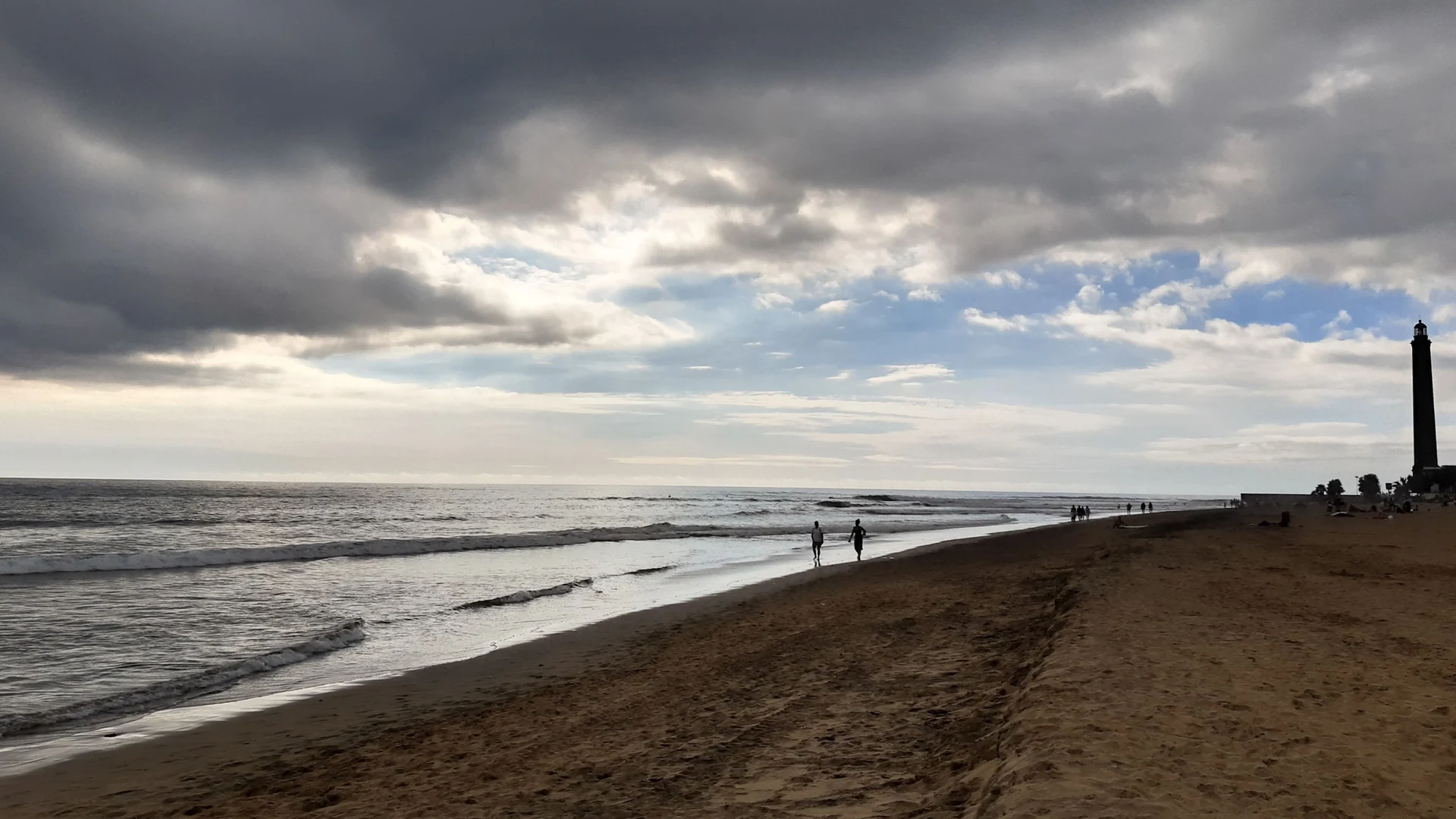
That same sun is worth planning around at the Maspalomas dunes, where midday sand temperatures can pass 50°C in summer.
Which month suits which trip?
The island genuinely works year-round, so this is about matching the month to what you actually want rather than avoiding a bad season.
- Beach and sea first: September and October – warmest water of the year at around 23°C, and one or two rain days
- Hot and dry, crowds accepted: July and August – no rainfall, nine hours of sun, the busiest and priciest weeks
- Walking and the interior: March to May – cooler air, low rainfall, and mountain roads without summer heat
- Cheapest and quietest: the turn of the year – but December records the most rain days of any month
- Wildlife at sea: April to October is the reported peak for dolphin and whale watching, though the populations are resident year-round
Winter is genuinely mild rather than merely tolerable. A January high of around 20°C with seven hours of sun is not a compromise if you have come from northern Europe.
Weather is only half the decision. Our best time to visit guide covers crowds, prices and the island's calendar of carnivals and festivals.
What the table does not capture
Two things, both worth knowing before you read a forecast and panic.
Cloud cover is not rain. The north can sit under grey for a whole morning and record nothing in the rainfall column, and a forecast icon does not distinguish between the two. On a south-coast holiday this rarely matters; on a north-coast one it changes the day.
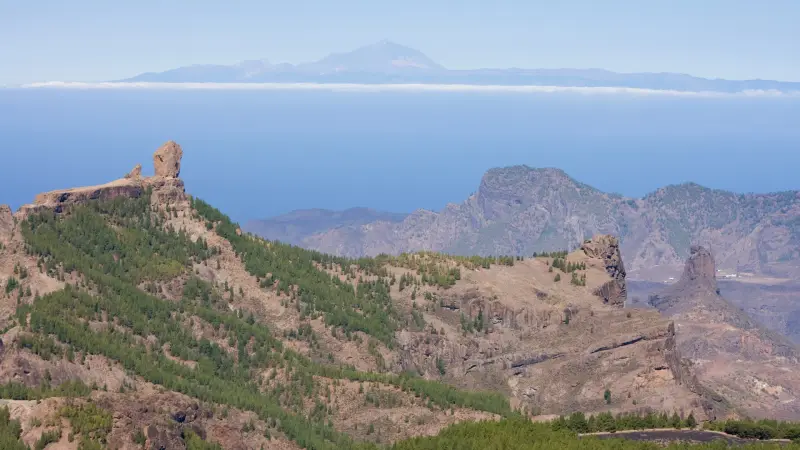
Altitude changes everything. The interior is mountainous and materially cooler than either coast, so a day trip inland needs a layer regardless of what the resort thermometer says. If you are heading up there, our Gran Canaria car hire guide covers what the mountain roads demand, and the airport transfers guide covers getting to the resort in the first place.
FAQ – Gran Canaria weather month by month
Featured image: Gerda Arendt / Wikimedia Commons / CC BY-SA 4.0