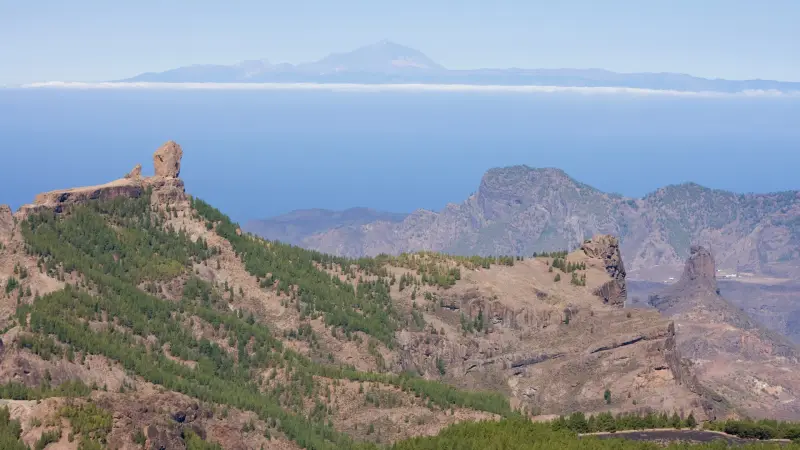
Gran Canaria's north is three towns, each with a different reason to go. Teror has the island's best-known Sunday market and the Basílica de Nuestra Señora del Pino; Arucas has a neo-Gothic church built from local stone and the Arehucas rum distillery; and Agaete has the Las Salinas natural pools and fish restaurants at its harbour, Puerto de las Nieves. By car from Las Palmas, all three fit into one day.
How do the three towns compare?
They sit along the green northern side of the island, within easy reach of Las Palmas and a long drive from the southern resorts. Pick by what you want from the day.
| Town | Go for | Best day | Bus from Las Palmas |
|---|---|---|---|
| Teror | Sunday market, basilica, balconies | Sunday morning | Global line 216 |
| Arucas | Basalt church, rum distillery | Monday to Friday | Global line 210 |
| Agaete | Natural pools, harbour fish | Any calm day | Global line 103 |
The order that works best from Las Palmas is Teror in the morning, Arucas around midday and Agaete for a late lunch and a swim, since Agaete is furthest along the coast. On a Sunday, Teror's market is the fixed point; on a weekday, the rum distillery is.
Teror: the Sunday market and the Virgin of the Pine
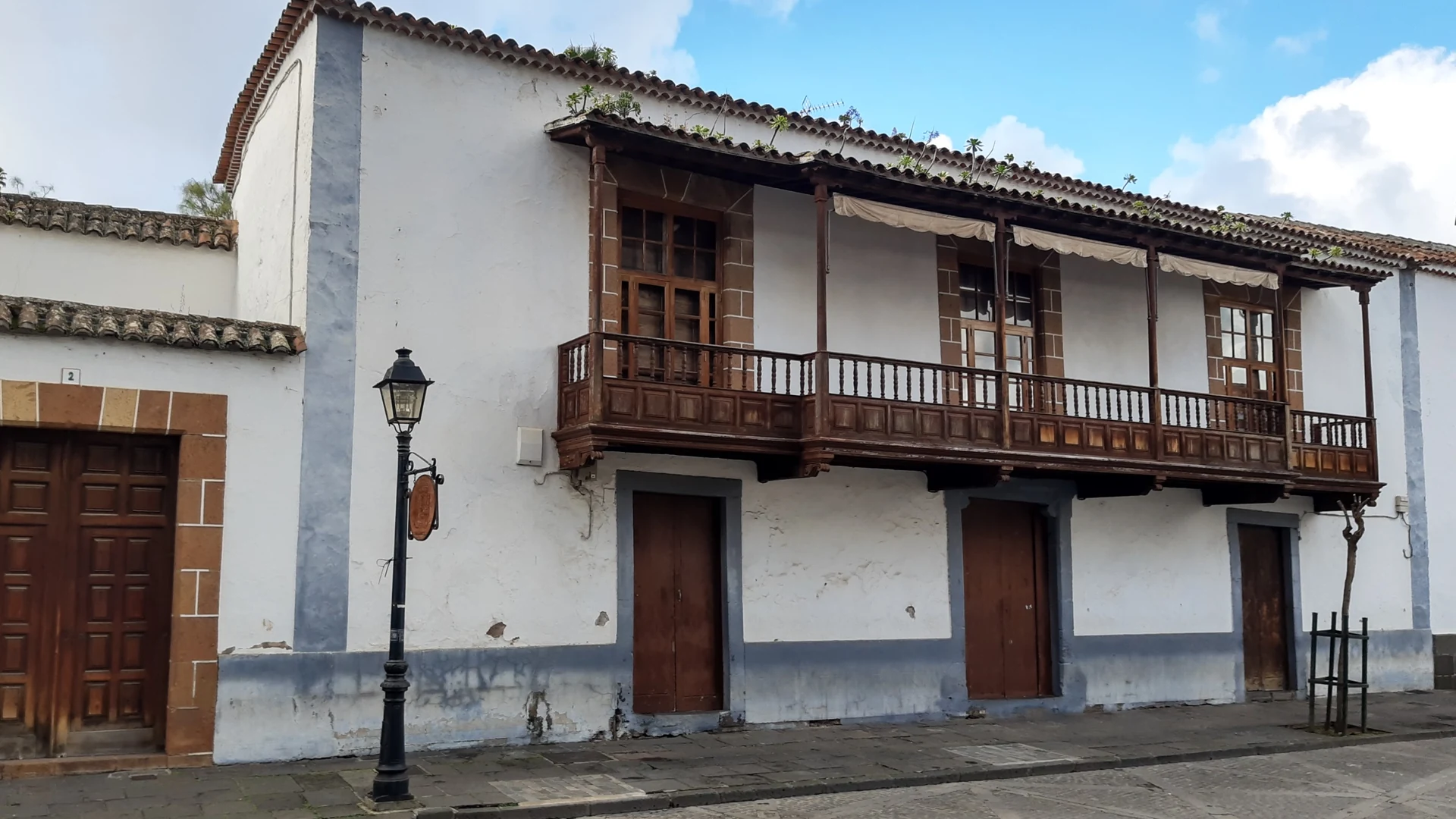
Teror is the most traditional of the three, and one of the best places on the island to see a historic Canarian town centre. Its streets are lined with whitewashed houses and carved wooden balconies, some of the houses dating from the 16th century, around the Plaza del Pino.
The Basílica de Nuestra Señora del Pino is the reason the town matters to Canarians: it is home to the Virgen del Pino, patron saint of Gran Canaria. The present neoclassical church was built between 1760 and 1767. Opening hours are limited and vary by day, including Sundays from 11:00 to 14:00, so check before you plan around a visit inside.
The Sunday market runs from about 08:00 to 15:00 every week in the historic centre, with more than 100 stalls selling Teror chorizo, cheeses, homemade sweets, embroidery and local produce. Arrive early; by late morning the streets are full.
Next to the basilica, the Casa Museo de los Patronos de la Virgen del Pino is a historic house where the Virgin's caretakers lived, open Monday to Friday from 11:00 to 16:00 and Sundays from 10:00 to 14:00, closed on Saturdays.
Arucas: a stone church and a rum distillery
Arucas is the most striking to look at, thanks to one building. The Iglesia de San Juan Bautista is a neo-Gothic church in dark local stone, often called the "cathedral" of Arucas, although it is a parish church. Work began in 1909 to a design by the Catalan architect Manuel Vega y March; it opened for worship in 1917 but was not completed until 1977.
The historic centre around it includes the town hall from 1875 and the old market from 1882, beside the municipal park, where an 1808 house holds the municipal museum.
The other reason to stop is rum. The Arehucas distillery in Arucas runs visits Monday to Thursday from 09:30 to 14:00 and on Fridays from 09:30 to 18:00, except public holidays, at €10 per person, with no reservation needed. Check the distillery's website for current times before you go.
Arucas is also where Banana World is, a plantation tour with tastings of Canarian banana products; our banana, rum and coffee tour guide covers it, along with a full-day tour from the south that includes the distillery. On the coast below the town, El Puertillo has natural pools and a small black-sand cove that is free to visit.
Agaete: natural pools and the harbour at Puerto de las Nieves
Agaete is the calm end of the day, and the one to save for when the sun comes out. Its harbour village, Puerto de las Nieves, has fish restaurants along the waterfront and the ferry port for Fred. Olsen Express crossings to Santa Cruz de Tenerife.
Do not confuse Puerto de las Nieves with Pico de las Nieves, Gran Canaria's highest summit in the mountains of the interior. They share a name and nothing else; our Roque Nublo hike guide covers the summit.
The main draw for swimmers is Las Salinas de Agaete, a set of three volcanic natural pools connected by underwater tunnels, filled by the Atlantic. On rough days the sea breaks over the rocks, so they are best on a calm one.
Off the coast stood the Dedo de Dios, "God's Finger", a rock pinnacle that became a symbol of the island. It collapsed during Tropical Storm Delta on 28 November 2005, and what remains is a stump. Guides and postcards that still show the finger are out of date.
Inland, the green Agaete Valley grows coffee. Finca Los Castaños is one of the farms that offers tours and tastings, and it describes itself as the only place in Europe where coffee is traditionally grown.
Can you visit Teror, Arucas and Agaete without a car?
Yes, but plan for two days rather than one. Global runs line 216 from Las Palmas to Teror, line 210 to Arucas and line 103 to Puerto de las Nieves, all from the capital. Linking the three towns by bus in a single day is harder than doing them as out-and-back trips.
With a car, the north makes an easy day from Las Palmas. From the southern resorts it is a long drive up the GC-1 motorway and round the capital, so leave early. Our Gran Canaria car hire guide covers the roads.
If you would rather not drive at all, several guided day tours from the south combine Arucas, Teror and Firgas, sometimes with Agaete. They are smaller operations with modest review records, so read the itinerary and reviews before booking.
A different kind of guided day skips these three towns for the mountains. The Rural Villages tour is eight hours in a minivan of up to eight people, from about €79 per person (checked 16 September 2026), stopping at Fataga, Tejeda and the cave houses of Artenara before reaching the north coast at San Felipe. Choose it if the interior matters more than the market or the rum.
For more on the capital as a base for the north, see our things to do in Las Palmas guide.
FAQ – Teror, Arucas and Agaete
Sunday. Teror's market runs every Sunday of the year from about 08:00 to 15:00 in the historic centre, with more than 100 stalls selling Teror chorizo, cheese, homemade sweets, embroidery and local produce. It is Gran Canaria's best-known traditional market, and the streets fill by late morning, so arriving early makes it easier to walk and park.
No. The Iglesia de San Juan Bautista in Arucas, Gran Canaria, is a parish church, although its size and neo-Gothic style mean it is often called a cathedral. Built from dark local stone to a design by the Catalan architect Manuel Vega y March, it was begun in 1909, opened for worship in 1917 and completed in 1977.
Yes. The Arehucas distillery in Arucas, Gran Canaria, runs visits Monday to Thursday from 09:30 to 14:00 and on Fridays from 09:30 to 18:00, except public holidays. A visit costs €10 per person and no reservation is needed, according to the distillery. Opening times can change, so check its website before travelling.
The Dedo de Dios, or God's Finger, a rock pinnacle off the coast of Agaete in Gran Canaria, collapsed during Tropical Storm Delta on 28 November 2005. Only a stump of the formation remains. It had been one of the island's best-known symbols, and older guidebooks and postcards still show it standing.
Las Salinas de Agaete are three volcanic natural pools on the coast at Agaete in north-west Gran Canaria, connected by underwater tunnels and filled by the Atlantic. They are close to Puerto de las Nieves, Agaete's harbour village. The sea can break over the rocks on rough days, so the pools are best visited when the ocean is calm.
Global buses from Las Palmas de Gran Canaria serve all three: line 216 to Teror, line 210 to Arucas and line 103 to Puerto de las Nieves in Agaete. Visiting all three in one day by bus is difficult, so it is easier to split them across two days or hire a car for a day in the north.
Featured image: Gerda Arendt / Wikimedia Commons / CC BY-SA 4.0
Some links on this page are affiliate links – we may earn a commission at no extra cost to you. Details