You do not need a qualification to dive in Tenerife. What you are booking as a beginner is a try dive, sometimes sold as discover scuba: an instructor-led first descent to around 12 metres, with no certification, no course and no exam at the end of it. A three-hour trip combining a dive with snorkelling costs €75 per person, checked on 19 August 2026.
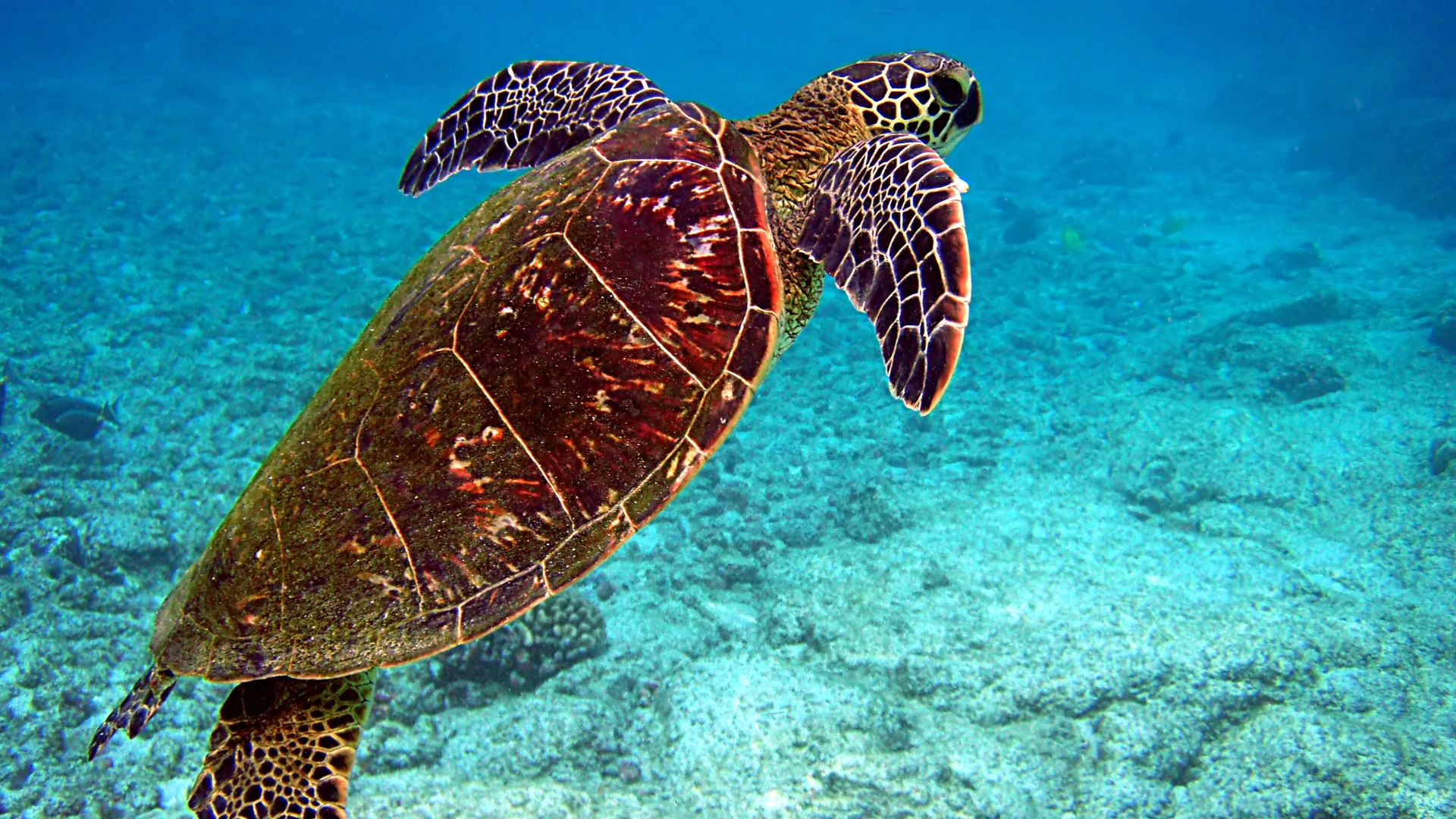
The other thing worth knowing before you book is that the turtles are not a marketing device. The seagrass meadows off this coast hold a resident green turtle population that feeds there year-round, which is why operators sell the sighting with more confidence than they could almost anywhere else in Europe.
Tenerife: 2-in-1 Scuba Diving with Turtles and Snorkelling
Total price from
€75
Includes taxes and fees
Powered by GetYourGuide
A three-hour beginner trip combining an instructor-led first dive with a snorkel session, run from Puerto Colón on the Costa Adeje coast.
- Three hours total, no certification needed
- Minimum age 8, wheelchair-accessible operator
- Maximum ten people per group
- Instructor in English, Spanish, Italian, French, Dutch and Russian
A try dive is not a PADI course, and the difference is the whole point
This is where people over-plan. A certification course takes several days, involves theory, pool sessions, written assessment and a qualification you keep for life. A try dive takes an afternoon and gives you no qualification at all.
If your goal is to see whether you like breathing underwater before committing to anything, the try dive is the correct product and the course is an expensive way to find out. If you already know you love it and want to dive unaccompanied in future, the try dive is a day out rather than a step towards that.
What the try dive does buy you is the part that actually matters on a holiday: a briefing, an instructor beside you throughout, and roughly 12 metres of depth, which is where the interesting things are.
What the three hours are made of
The three hours are not three hours underwater, and nobody advertises it clearly. The window covers the briefing, kitting up, the boat run out, the dive itself, the snorkel session and getting back.
Actual submerged time on a first dive is typically a fraction of that, which is normal rather than a short measure: air consumption for a beginner is high, and a first descent is deliberately unhurried.
The operator runs from Puerto Colón in Costa Adeje, with boats a few minutes' walk from the dive centre and three departures a day, at 08:30, 11:30 and 14:30. The morning slots are generally the calmer water.
Why the turtles are a real expectation
Most operators selling wildlife sell a chance. Here the claim holds up for a structural reason: the green turtles on this coast are resident rather than migratory, feeding on seagrass meadows in shallow water rather than passing through on a season.
That feeding ground runs roughly between Playa de las Vistas at Los Cristianos and Playa San Juan, with the densest reported sightings around Playa Paraíso in Adeje, which is the stretch of coast this dive works. Our kayak and snorkelling guide covers the meadows in more detail and how close to shore they start.
No operator can promise a wild animal, and anyone who does is selling something they cannot deliver. What can honestly be said is that the odds here are unusually good and do not depend on the month you visit.
Who can do it, and who should not
The minimum age on this trip is 8, which is written into the product itself rather than left to interpretation. The operator is also wheelchair-accessible, which is rarer in diving than it should be and worth knowing if it applies to you.
Beyond age, the requirements are ordinary: you should be able to swim, be in reasonable health, and expect to complete a medical questionnaire before diving. A yes on that form does not automatically rule you out, but it may mean the operator asks for a doctor's sign-off, which is not something you can arrange on the morning.
The genuine disqualifiers are worth naming. Do not dive if you have a cold or blocked sinuses, because equalising will be painful or impossible, and do not book a dive for the day before you fly home. Standard guidance is to leave a clear interval between your last dive and a flight, so put this early in the holiday rather than at the end of it.
Getting the most out of a first dive
Two things separate people who enjoy it from people who spend it fighting: breathing and ears. Breathe slowly and continuously, never hold your breath, and equalise early and often on the way down rather than waiting for discomfort.
Do not book it for a day when you have something else scheduled afterwards. Diving is more tiring than it looks, and the combination of sun, salt and adrenaline tends to end the day earlier than planned.
For the rest of what the island offers around the southern coast, from the volcano to the water parks, the things to do in Tenerife guide sets out where each one sits.
FAQ – scuba diving in Tenerife as a beginner
Featured image: Wouter Hagens / Wikimedia Commons / CC BY-SA 4.0